Mailing Lists | Direct Mail Journal - Part 7
 

Direct Mail Journal

Direct Mail and Marketing Tips

Archive for category: Mailing Lists

Building a Local Brand with Direct Mail

Does direct mail have a bad rep? When consumers think of email newsletters they probably think of discounts, sales, and special offers. When they think of mail, it’s just bills and bad news right? Wrong! This way of thinking will only hold you back from the host of benefits that direct mail could bring your local business right now!

Direct Mail is Easier

A recent study showed that direct mail is easier to understand, and requires 21% less effort to process the information, compared to a digital promotion such as an email. Some offers are very simple and straight-forward, but some business propositions require a little more thought-power to be completely understood. If your business, or the offer you’re highlighting, fall into this category, consider a test run to try different approaches.  You can also use images, in some sections, rather than just text, to help improve comprehension (understanding). 

Is uncertainty still holding you back?  Are you curious about the best place to begin and the right process to use?  Zairmail can help you get started quickly and we can even provide you with a list of contacts to send your campaign too. 

You Don’t Need Big Bucks

You don’t need a huge budget to be successful with direct mail. This is a common misconception which we’re pleased to say just isn’t true. This is good news for start-ups and smaller local businesses. A postcard campaign is one very cost-effective way to reach well-targeted prospects for a lower cost. Postcards are cheaper to produce and small in size which makes them great for the mail. A good postcard should take prime position on the fridge of the recipient! A fridge-worthy message is what you’re aiming for. Give us a call on 1.888.898.0066 or 503.715.3109 to discuss your project. 

More Options for the Customer

A strong call-to-action is always needed on any kind of promotion, along with a strong and clear message. With direct mail, you can give the customer multiple options to respond so it’s easy for everyone to get in touch. You can tell them to email, call or visit your website depending on their preferred method. 

If you’re a small local business, having these multiple options can be very beneficial, and increase the level of engagement, rather than limit the recipient to one method. Some people just don’t like to speak over the phone initially; whereas others might not want to wait on an email. It’s always a good idea to include your website so that customers can learn more about your business. Even if you really only want calls or email, the mail is like the door to your business and the website is a bit like the lobby. 

We’re certainly not saying ditch the digital and put all of your efforts into direct mail. We just strongly recommend a combined approach, as laid out here. 

Zairmail (www.zairmail.com) is the fastest and easiest way to send (real) postal mail. Give us a call anytime at 888.898.0066, we would be happy to help with your direct mail needs.

social-icons

Can Social Media Work With Direct Mail Marketing?

It’s no secret that social media has taken the world by storm. There are 3.5 billion active social media users worldwide and the average amount of time spent on social platforms is over 2 hours every single day.

This is a huge group of people who are heavily invested in their screen time and interaction with a social media app. This opens up doors of opportunity to find and engage with new customers/clients. However, it’s also a very busy competitive space. 

When combining traditional mail with digital marketing, you can enhance the reach and impact of your campaigns. In this article, we’re going to focus on the connection between social media and direct mail and look at some simple ways you can integrate the two. 

Direct Mail to Hook, Social to Follow

Direct mail should act as your hook. It’s a hugely successful way to get your message in front of a highly targeted audience. It’s a far less competitive space in 2019 compared to the digital world and it actually carries more trust. Believe it or not, because direct mail is tangible and ‘real’, it’s proven that recipients trust it more and feel as though it has more authority than a digital message. This is really important when it comes to getting attention and building a connection of trust which eventually results in action. 

The other reason to lead with DM is that the demographics are much better developed and more precise.  If you were to target Dentists in New Jersey who have purchased a Chevy in the last 12 months, that is doable with a direct mail list.  It would be difficult to find anything like this for email or social media. We already know that “the list” is 70% of our success.

Once you’ve got the attention of a receiver, you can easily direct them to your social media channels if this is your goal. If it’s not a primary goal, simply including your social media handles (e.g @yourbusinessname ) and the platforms you’re present on can drive people towards them in the future. 

Use Social Media to Communicate

Depending on your audience, you could use social media to collect responses. Facebook messenger is a very popular way a brand can communicate with their customers directly and privately. This type of campaign would probably be more effective when targeting 18-35-year-olds because it’s a group of people that will already communicate with businesses in this way. 

In general, we should let customers contact us in ANY way they prefer – phone, fax, email, social media. Any additional channel we can give potential customers to reach us is a really good thing. If they prefer Facebook, then we want them to be able to use this.  The same goes for other forms of social media.

In one of our recent articles, we discussed using premiums as a tool to collect responses. This is one way you can get customers to interact and make contact in order to redeem an offer. 

Shout-out

Here’s another idea. Use part of your mail to focus on your offer and drive responses to that (whether that’s a call center or website). Use the other part of your campaign to shout about your social channels and what happens here. If you share exclusive discounts, giveaways and company info that will benefit customers on your social channels, let them know! Let them know why they should follow you on Instagram vs everyone else. What will they gain? 

If you sell home-ware will they gain interior design inspiration, ideas for easy storage and ‘Insta-worthy’ décor tips? If you’re in real estate, will you share newly available homes on your Facebook page the minute they go up for sale? There has to be an advantage for someone to jump on their device and seek you out. You can post all sorts of fun content, contemporary new home designs, homes of the rich and famous, homes of different peoples (Eskimo’s, cliff dwellers, houseboat users…). The key to social media is entertainment.

Zairmail (www.zairmail.com) is the fastest and easiest way to send (real) postal mail. Give us a call anytime at 888.898.0066, we would be happy to help with your direct mail needs.

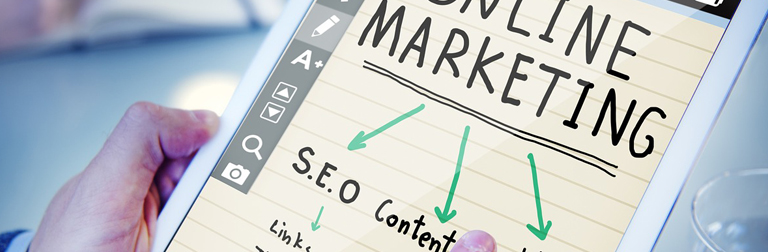
online-marketing

How to: Combine Direct Mail & Digital Marketing

How do you successfully fit direct mail marketing into your overall marketing strategy and combine this with digital marketing efforts? It almost seems like a backward concept doesn’t it? Once upon a time, businesses contemplated how to make digital work and how they could expand their strategy to dovetail with offline efforts. Now the direct mail marketing space has become much less crowded it STANDS OUT above all that digital noise. But that’s not all, it’s also a very different place to what it was several years ago. It’s crucial to recognize how consumers search for information following brand introductions and how they interact with advertising both online and offline. Here are things to consider for a more integrated marketing approach:

Matching Data Files

Target the same customers across multiple platforms by uploading your direct mail data file to places like Facebook advertising or your email marketing list. Of course, this requires that you have email addresses for the same group of people you’re sending direct mail too. Email addresses could be more challenging to acquire for non-customers, but it’s a very good tool for re-marketing purposes or upselling. Increasing prospect exposure to your offer is usually very effective, as long as it’s not overdone. If you have time-limited or limited availability offers, sequential online ads could act as a real-time way to let customers know how much time is left, or how many spaces are still open, following on from the initial message.

Streamlined Messaging

Even if you’re not targeting the exact same group of people across multiple platforms, it’s still important to keep all branding and messaging the same with your online and offline campaigns. [This is super important. Consistent branding/messaging is key.] You could use color or image variations in adverts, as long as they are clearly connected. This means that if the same person does see more than one advert, they can make that brand connection instantly. This is where online campaigns really support offline efforts and visa versa.

It is important that brand/message is consistent, but we also don’t want it to get stale, otherwise, people just mentally ignore it. To deal with this advertisers can change the visuals slightly to keep it interesting, but keep the messaging the same.  Check out this example from Fresh Sep Kitty Litter. This same concept can apply to our dm and digital campaigns.

marketing

Create Combined Funnels

You might use a direct mail campaign to initially reach new potential customers and generate responses. However, those responses could be online. From here you could follow up with a thank you email and continue immediate communication (in relation to that initial offer) online. You can and should use direct mail to generate responses that happen in the digital world. The direct mail campaign has played its part in grabbing attention and creating action. The digital side takes over to continue the conversation in a place that customer (no doubt) spends a lot of time… on a device.

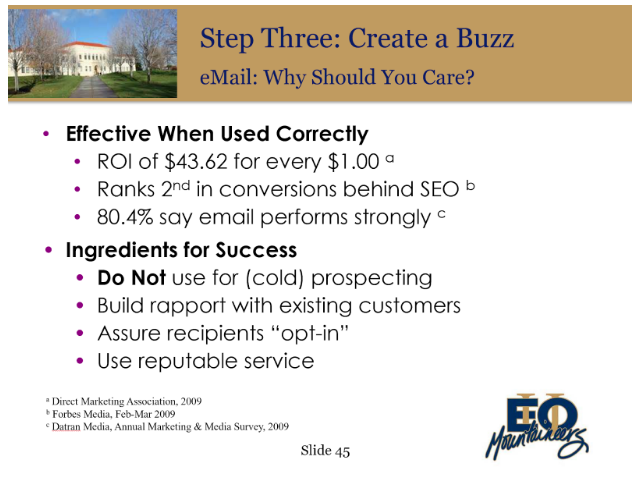
Direct mail and email as tools both have strengths and weaknesses.  Email is a very effective tool for building a rapport once you have a relationship with a customer.  Because of the volume of SPAM these days, it is a very poor tool for prospecting or finding new customers. One of the strengths of direct mail is the ability to target – the lists and demographics are very well developed.  It can reach every household and business in America. Plus, it is a welcome form for initial engagement. That argues for a strategy that starts offline and then morphs online with periodic touches offline as well.

email-marketing

Combining your offline marketing with your digital side enhances your messages and supercharges your impact. The takeaway points here are to stop thinking about direct mail and digital marketing as two completely separate funnels and start looking at them as a way to compliment each other. It can be a real shift in your approach to thinking about marketing campaigns, but as with anything, if you’re in doubt … always test it first. : )

Zairmail (www.zairmail.com) is the fastest and easiest way to send (real) postal mail. Give us a call anytime at 888.898.0066, we would be happy to help with your direct mail needs.
people

Basic Principles for Reaching the Right People

Put simply, marketing is the process of effectively communicating your product or service to a customer. This could be through branding, advertising or product position. Marketing is not just the advertising and promotions that take place. How your business is perceived all comes down to marketing and positioning your service or product as you want it to be viewed. Conducting market research also forms a part of marketing; it’s very much a collective term.

Understanding the problems of your customers

Have you heard the saying ‘sell the problem you solve, not the product’? One of the major principles of marketing is understanding the problems your target market faces and using that to create something (be that a product or service) which solves that particular problem better than a competitor.

Every business solves a problem of some sort, even if it’s not immediately obvious at the surface. However, there is a difference between knowing the problem and really understanding it. How does the problem make your customers feel? How does it impact other areas in their lives? Conducting market research is one of the best ways to gain a full and true understanding.

If you offer a quicker service for something that’s usually drawn-out and stressful, don’t focus your messaging on the ‘quick service’ part. Again, focus on the problem you solve; ‘less stress, less worry’.

Demonstrating Value

Showing the value of your business is key to acquiring new customers. This can be challenging because there are limited ways to do this successfully. Offering trial periods or free samples is one way to hook in would-be buyers, but this can be costly. If you go down this route you would need to monitor the ROI closely. If this approach doesn’t work for your business model, you could showcase customer reviews and case studies as a way to create ‘social proof’ of your value.

For example, if you have a 5-star rating on a well-known platform, you could include this in all marketing material, both online and offline.

Building Positive Relationships

When you generate a lead you are forming a relationship with a customer. When you send out promotional content you are starting that relationship. Before a buyer commits to any kind of purchase they already have some form of a positive relationship with that brand. At the point of transaction, you have built trust between you and the customer. You have created an understanding that you’re aware of and care about the problems that the individual faces.

Many brands continue to build on that relationship with follow-up content that does not directly sell. Tips, tricks, and support in the form of newsletters, direct mail, and social media content. This is possible when you know exactly who your buyers are and you really understand the other challenges they face that surround your industry.

Here’s a very specific example that covers the 3 principles discussed above:

A local acupuncture business wants to reach more pregnant women who are suffering from morning sickness or lower back pain. They understand that for women struggling with these problems it has a huge impact on their ability to continue work leading up to their maternity leave. It can leave them feeling very low and take the enjoyment out of their pregnancy due to constant suffering. To demonstrate value, the practice offers 70% off the first session and promises to help women enjoy their pregnancy to the fullest, taking away the symptoms that are causing stress and discomfort.

After a customer has completed a course of acupuncture, a monthly newsletter offers them advice on staying healthy as a new Mom and looking after their mind and body as they face new challenges.

Zairmail (www.zairmail.com) is the fastest and easiest way to send (real) postal mail. Give us a call anytime at 888.898.0066, we would be happy to help with your direct mail needs.

blue-orange

How to Create Direct Mail That Stands Out

How can you send mail that builds trust, delivers your intended message and grabs attention? Is there a formula for success when it comes to winning with direct mail marketing? We think so! Of course, there are other factors involved in a successful campaign, like mailing to the right target audience and having a product or service that is worth investing in. Assuming you’ve got those things covered, how can you create mail that stands out?

Postcards That Punch

You can be as creative as you like with a postcard design, but generally, you can pack a lot of punch into a postcard campaign. They are low-cost but can generate a high ROI due to their attention-grabbing capabilities. You can use these in between bigger sends; for example, if you post catalogs then postcards in-between catalog sends could keep customers interested.

Personalization applies to postcards as well.  This can include the text, like the name of the recipient, and in some cases the image or offer used. If you’re sending offers to previous customers this might include something different to what you would send to new potential customers. You can personalize many aspects of postcards.

Be Bold

We have already learned the formula for success is 70% list, 20% offer, and 10% creative.  So, if we have the right list and the right offer, how do we use a creative to grab attention and close the deal?

Bold colors, bold images, bold words. Think bold if you want to be heard. It’s no good sending out a piece of mail that looks like every other piece. So, forget what you already know about direct mail and re-define the space for yourself. The first rule to standing out is not to be afraid to stand out in the first place! This means no holding back during the creative process.

To use a postcard as an example, think of it as a little (or little giant) billboard in the mail.  The advantage to a postcard is that you don’t need an open to get an impression. The person receiving your postcard will see your message – we already know that.  So, make it stand out from the crowd. Use personalization, use color in unique ways, use an image that grabs attention and begs for a spot on the fridge. Now that is the gift that keeps on giving.

Snap them Back

Snap-packs stand out for a different reason to postcards. They look like official letters from places of authority. With a snap-pack, you have limited space to work with. You need to be direct and to the point.  Chatty just will not work with this format. It will look like an official document (PIN number, rebate, contest notification, …) on the outside. You will probably want to continue with that theme on the inside – official: direct and to the point.

You’re almost guaranteed opens so you’ve covered that first difficult step. Once opened, you need to generate a response through wording and content that still engages. Don’t just connect, make the recipient take action.  We need an offer so compelling people have to respond. Make the offer so good that they will have regrets for weeks if they don’t respond.

Crystal Clear

A message that is simple but absolutely crystal clear will win. Use headlines and subtitles when necessary. Bullet point to reduce wording (for example on postcards). Don’t confuse the receiver in any way, use a strong call-to-action that is EASY to action. (take action on).

Extreme Messages

So even though your message needs to be crystal clear, that doesn’t mean it can’t be EXTREME! Extreme messages get attention. However, you must deliver on that message otherwise you lose trust and value. In the online world, it’s known as ‘click bait’ and often extreme headlines or video titles do not deliver on their promises. This only annoys the receiver and as we said, breaks trust. An example of an extreme message could be the following: ‘Change Your Life Today’. If your product or service is genuinely life-changing, then this could work really well. If it would be underwhelming in reality, then you wouldn’t go for this technique.

Headings should be concrete, and benefit-oriented.

  • Be Debt Free in 30 Days
  • Cut Your Mortgage Payments in Half
  • Experience the Best Vacation of Your Life – For Free

Sometimes the use of numbers, and concrete concepts help with visualization and credibility.

If you have tried sending mail in the past that seems to follow the rules above but hasn’t resulted in any success get in touch. We have mailing lists that might suit your product/service better and can offer expert advice when it comes to design, mail type, and deliverability. Creative design is easier said than done, so let our experts guide you if this isn’t your forte.

Right now, we’re offering YOU a FREE, no obligation, direct mail assessment. Our DM experts will spend up to 2 hours consulting with you, critiquing your current DM piece (message, offer, response device), your target audience, and suggest ideas for even more powerful future campaigns. ($280 value) Contact us today on our toll-free number.

Zairmail (www.zairmail.com) is the fastest and easiest way to send (real) postal mail. Give us a call anytime at 888.898.0066, we would be happy to help with your direct mail needs.

strategy

New to Direct Mail Marketing? Here are 5 Things You Need to Know

Many businesses are reading about new digital trends and how to embrace the digital world for the first time. Many other organizations are so accustomed to the digital space that this isn’t even needed anymore. They are no longer ‘new’ to digital marketing but well established in their approach to this. So, it’s ironic really, that here we are talking about being new to something that was happening long before the digital world even existed. The thing is, direct marketing is actually a less-crowded place for marketers to be. It’s a medium that actually converts better for marketers, compared to digital methods, when done correctly.

On that note, you might be surprised to learn these five things about direct mail marketing.

Mail is More Memorable

57% of people say they are most likely to remember a message by mail. With digital ads and promotional messages, as regular smartphone users we see so much information through our screens it’s extremely difficult to remember messages from businesses. A memorable digital message has to work 10 times harder than a direct mail message. It’s tangible, it feels more real and as a result, it’s better remembered.

Mail is Authority

Many people still prefer to receive bills and statements through the post because it gives them something physical to deal with. This connection between physical mail and authority carries over into promotional mail too. However, in the case of a branded offer, it’s a different type of authority that comes across; one of trust.

Mail Hangs Around Longer

On average, advertising mail is kept for 17 days before being disposed of. When you think about this, it’s huge for a marketer! Yes, in some cases that mail might get pushed aside and not looked at, but for others, it’s something that might sit openly on the counter side, kitchen table, pin board or even on the fridge. Compare this to a digital ad and it’s something that’s seen for a few seconds. 51% of email actually gets deleted after just two seconds. Even if a digital ad is repeatedly shown to a user, it’s not always there in the same way.

Mail Drives Digital Action

It’s a common misconception that if you require a digital action (email lead, website sale, etc,.) that direct mail will not deliver the same results as a digital funnel. 92% of people will be driven online after receiving a form of direct mail.

If you’re still skeptical about the power of direct mail and you’d like to ask some specific questions, please feel free to contact one of our team. We can guide you through every step and even look after all elements of the process; providing you with a contact list and assisting with design work for promotional postcards and more.

Zairmail (www.zairmail.com) is the fastest and easiest way to send (real) postal mail. Give us a call anytime at 888.898.0066, we would be happy to help with your direct mail needs.

CTA

The Call-to-Action in Direct Mail Marketing – Are you Winning?

The call-to-action (CTA) is one of the most important elements of any promotion. It doesn’t matter if it’s an online or offline promotion, without a call-to-action your audience is left with no direction on what do to next. With offline direct mail marketing, CTA’s aren’t about just ‘clicking here’ and taking action in this way, but they are still about direct actions and direct results.

The Rules of a CTA

To start, ask yourself, what do you need customers to do first? If you’re in real estate and your end goal is to close that sale, how does that process start? Possibly it’s with a phone call. Your CTA would, therefore, need to be something like ‘Call Us Now’ followed by a phone number. In this example, the CTA could be even more enticing, so read on to find out how to take this further. Remember this key rule for a CTA: a CTA should be big, bold and explicitly clear!

Eye-catching creative isn’t enough if it fails to deliver responses via a strong call-to-action. It might stand out amongst other mail and it might well be read, but you must make it clear what the receiver should do next. They won’t take the time, or expend the energy, to discover this on their own, it needs to be explicitly clear.

So, step one is to ask what you want customers to do first. What action do you desire from them? The second part is to ask yourself, what benefit am I offering them? Finally, are you driving an incentive to make them take that action? Why should they take that action?

The incentive is called the “offer”.  The offer is the second most important piece of direct response (mail, tv, …other) campaign.  The CTA is an explicit request to take advantage of the offer.

The formula for successful direct response is 70/20/10 – 70% list, 20% offer, 10% creative.

We know that when we get the right offer, in front of the right audience, good things happen.

Creative helps us break through the clutter (get noticed or interrupt).  The offer is what compels people to respond. The offer needs to be compelling enough that no one in their right mind would ever be able to say no – though we still need to make money.  We can look at the first promotion as acquisition cost if it leads to regular ongoing orders (lifetime customer value).

The offer should be non-threatening or low perceived risk.  We also need to reduce/remove any barriers. You see how people say free, no obligation, complete money-back guarantee, free signup, not credit card required…?  These are all designed to reduce barriers for responders.

Enticing CTA’s

You could really make your CTA’s enticing, rather than the standard ‘Call us Now’ or ‘Visit our Website’. Add to this with powerful phrases such as ‘40% off when you call us today’. [This is the offer + CTA] You can add time-sensitive incentives or just give them a direct message such as ‘Call now for an exclusive quote’. If you don’t have the capacity to take calls, or this isn’t your desired action, then you might want to focus on driving website visits. This might seem like a difficult task without ‘click here’ buttons that you would find on a digital promotion. However, you can strategically position your web address with a CTA such as, ‘Visit our website for 20% off new sales!’.

Design is Key

The design of the CTA is also incredibly important and should be taken into consideration along with the overall design of the promotion (whether that’s a postcard, flyer or snap pack). Think about the different elements of the design, from the color of the CTA; does it pop against the rest of the design? The position of the CTA; could you place it higher on the design rather than at the end? Finally, think about the size of the CTA. You want it large enough to be seen, but not too dominating that the key message/benefits you’re trying to convey from the promotion get lost.

If you’re new to direct mail you could benefit from a FREE direct mail design session with one of our design team members here at Zairmail. We have everything you need to get your campaign off the ground, including targeted direct mail lists and free direct mail sample kits.

We have already helped 100’s of customers enhance their direct response programs and supercharge returns.  Can you afford not to produce the same results for your business?  Click here to schedule a free consultation and start driving greater business growth now!

<< Click Here – Grow Your Sales >>

mail

Why is Direct Mail Marketing So Powerful?

We’re in a digital age. So much so that the digital world rules our day; from the minute we are called to life by our smartphone alarms, to the minute we close our eyes and a background app is monitoring our sleep! When you really stop and think about just how integrated technology is in our daily lives… it’s terrifying! Yet it’s also completely normal and accepted.

As business owners and marketers, the digital space gives us so much opportunity that we just didn’t have 10 years ago. It gives us access to people in a completely new way and with that comes immense amounts of valuable data.

The problem is, that businesses are so focused on the next big digital move that they often neglect more traditional methods of marketing that are still, if not more, valuable today. Direct mail marketing cuts through the digital noise and stands out in a world of screens. Yes, offline mail could well direct the customer to a website or online platform, but it does so in a more authentic way.

Physical Mail Builds Trust

Once upon a time, online shopping was a risky business. People didn’t know what or who was authentic online and which businesses they could trust. Today we know that online shopping and online communications are safe and we know what to look for as consumers. The thing is, there is so much spam online and that many advertisements, emails, and websites that it’s difficult to build trust when you’re trying to reach brand new customers. Recently there have also been huge issues with social media exploiting user data, again eroding online trust. As a result, trust is actually on the decline, unless you’re a huge brand with a huge reputation. Even creating a positive brand awareness can be a challenge. This is where direct mail could really help you out.

“76% of the consumers trust direct mail when it comes to purchasing decisions,” but why is this?

Well, the answer is quite simple, people trust direct mail because they are receiving something tangible and real. It’s usually highly targeted for local businesses and it’s often much more personal. If we need to reach a dentist in New Jersey who purchased a Ford in the last six months, we can find that list. This is not so much the case with online. Even with all that data, we still can’t target users at that level of detail.

Another thing to consider is the potential for mail to hang around a while, as a reminder. Customers might keep a flyer on their counter side, on a table top or in a pile of papers to look at later. Online, when a browser, website or email is closed, so is that advertisement… until it maybe appears again, if and when it does.

It’s Lighter on the Brain

We know what you’re thinking… how can something be lighter on the brain and how can we know that? Well, a fantastic Canadian neuromarketing firm carried out a study which showed that it takes 21% less cognitive effort to process direct mail compared to digital media! They concluded that direct mail was easier to digest and easier to remember.

Online tools such as email are very good at building rapport once you have a relationship.  However, because of the spam effect, they are not very effective when prospecting for new customers. In addition, search engine marketing works well when customers are looking for a product or service.  However, when we want to reach out to them with a new offer, especially something they might not have otherwise considered (or didn’t even know they needed), direct mail is better at getting the job done.

Of course, we’re not saying that online advertising isn’t valuable. It 100% is a crucial part of any marketing strategy in 2019. We’re just asking you to consider older forms of marketing that still carry a lot of trust for the majority of consumers.

Zairmail (www.zairmail.com) is the fastest and easiest way to send (real) postal mail. Give us a call anytime at 888.898.0066, we would be happy to help with your direct mail needs.

strategic-planning

Strategic Planning – Looking for Patterns in Your Finances

When you’ve got all of your financial information in front of you, it can feel overwhelming. Especially when it comes to business finances. If you followed our last guide ‘Doing the Math’ you should now have a much clearer overview of your financial performance in the previous year and roughly why it performed this way. The next stage is to look for patterns within the numbers that can serve as clues for planning.

Start with the Customer

A good place to start is by sorting all of the orders by the customer. If you sell fast-moving items such as food or fashion, it will be better to approach this slightly differently. For fast-moving items look at the largest order values or total repeat orders for the top percentile, middle percentile, and bottom percentile. If you have customers who use your business as an ongoing service, or something that fits this category closely, sort customers from largest to smallest.
It doesn’t really matter how you do this, the end goal is the same. You want to figure out who your biggest customers are; whether that’s another company for a B2B or the biggest category of individuals customers for a B2C organization.

When you carry out this task, be mindful that things might not always be as they seem. Large customers might have been in a position to negotiate additional discounts. Small customers might actually contribute more to the bottom line. This is why it’s so important to carry out a financial assessment rather than make assumptions.

The Pareto Principle

You might find the ‘pareto principle’ to be true in your own stats. This is when roughly 80% of your sales are generated by just 20% of your customers. The higher that percentage (80%) the riskier it becomes for your business. You know the phrase ‘don’t put all your eggs in one basket’; this couldn’t be truer when it comes to customers/clients. Of course, there are some industries where this can’t be avoided due to a small number of prospective customers. However, in cases where this is not true, try and nurture smaller customers and find new ones to reduce your overall reliance on the ‘whales’.

Answer these questions:

  • Are specific customers or industries (B2B) more responsive to your business compared to others?
  • Does this offer you any clues on where to find future customers?

We can now drill down further and turn our attention to look at specific orders. So rather than focusing on the customers now, it’s time to look at the products or services that were ordered the most and the least.

Answer these questions:

  • What is the average order size?
  • Which is the most popular and least popular item/service to be ordered?
  • Is there anything you can do to increase the average order size? Can you increase your upselling efforts?
  • Why are certain products selling better than others?
  • Can you make any changes to improve the appeal of the least popular items?

If you’ve successfully carried out part one, part two and now the third part explained in this article, you should have a solid foundation for a plan to move forward. In the next installment, we will show you how to look for new opportunities for growth.

Zairmail (www.zairmail.com) is the fastest and easiest way to send (real) postal mail. Give us a call anytime at 888.898.0066, we would be happy to help with your direct mail needs.

customer

The Quick Guide to Better Customer Acquisition

Your business survives and thrives on customer acquisition and retention. You know the saying… “if you’re not growing you’re shrinking”. Even if you feel like things are ‘maintaining’ well, your business is getting smaller. Whether you see it now or whether you start to notice this in a few months, or years. Growth is crucial. Customer acquisition is also vital to demonstrate traction to future investors and partners you might want to work with.

What’s Your Customer’s Value?

When you start taking things up a notch you really need to be aware of two main figures. The cost of acquiring a new customer and their lifetime value. Without these figures, it’s very difficult to scale acquisition techniques. Step one is to work this out.

A Good Customer Experience

From the moment a customer is introduced to your business until the very moment they make their last ever purchase or exchange, they are on a journey. That journey can either be a terrible experience, or one worth coming back for and recommending to friends. The ‘experience’ starts before a customer has even become a customer. This is absolutely key! Give them a taste of the experience they can expect from you. If you’re giving away a freebie of any kind, treat them like paying customers. If you’re telling a story to encourage engagement, make your branding and values the centre of it.

It’s All About the Interactions

A lot of business strategies don’t involve direct customer strategies until later down the funnel. This makes sense from a cost point of view, but could it actually mean you’re losing out in the customer acquisition game? This really follows on from the point above about customer experience. If you give those customers a direct interaction, (over the phone for example) you’re putting them at the centre and giving them immediate attention. Commonly, after a sale has been made companies try to optimize for fewer interactions. Again, this can be a mistake because follow-up issues often get neglected.

Awareness, Consideration, Decision

Buyers move through a funnel that starts with awareness. This is the point at which they’re introduced to your brand. This doesn’t have to be a time or place in which they are immediately ready to purchase. You can build awareness by using your social media platform, running local ads or of course with direct mail. You don’t need to make awareness campaigns time sensitive. You’re trying to build that connection for the future.


Consideration is the next part in this funnel when someone looking to purchase what you sell starts to consider their options. Due to the awareness you created in the first stage of the funnel, your business is a part of this consideration and might be compared against other competitors. When someone is considering your business they will typically visit your website, or call your business to ask questions. It’s at this stage you should gather their information, so you can re-market to them and help further.

Finally, a decision will be made and a sale will close. This decision might come off the back of a final advert in your funnel, a follow-up call or completely out of the blue.

As long as you’re taking active steps to support people at every stage of the A.C.D funnel you will acquire more customers.

Zairmail (www.zairmail.com) is the fastest and easiest way to send (real) postal mail. Give us a call anytime at 888.898.0066, we would be happy to help with your direct mail needs.



About the Author

Wilson Zehr, PhD is a Direct Mail Industry Expert, Direct Marketing Specialist, and CEO of Cendix (www.cendix.com), the leading provider of Web-to-print solutions that increase sales both online and offline. He is also the founder of Zairmail (www.zairmail.com), the company responsible for many "industry firsts" in direct mail.


Click here to get a free Zairmail Sample Kit with all the information you need to get your direct mail campaigns off the ground!


Sign-up for the Zairmail Newsletter

Receive direct mail tips and insights that can help grow your business, sent right to your inbox.

Sign-up for our email newsletter, and you'll also get a free Zairmail Sample Kit.


Zairmail Direct Mail   1.888.898.0066   503.624.6099

Home     Send Direct Mail     Free Sample Kit     Login

Frequently Asked Questions     Contact Us


© 2003-2026 Cendix Solution. All rights reserved.    Terms and Conditions    Privacy Policy


Zairmail site is secured through GoDaddy SSL Zairmail site is an Authorized Partner with First Data Zairmail is an Authorized Affiliate Merchant with the U.S. Postal Service Zairmail is a Known Shipper with the U.S. Deparment of Transportation Zairmail is PayPal Verified Zairmail is a member of the Direct Marketing Association Zairmail is a member of the Printing Industries of America Association Zairmail is Microsoft Certified Partner Zairmail is a member of the Intel Channel Partner program