Direct Mail Journal

Direct Mail and Marketing Tips

Archive for category: Direct Mail Postcard

Direct Mail

Tips for Local Business Marketing

Local business marketing is slightly different and requires a different approach to other organizations selling to the masses. It often needs a more personal touch and process. We hope these tips will put on the right path to grow your own local business marketing success. 

Connect with Other Local Businesses

There is always a cross-over or connection you can make with another local business that will benefit your own business. For example, if you sell Mother and baby classes, consider connecting with baby retailers in the area, or other related businesses. It doesn’t matter what industry you’re in, there will be a way to make this work. Think outside the box if you’re a more niche business. 

The relationship could be something as simple as reciprocal links on your website or exchanging flyers, business cards to display in each other’s stores. However, it could also develop into something more substantial, a true partnership or some kind of collaboration on a product, event or package. The possibilities are truly endless and this can give you a foot up the ladder if you’re a new business too. 

Sort out Local Listings

Google Local is a really important listing to have mastered. Utilize this to your advantage; keep the listing up to date and add all of the relevant information. Upload multiple photos, make the most of this feature and showcase your best bits. You should add a contact number, email address and of course a correct address. Google reviews will also display with your listing, so if you can find a way to encourage customers to leave reviews here (or even incentivize them to do so) your listing will stand out even more. 

Google local is the main one, but of course, you need to be present on other local listings to really make the most of this. The majority of them are free so there is no harm in signing up for as many as you can. Bing, Yelp, Yellow Pages; you can find an extensive list here. 

Local Facebook/Instagram Adverts

When it comes to social media adverts and local targeting, the best platform to use is the Facebook ads manager. From here you can run social media adverts on Facebook, Instagram or both simultaneously. The local area targeting is very powerful and, of course, you can couple this with interest-based targeting as well to really drive home the group of people you want your advert to be seen by. These types of ads give you full control over budget and provide in-depth stats that can help you make a decision on further investment or tweaks that need to be made to each campaign. You can start with a low budget and build on this over time, you don’t need to spend big to get results. 

Direct Mail Campaigns

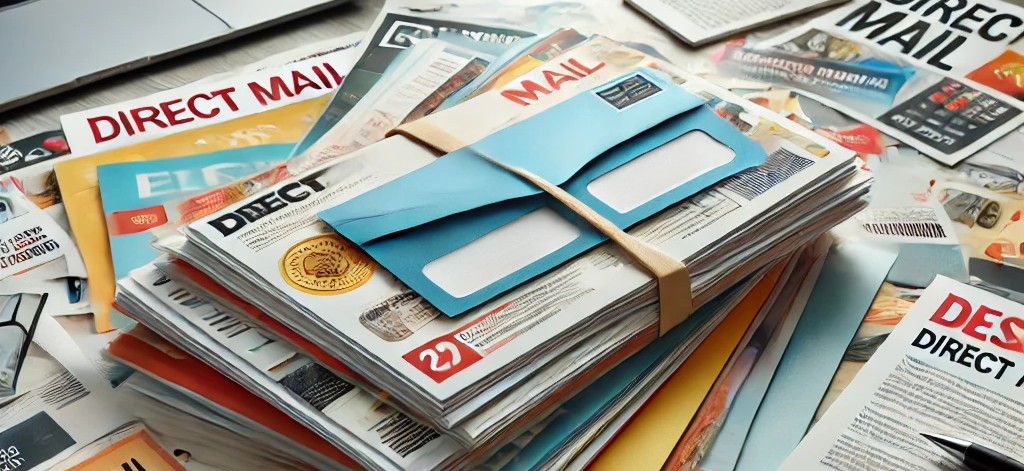
One of the most effective ways to reach a highly targeted local audience is through direct mail campaigns. Direct mail is highly trusted, more digestible than online adverts as well as inexpensive and quick to mail out your message. It is a common misconception that direct mail will take you a long time to get set-up and organized. Not to brag, but we created the concept of hybrid mail! Zairmail created the concept of short-run hybrid mail (“electronic-to-postal mail”) with the US Post Office back in 1999… we know what we’re talking about when it comes to mail. 

We have seen how the online world has changed the space for the better, giving direct mail even more power than it had before! If you need more information check out our latest article, ‘building a local brand with direct mail’ which covers all of the reasons why direct mail brings a host of benefits to any local business. 

The Enduring Power of Direct Mail

Expert Insights from Zairmail’s Wilson Zehr

Episode Details

2332 – What Swimming Teaches About Direct Mail Success

Podcast: The Thoughtful Entrepreneur

Host: Josh Elledge

Guest: Wilson Zehr, Founder & CEO of Zairmail

Published: November 28, 2025

Duration: Approximately 18 minutes

Listen to the episode here: The Thoughtful Entrepreneur Podcast Episode

In this episode of The Thoughtful Entrepreneur, host Josh Elledge welcomes Wilson Zehr, Founder and CEO of Zairmail, for a deep exploration into why direct mail is still one of the most effective marketing channels in today’s digital-first world. Wilson draws from decades of experience, plus a surprising connection to competitive swimming, to illustrate how businesses can blend digital convenience with physical mail for unmatched engagement and ROI. This episode offers a practical, insightful guide for any leader looking to leverage direct mail to scale their business.

Direct Mail as a Competitive Advantage in a Digital Era

Wilson opens the conversation by comparing the discipline of competitive swimming to the discipline required to launch successful marketing campaigns. New swimmers must warm up, refine their technique, and focus on continuous improvement, principles that apply seamlessly to businesses exploring direct mail for the first time. He emphasizes the importance of starting with small, targeted campaigns and refining strategy over time.

The discussion then highlights how Zairmail’s platform blends the ease of digital workflows with the impact of physical mail. Businesses can upload documents, preview their mail in real time, and send campaigns with a single click. With next-day processing and a nationwide production network, Zairmail ensures speed, scalability, and reliability across every campaign.

Wilson also breaks down why direct mail continues to outperform expectations in 2024. From owning the “mail moment” to delivering strong ROI and enabling precise demographic targeting, physical mail creates a level of attention and trust that digital ads struggle to achieve. Whether using postcards, letters, snap packs, or self-mailers, choosing the right format can dramatically improve response rates and engagement.

Listen to the episode here: The Thoughtful Entrepreneur Podcast Episode

Free Direct Mail Sample Kit

See direct mail before you send it

Get samples of direct mail postcards and letters, plus service details to help you launch your first campaign. Your kit ships free by USPS.

Request Your Free Sample Kit →

About Wilson Zehr

Wilson Zehr is the Founder and CEO of Zairmail and a seasoned marketing expert with 26+ years of experience helping organizations execute high-impact direct mail campaigns. Wilson’s background in both technology and traditional media uniquely positions him to bridge the gap between digital tools and physical marketing performance.

Connect with Wilson on LinkedIn.

About Zairmail

Zairmail is a leading direct mail platform that makes sending physical mail as simple as sending an email. With next-day processing, nationwide facilities, real-time previews, and data-driven targeting tools, Zairmail empowers businesses of all sizes to launch fast, reliable, and high-ROI direct mail campaigns.

Links Mentioned in This Episode

  • Zairmail Website
  • Wilson Zehr LinkedIn Profile

Key Episode Highlights

  • How swimming principles translate into better marketing execution
  • Why direct mail continues to deliver high ROI in 2024
  • The four main direct mail formats and when to use each
  • How Zairmail blends digital workflows with physical mail for unmatched efficiency
  • Expert tips on targeting, creative, testing, and integrating digital channels

Conclusion

Wilson Zehr reinforces that direct mail isn’t outdated; it’s a powerful, underutilized differentiator. By integrating digital simplicity with physical presence, businesses can capture attention, build trust, and drive response rates that rival or exceed digital channels. Whether you start small or scale quickly, Zairmail provides the tools and expertise to help you succeed.

👉 Book on Calendly

More from The Thoughtful Entrepreneur

Want to be featured on The Thoughtful Entrepreneur? Get your voice in front of 50K+ listeners.

Schedule your guest spot here »

Consultant doing 6+ figures? Let’s introduce you to your next big client, partner, or referral source.

See how here »

Thinking of launching your own podcast? We’ve built over 250 shows for leaders who now land dream guests and clients weekly.

See the system here »

What’s Your PodVerified Score? Find out how you rank as a podcast guest and get matched with hosts who actually want you.

  • 2 free podcast matches
  • Dashboard with warm-up plans
  • Media badges to showcase your guest authority
  • Priority access to Founders Club (limited to 100)

View the platform »

Subscribe to The Thoughtful Entrepreneur

New episodes daily to fuel your impact, visibility, and influence. Thanks for listening; now go build something extraordinary!

Click to View Full Episode Transcript

Podcast: The Thoughtful Entrepreneur
Episode: What Swimming Teaches About Direct Mail Success
Host: Josh Elledge
Guest: Wilson Zehr (Seasoned Entrepreneur, Academic & Founder of Zairmail)


[00:00:04] Well, hey thoughtful leader, welcome to The Thoughtful Entrepreneur- on this show I interview purpose-driven founders, experts, and change makers who are making a real impact in the world. Want to be a guest? Simple. Go to upmyinfluence.com and click podcast. I’d love to to our audience of over 100, and across over 2,300 daily episodes. and counting. Want to get booked I’m other great shows like this. Simple go to pod verified.com and get your free guest authority score. Thousands of hosts are looking for a high quality guests and pod. Pod verified connects you the right way now. Let’s dive into today’s episode.

[00:00:58] With us right now, it’s Wilson Zehr. Wilson, you are the founder and CEO of ZairMail. You’re found on the web at zairmail.com. We’ve got that all linked up in the show notes. Wilson, it’s great to have you. Thank you, Josh. Great to be here. Thanks for the opportunity. Absolutely. Before we kind of get into what their mail is and what you do, I understand that you have a background in competitive swimming. You’ve spent some time doing laps. I have. I’ve done it way too many laps. I’m actually just recovering from a biking injury and getting back into it again. So I’ve been putting in some more mileage now and it feels good to get back into the swing of things.

[00:01:38] Since I have you here, I may as well ask. So when I have swam regularly, swam regularly, I get a lot of my shoulders end up getting like woof. And then I get like shoulder pain and you know, kind of like for overuse injury. So is if there’s a new swimmer, is it really important to kind of ease into it? Is stretching really important? Any tips you could give me or any beginning swimmer that wants to make swimming a bigger part of their physical life? Of course, yeah. I’m not sure I qualified to really coach that way. But certainly with any kind of exercise like swimming, It works to, you know, to start out with some stretches and, you know, warm up, a mild warm up or and work up to a higher intensity kind of workout. And I find that, you know, as I get older, I need a longer warm up too, you know, much longer. But that’s really important to use.

[00:02:42] into it. The other thing is with swimming over the years, the strokes have changed too. So if you have having shoulder pain, you may want to look at the rotation, the way you’re pulling into the strokes. I’m certain there’s a YouTube video for everything. I bet. I bet. I think it’s perhaps maybe a little deceptive because it’s low impact. You’re like, let’s go to town. Again, I’m speaking as someone who is crested into their 50s. There’s just the reality of that. But in terms of like experience with swimming, you did compete at one point? Oh, I did. Yeah. And I’m recovering a better swimmer. I swam for a lot of years. I swam as, as an adult, I swam at…

[00:03:33] You know, I’ve been at Long Course Nationals, Nike World Masters. I still am a swim, you know, one to two miles, three to four times a week. For me, the fitness piece is really good. Cardiovascular fitness, muscular fitness. But it’s also, you know, there’s a little bit of are in the zone, you’re swimming, you can think, sort through problems at work, kind of disconnect from things that are, from troubling you a little bit. It turns out to be very therapeutic for me as well. Likely not looking at Yeah, no, it’s funny because I had one at the edge of the pool the other day and the lady said, well, you, you’re very trusting. I said, well, I’ve had to replace more than one. Your business is airmail.com. You have been at the helm. You founded this company over 26 years ago.

[00:04:33] So congratulations, congratulations on your longevity right before the new millenia. So, tell us what ZairMail is. ZairMail is, you know, our focus is on convergence and in particular convergence in this case is you know, blending between the internet, the the interactivity, robustness, connectivity of the internet with the traditional postal system. And we’ve done that with direct mail. So if somebody wants to send a direct mail campaign, they upload a document, upload a list, see it preview in real time, push the button, earn the mail tomorrow, the next day at a fraction of the cost. So we’ve really made direct mail, lawmaker, you know, as fast and easy as email. And we can do that, you know, we are a software company, so we do fulfillment through a nationwide network of production facilities.

[00:05:37] It gives us all kinds of additional capabilities. We have almost unlimited capacity. We can get things in the mail tomorrow. We can do fault tolerance. We can route things electronically as far as they need to go before we turn them analog analog or how is physical male and and and other I imagine you have some great info and data about this. How is it performing today? In my experience, there’s just been so much noise with things that AI wants to spit out, slamming DMs, slamming email marketing, ads everywhere. To me, it all becomes And so, you know, I hear the argument frequent of those who deliver physical material that is just not as competitive these days.

[00:06:37] Right. I mean, I hear that argument too, and it’s one that, as you can imagine, we would embrace. When you deliver a letter to somebody’s mailbox in that moment, in that space, you don’t have any competitors. You own that moment with the customer, and that’s really hard to find in the digital environment. environment in the way. But beyond that, I mean, I mean, I think if that was the only advantage, then that might pan out as well. You know, the direct marketing association says that on average direct mail returns $12 for every dollar invested. Those are great returns and part of the reason for that is that mail does some things that no other medium can do and I’m not saying that we shouldn’t use digital media because we use it too. I mean we use AdWords, we use email, we use all the tools to market our business too, but it is.

[00:07:34] we should look at all of these things like tools or the portfolio tools and it’s, we need to use the right tool to address where the customer is, a customer journey and how we get them to where they need to go. But in terms of direct mail or in terms of mail, you know the thing that the things that The thing that advantages to mail as a tool is first of all reaches every household or business in America six days a week and it does that by mandate. It’s required by federal law. Secondly it’s proactive communication with a lot of digital stuff. I’m putting content on the web me. But with direct mail, I can reach out to find someone and I can deliver their message right now.

[00:08:27] And so i you know it’s some of the sense i’m i’m in control of the timing thirdly it’s precise our audience targeting you know people have been doing mail for a lot of years so the demographics are very well developed target jewett denison new jersey who bought a new car in the last six months i can grab that list and in fact i can grab all kinds of lists doing mortgage marketing, I can pull FICO scores and credit ratings and underwriting criteria, so that I’m talking to, that could do the job. I can pull, I can look at new movers, new homeowners, I can look at families with children or incomes in a certain range within a certain geographic area. It’s very difficult to do that online.

[00:09:11] And finally, it’s just built into American psyche. I mean, people are used to coming home looking at a mailbox and seeing what’s there. The U.S. Postal Service would call it the mail moment, you know, where you go to the mailbox and there’s music from the heavens and lights shine. And I think they may be romanticized a little bit. The fact remains that people, that’s part of their daily routine. They check the mailbox because you don’t have the negative reaction for some other kinds of advertising mediums. Imagine the last time you got a cold call on the phone at home. go. The complete industry vaporizing, you know, that people, as you mentioned before, people are bombarded by advertising, we need to find a way to, to connect with them and inform them without

[00:10:06] Causing them to recoil and mail does that. Yeah, and so I think obviously we’re looking at postcards. What other pieces are quite popular that you handle? Well, I would say that the top four are. our postcard for us is postcards, self mailers, something called a snap pack, and then a letter itself, a traditional letter. Once again, they’re tools and they have different purposes. The two most popular products of those are a letter and a postcard, and we do a ton of letters, first-class letters, so millions every month and we do a bunch of postcards as well. The thing about postcards is that there is a discount for postcards so it’s usually the least expensive solution. It’s like a little billboard in the mail, so it shows up. I get an impression.

[00:11:08] almost always I’m going to get some kind of impression with it. And how I break through the clutter has to do with the verbiage and the image that’s attached. attached with it. The downside to a postcard is that, of course, it’s the space is limited, you know, so the message has to be very. Simple and crisp. The other is that there’s no personal information. It’s not hidden. Everything’s exposed to the world. So if you want to talk about things like mortgage balances and payments and credit scores and stuff, that’s not the place to do it. If you have some more complex offer, a lot of times we’ll move to something like letter mail. With letter mail, I have more space. Most of the letters we send these days are one page. There was a day when people are sending publishers Clearinghouse.

[00:12:03] The big package but today you know we live in a short form video world so people aren’t spending as much time with things as they so one page is just about right it gives us a lot more time to belt that develop the offer the contents of courses is going to be personal and confidential so if we. We wanted to talk about your payments, what the APR would look like. That’s a better environment to do that. But the trick with the letter is, of course, I have to get an open before somebody can get my contact. with some kind of, you know, some kind of a teaser on the outside, we can do that with the return address.

[00:12:46] But that’s where a SNAP PAC comes in. A SNAP PAC, a lot of people aren’t familiar with this format. Well, probably most people are familiar with it. They just don’t know it by name.- So the technical name is a pressure sealed mailer. And you’ve seen these if you’ve got a pin-number from the bank that came or checking them out where you tear off the edges and you open them up. So we do a bunch of those too. So we call it a snapback. And when it’s not packed, we almost always get an open because people associate it with like a pin number, a check or something of that nature. And we’ve got more space to work with. And so we do a bunch of stuff like that. Self mailers are not as common, but they have elements of both a postcard because they’ve got external.

[00:13:30] external surfaces that are exposed to the world, but they also allow us to add more content. Typically, those pieces are on a continuum. Customers will select something in between, a long, somewhere in Sorry, is that too much? I love it. I love it. The website is airmail.com. You’ve got some resources. Do you mind going through to our friend that’s been listening to our conversation where they go from here? Also too, like I would imagine some people are curious, about what the costs are. Well, you’ve got a direct mail price. so you can figure out pretty close exactly what your campaign’s gonna cost, is that right?

[00:14:17] Yeah, no, that’s true. I mean, if you go to the site, the top right hand corner is all the quick navigation stuff. You come here, you’ve been here, you want to see a link. Second column over. It’s the second caller of Oliver first item mailing formats and pricing. Once you click in there, you’ll see all the different formats and the pricing associated with it. There is a direct mail calculator as you mentioned. We do. There’s templates, libraries, there’s articles with information. We also have a blog called the Direct Mail Journal. www.directmailjournal.com that has tons of articles and tips and information on how to be successful relent only just with the mail by marketing your small to medium business.

[00:15:18] If you go to the top of the site on the right hand side in green, you’ll see send a single letter for free now. So that’s for a product we call Speedy. It’s a brand new product for us. and you can download a copy for free at www.zairmail.com. No credit card required and basically it’s a desktop icon and you can drop a PDF or a word file on it or you can just push a button, it’ll send it out as a letter. First two letters are free. Not a lot of people give it away free postage, so that’s a great opportunity. everyone to download it, give it a try. You’ll see that our toll free number is right on our website. Unlike a lot of sites, we want you to call. We’d love to talk to you.

[00:16:10] So give it a try and give us a call. Let us know how it went. What do you like? What would you change? We need the input. Wilson Zehr, your website, zairmail.com. Wilson’s been a great conversation. Again, you’ve got a lot of those great free… resources that you’d mentioned directly on your website. Thank you so much for joining us, Wilson. Thank you. Thank you, Josh. Really appreciate it. If you’ve enjoyed this conversation, I’d love to invite you to share your message with the world at podverified are connecting, the right way. Pod verified helps match you with the right stages for your level of authority. No more wasting time on…

[00:17:00] brand new shows that just are to your guest authority score is free and so are your first two podcast matches. me there. I’d love to learn more about your business, support your mission, and help promote you far and wide. Just head to www.podverif… And, of course, if you’d like to be a guest right here on The Thoughtful Entrepreneur, just go to upmyinfluence.com and click on podcast. Thanks for being a part of this movement. We rise by lifting others.

direct mail call to action

20 Direct Mail CTAs to Encourage Customers to Take Action

A strong direct mail call to action (CTA) tells recipients exactly what to do next. Whether your goal is to generate phone calls, drive website traffic, book appointments, increase store visits, or encourage purchases, the right CTA can turn a printed mailer into a powerful marketing tool.

The best direct mail CTAs are clear, specific, and action-oriented. However instead of simply providing information, give your audience a reason to respond and make the next step easy.

Here are 20 effective direct mail CTA examples you can use in your next campaign.

1. Call Us Today

Encourage prospects to speak directly with your team and get immediate assistance.

2. Schedule Your Appointment

A straightforward CTA for healthcare providers, professional services, contractors, and other appointment-based businesses.

3. Request a Free Quote

Give potential customers an easy way to learn about your pricing and services.

4. Claim Your Offer

Create urgency by encouraging recipients to take advantage of a special promotion.

5. Visit Us Today

A simple and effective CTA for restaurants, retail stores, local businesses, and service providers.

6. Scan to Learn More

Use a QR code to connect your direct mail piece to a landing page, website, or additional information.

7. Scan to Get Your Discount

Give recipients a specific reason to scan your QR code and engage with your business.

8. Book Your Appointment Today

Make your desired action clear and encourage customers to schedule without delay.

9. Visit Our Website

Direct recipients online to explore your products, services, offers, or additional information.

10. Get Started Today

A versatile CTA that works well for many industries and marketing campaigns.

11. Reply Today

Encourage recipients to respond directly and start a conversation with your business.

12. Contact Our Team

A professional CTA for businesses where customers may need personalized assistance.

13. Bring This Card In

Encourage foot traffic by offering a discount, promotion, or special benefit when customers bring the mailer to your location.

14. Use Code: MAIL20

Promotional codes make it easy to track direct mail campaigns while giving customers an incentive to purchase.

15. Start Your Free Trial

An effective CTA for software, subscriptions, memberships, and other trial-based services.

16. Request Your Free Sample

Give potential customers a low-risk way to experience your product.

17. Call Before the Deadline

A legitimate deadline can create urgency and encourage recipients to respond promptly.

18. See What You’re Missing

Use curiosity to re-engage previous customers or introduce prospects to a product or service.

19. Let’s Talk

A friendly, conversational CTA that works particularly well for B2B direct mail campaigns.

20. Send Your Letter Today

For campaigns promoting physical mail, encourage recipients to take the next step and send their own letter.

Make Your Direct Mail Campaign Actionable With Zairmail

A compelling CTA is only part of an effective direct mail marketing campaign. However once your message is ready, you also need a simple way to print and mail it.

With Speedy by Zairmail, you can drag and drop your document, enter your mailing information, and submit your letter for printing and mailing. This makes it easier to turn your digital documents into professionally mailed communications.

Learn more about Speedy by Zairmail and simplify your direct mail process: Zairmail Speedy.

A clear call to action tells customers what to do next. A simple mailing solution helps you get your message into their hands.

Zairmail is a cloud-based platform that enables organizations to automate business-critical physical mail at scale. Combining powerful integrations, workflow automation, and a nationwide production network, Zairmail helps organizations execute high-volume mail operations with greater speed, reliability, visibility, and operational efficiency. Visit www.zairmail.com to learn more.

Improve B2B Sales Prospecting

How Direct Mail Can Improve B2B Sales Prospecting and Follow-Up

Episode Details

Podcast: CEO Sales Strategies
Episode: #220 – How Direct Mail Marketing Improves B2B Sales Prospecting and Follow-Up
Published: January 13, 2026
Guest: Wilson Zehr
Guest’s business: Zairmail
Guest’s title: CEO and Founder of Zairmail
Host: Doug C. Brown
Duration: Approximately 43 minutes (43:00)

Apple Podcasts: https://podcasts.apple.com/us/podcast/how-direct-mail-marketing-improves-b2b-sales-prospecting/id1560405867?i=1000744958028

B2B sales teams have more ways to reach prospects than ever, but getting someone’s attention is still one of the biggest challenges. Emails can get buried, calls can go unanswered, and digital messages can easily become part of the daily noise.

Direct mail gives sales teams another way to stand out.

In a recent episode of the CEO Sales Strategies Podcast, Wilson Zehr, CEO of Zairmail, discussed how physical mail can support B2B prospecting and follow-up, especially for high-value sales and longer sales cycles.

Reach Prospects in a Different Way

A physical letter creates a different experience from an email. It gives prospects something tangible to open, read, and remember. For salespeople trying to start a relationship with a new account, that extra touch can help make an introduction feel more personal.

Direct mail can also be highly targeted. Instead of sending the same message to a large audience, businesses can identify specific companies, industries, job roles, or prospects that fit their ideal customer profile.

Make Follow-Up More Memorable

Direct mail isn’t only useful for cold prospecting. It can become part of a sales follow-up strategy.

For example, a salesperson could send a personalized letter before a sales call, follow up with a prospect after a meeting, or reach out again when a conversation has gone quiet. These physical touches can complement email and phone outreach rather than replacing them.

Combine Personalization With Technology

One of the challenges with direct mail has always been the time involved in preparing and sending individual pieces. Tools such as Zairmail’s Speedy are designed to make one-to-one mail easier by allowing salespeople to send letters from their desktop without handling the traditional printing and mailing process themselves.

The opportunity is simple: use direct mail alongside your existing sales process to create another meaningful touchpoint, reach important prospects, and make follow-up more personal.

In a crowded B2B market, sometimes getting noticed starts with sending something people can actually hold.

Apple Podcasts: https://podcasts.apple.com/us/podcast/how-direct-mail-marketing-improves-b2b-sales-prospecting/id1560405867?i=1000744958028

Zairmail is a cloud-based platform that enables organizations to automate business-critical physical mail at scale. Combining powerful integrations, workflow automation, and a nationwide production network, Zairmail helps organizations execute high-volume mail operations with greater speed, reliability, visibility, and operational efficiency. Visit www.zairmail.com to learn more.

Free Direct Mail Sample Kit

See direct mail before you send it

Get samples of direct mail postcards and letters, plus service details to help you launch your first campaign. Your kit ships free by USPS.

Request Your Free Sample Kit →
Click to View Full Episode Transcript

Podcast: CEO Sales Strategies
Episode: How Direct Mail Marketing Improves B2B Sales Prospecting and Follow-Up
Host: Doug C. Brown
Guest: Wilson Zehr (Seasoned Entrepreneur, Academic & Founder of Zairmail)


[00:00:00] Okay, when I sell my business, I want to help my kids and I want to give back to the community. Ooh, then it’s the vacation of a lifetime. I wonder if my out of office has a forever setter. An IG Private Wealth Advisor creates the clarity you need with plans that harmonize your business, your family, and your dreams. Get financial advice that puts you at the center. Find your advisor at igprivatewealth.com. With Amazon, you can deliver joy to everyone on your list. Like your Uncle Ricky, who made your wedding photos unforgettable because his fly was open. Get him some new underpants he’ll love. And save big with Amazon Black Friday week starting November 19th.

[00:00:50] This is Doug C. Brown with the CEO Sales Strategies Podcast. I have Mr. Wilson Zehr coming on the call with us. He has a company called ZairMail and Sendix and they are a company that specializes in direct mail and marketing. I wanted to bring him on. because I wanted to get direct mail because most people aren’t using it and when you use it strategically you can really kick up some numbers in a positive way utilizing direct mail. In other words, you can cut through the clutter a lot faster using direct mail if you know how to use it. So we’re going to go talk to him again. Those of you who want to raise your EBIT up, increase your cash flow.

[00:01:35] You, you want to get your valuation on your company up, you know, get systems processes in there, lower down levels. Reach out to me directly at Doug at CEO sales strategies.com. All right. So let’s go talk to Will right now. Welcome to Hey, Doug. Great to see you. Glad to be here. Thank you. Thank you for the opportunity. It’s awesome to talk with you. Now, you’re from Oregon, right? Or if you’re not from Oregon, you’ve say, what do you say, Oregon or Oregon? No, it’s Oregon. Oregon. All right. Yeah, we’re just south of Portland, Oregon. And. And the company is, is it Sendix? Sendix, right? I think that our software company is called Sendex website. as the, same name, bot.com. But the brand that people would know us best by is called Zermil.

[00:02:37] It’s like airmail with the Z on the front. So z-a-i-r-m-a-i-l dot com. And ZairMail as a a brand has been around since 1999 a nd one form or another. You’ve had some kind of get people a bit of your background. So when we get into the conversation, I’ll understand the context like you. You’ve been around for a while and built some companies, right? I have. Yeah, I’ve done a lot of different things. I mean, I have. I’m not to go too far back, but I have an undergraduate of finance with a minor in computer science. I started out my career as a software Um, the compilers basically have, uh, a programming language called ADA that was mandated by the department of defense for all Mr. Critical Nevada systems. So a lot of large scale military projects are soccer was used for. Um, after a while I just, I felt like I wanted more control over my destiny, so I went back and I got an MBA. Okay.

[00:03:37] When I sell my business, I want to ask an investment advice. I want to help my kids and I want to give back to the community. Ooh, then it’s the vacation of a lifetime. I wonder if my head of office has a forever setter, An IG Private Wealth Advisor creates the clarity you need with plans that harmonize your business, your family, and your drive. Get financial advice that puts you at the center. Find your advisor at igprivatewealth.com. and and umm did some other graduate studies. But returned as a product line manager for a software manager. I managed a couple of different product lines and was responsible for our relationships with all of our platform vendors. So Sun, HP, DEC, IBM, people like that. I went from there to a company called Sequin Computer Systems where I managed our global, global relationship with Oracle Corporation, which is a $300 million business for Sequin, give or take.

[00:04:36] And then started working on startups. I mean, that was about the time when the internet or the World Wide Web just took off. This around 1999 or so or somewhere in that area or is it earlier? Yeah. Probably about 95, I think. 95, yeah. OK. And how do we get the Zermil? Yeah, that’s a good question. Yeah, the first one we worked on was called Efusion. It was jointly funded by Intel, Microsoft,, france.com, telecom, italia. We worked on voice over. some of that technology still exists in applications like Skype and things like that. We were basically working on convergence between the internet. and the public telephone network. And that’s been kind of a theme of the applications I’ve worked on throughout my a career. Most of it, it’s almost all software. It

[00:05:39] and most is focused on convergence. So looking at legacy applications or legacy tools and figuring out ways to make them more work more efficiently with the World Wide Web, the internet. you know, electronic communication, things like that. So, XRML was the idea, the idea there is that, you know, the US Postal Service still moves a lot-of communication. There’s something like 40% of the world’s mail. It’s a huge operation, but it was not connected to the online environment at all. So, we started out to make sending a letter. fast and he’s is sending an email. And you might say, well, that’s backwards. You know, email is supposed to be the next generation. It’s just that there’s things that that mail does that email does not do. And, you know, there’s still a lot of applications for it. So we spent a lot of years working on that. We did the applications called hybrid mail, we did the first

[00:06:33] version of that in 1999, working in partnership with the US Postal Service. The software company does web to print applications. So we automate the production and ordering of print products of all different kinds. and XAML is just a special focused application of that software. Let’s talk about direct mail. Let’s talk about using mail because I think this is such an underutilized asset that people could And they don’t and by the way folks if you want a voice over internet protocol basically is probably one of the more famous companies you’re familiar with would be Vonage that really kind of push that type of thing out but if you look at like Ring Central or you know Zoom you know phone systems or free

[00:07:22] I mean, they’re all using that type of technology, correct, Wilson? Yeah, so that’s absolutely you know so you take the voice the analog voice you digitize it you packetize it and then you send it in packets where you reverse the process on the other end so even as we’re talking now it’s all packet based there’s no yes. probably no copper involved at all. No, if there is, my goodness, we can dig it up and sell it. Let’s talk about. When we first moved into our first office space at Zermatt, we needed internet access because we had our servers on site. our web servers. And so we had a T1, a channelized T1. 24 channels. Exactly.

[00:08:27] super expensive. But if you turn that into data, that’s a really big pipe, you know, you can push a the data through that. Yeah, yeah, yeah. Was it 1.54 meg or something like that back then, right? So I was in the telecom industry, and we used to do integrated T1. So I It’s interesting because the reason, I asked you in 1999, because back in 1999, I remember talking to a bunch of people and I said, this internet thing is going to change sales forever. like and they all said you’re crazy man they would how’s that gonna’. I’m like think about it information gets to you as the buyer before you as the sales channel who they’re relying upon to be an expert today it’s it’s like shifts the balance of information power.

[00:09:19] And so, you know, they all told me it was nuts, but today here we are. You know, to validate your point, when I was at Sequin Computers, I mean, our major competitors were like IBM and DEC and people like that. And we were all electronic. We all used email back at that point in time, which was a new idea. You know,- sales guys would go on a sales call and they’d send back an email say, how do I compete against IBM? How do I do this? How do I do that? You know, and the flow of information was so much faster. It was a huge competitive advantage. Yeah, and that’s where I see direct mail being a competitive advantage, especially for prospecting and follow-up components, which I don’t see people using very effectively when

[00:10:08] example, like when we used to do, so Chet Holmes wrote a book called called The Ultimate Sales Machine, and then I was the president of And we used to do something called the dream 100, which was take your top 100 clients that you’re looking for and use direct mail, lumpy mail campaigns to go out and get their attention. And if you did this right, you’d end up with somewhere between 10 and 20% of the clients before the list of a hundred, right? And so, you know, why? Let’s take today how much direct mail do you actually get? You don’t get a lot. I mean, you know, I stopped by my mailbox and it’s like, oh, there’s like three pieces of mail in the mailbox. You know, usually it’s like a utility company that didn’t get my, you know, my mailing

[00:11:05] from something and something else, right? But all of a sudden it comes in this thing and you look at it and you read it. So why is direct mail, like it’s a hundred percent connection rate for the most part. Somebody picks it up and at least they have a connection, right? an email, you may not even read it or that type of thing. Why is direct mail, in your opinion or in your expertise, I should say, why is direct mail a needed resource for people to utilize? And that’s an interesting question. We could go a couple different directions with that. So I mean with enterprise sales. People used it as a tool like you’re talking about, forever, because if I, you, you know, if I send a letter to somebody, and then I follow up on my letter, also it’s not a cold call. Right. Right. It’s all of a sudden, I’m just following up. Did you get my letter? Can I provide some more information? Just wanted to answer any questions you might have, you know, and people have been doing that forever, and it’s very…

[00:12:10] if they do it because it’s effective, and it’s still effective. Right. And that’s slightly different than the stuff you’ll see in the mailbox that’s. That’s still targeted direct mail, but it’s it’s direct response, right? They’re looking for somebody to pick up the phone call them and buy something right and enterprise sales as you know, you know a lot of the sales cycle, ever sales cycle, something like 12 to 18 months, there’s tons of touches, you know, So it That aside, we can come back and talk about all that, but why do people use it still? If you’re talking about direct response, what I would say is,

[00:12:55] As a market person, the piece we didn’t touch on background wise is I also teach at the university, you know, in the university environment when I’m in between startups. So I usually teach marketing, entrepreneurship, finance and business strategy. And so when when marketing we talk about you know we looking at. tools, you know, and the tools that will help the customer along the journey, we want to be able to, you know, to get their attention and inform them and move that process. And in order to do that, we may need a lot of different tools. It’s not just do I do digital, do I do is direct, do I do something else, you know, mail.

[00:13:37] because direct can be lots of things, you know, you can do direct TV, direct, you know, all different, kinds of different mediums, you can use that for. So when we think about it as a tool, there’s some things that it does that no other tool really does, at least not very well. First of all, you can reach every household and business in America. You alluded to that. Something if you’re going to use something electronic like email, first of all, you wouldn’t be able to get probably a reliable list of our household business. in America, but something like 30% of even legitimate emails never delivered because of spam filters and stuff. Okay, when I sell my business, I want the best tax and investment advice. I want to help my kids and I want to give, give back to the community. Ooh, then it’s the vacation of a lifetime.

[00:14:26] I wonder if my out of office has a forever setter. An IG Private Wealth Advisor creates the clarity you need with plans that harmonize your business. your family, and-your dreams. Get financial advice that puts you at the center. Find your advisor at idprivatewealth.com. And then you know when I I don’t know about you but I probably get four or five hundred emails. and then when I’m looking at email I’m not looking for stuff to read I’m looking for stuff to delete because I have to get to the bottom of my email bar. so it’s a different dynamic but if i reach out with mail i can reach every household in business america six days a week it’s proactive communication if i’m using ad words or something like that i have to wait for people to come find me i was talking to the the the gentleman who came yesterday to install christmas lights and he wanted to talk about his own advertising he said

[00:15:27] Facebook ads, great tool. It’s untargeted, but it’s also passive. You have to wait for people to come to you. And when they’re in that environment, by the way, it’s not just you talking to that customer. There’s it’s noisy. There’s other people trying to talk to that customer too. With mail, I could own that conversation. It’s me to the customer. Precise audience targeting. If I I decide I want to reach Jewish medicine, New, New Jersey, who bought a car in the last six months, I can probably find that list. Finding that online is almost impossible. And then the other piece you mentioned is that it’s built in the American psyche, you know, people are used to checking your mail every day. You know, if you talk for the postal service, they talk about the mail moment, you know, people come home, you know, the light shines from the heaven and there’s music and they pick out their mail and, you know, they, they.

[00:16:19] take some action on it and of course it’s over romanticizing a bit but people are used to a check in your mail and taking action or not based on that, which is a lot different reaction than they get when they get a telesales call during dinner. yeah without question, it’s you know i think there’s one other aspect to it too when you get a really good piece of mail in the mail it feels like a present it, it feels like a gift and i don’t get even a phone call. There’s something because it really engages most of our senses. We’ve got our tactile sense. We’ve got the auditory sense of opening the thing up if it’s sealed. We’ve got the visual sense of how it looks.

[00:17:14] Um, you know, you even have the sense of smell ofa how maybe, you know, I mean, I remember I got a card in the mail one time and it smelled a little like Christmasy peppermint type smell. Right. And I was like, Oh, this is pretty cool. And I. And it was obviously, I mean, I wish it was your Christmas guy light thing because I would have been like, geez, come on over. Right. Um, Because And the freezing cold here and hang Christmas lights, right? I mean, very few people I know. Plus, you know, at my age, I don’t want to be climbing the ladders like I used to. My iPhone, I make on the roof. If I fall off there, it’s over. So I, you know, there’s this.

[00:17:54] there’s a lot of I’m a big proponent on it because people don’t use it very often either so there’s less competition in that space and you can be very creative on using direct mail as well and people generally. at least they connect, and they usually read something in it. And so, to me, there’s a better way of getting your message out, and it’s a follow-up tool. Sure, yeah, there’s you know, it’s interesting, you know, there’s different ways to use it too. And so, you know, with an advertising, we think about a continuum and one end there’s brand advertising, and there’s Nike, just do it. No earl, no phone number, anything. On the other end it’s just an 800 number call now. So response response advertising. When you look at the mailbox, you’re going to get some variation of those themes.

[00:19:00] useocally how you’ve targeted it may or may not be less actionable or less important right now. When we look at this model of direct mail or the model, oh, by the way, I was going to say earlier that Direct Mail, Direct Marketing Association says that on average, direct mail returns about $12.12 for every. Every dollar invested. And, so, you know, so that’s a very good return rate, but in order to do that, it really needs to be on the targeted direct response. theme of that spectrum. We the model that we use one where we say you know the success rate is 70 percent list, 20 percent offer, 10 percent creative, meaning

[00:19:49] The most important thing is to make sure I’m talking to the right person. And if I’m talking to the right person and I have the right offer, something compelling, our response rates really look, usually look very good. Things happen. Whatever’s less is creative. It’s interesting because what a lot of agencies what they pitch most is the creative you know right which is it’s important i mean i’m not gonna say it’s not i mean to break through but if i can talk to the right person that is more than half the battle right there and it’s so when you talk about your looking at your mailbox at home a lot of it you know you you can get a valve pack,

[00:20:27] or something, you know, that’s just, you know, blow-ins that are, you know, that are not targeted. may or may not respond well. But if I have something to you, Mr. Brown, and I know that you have the children in school, and I’ve got this discount education loan, and we can help you manage that process, you might be interested in that. And homework and if we’ve got a compelling offer. Yeah, and you know, B to C. type, you know, let’s say you just got a mortgage, right? And then, you know, it’s public record and you can send a direct mail piece saying, Hey, you got mortgage, you want to protect your mori? Let’s say we sell in life insurance and something like that, like, you know, mortgage protection insurance.

[00:21:15] Also in the B2B world though it works for clients. and what I like about direct mail is there’s not a lot of people who have getting mail today like they used to years ago like when I was growing up it was like it was mail or phone call you didn’t have internet you didn’t have you know you might have a print advertising or whatever that you might read something but, are the yellow pages yeah or the yellow page exactly right um but but the yellow pages dono that that’s like i’m going to the yellow pages because i I if i got a really nice uh targeted message from direct mail it’s telling me oh maybe i do R need something and therefore i’m now responding to that process um you know it’s in what i want people to get is if.

[00:22:13] And I agree 100% with you. No matter what kind of marketing we’re doing, if we don’t have our ideal right fit buyer in the mix as a primary, then our messaging is going to be off anyways, right? I mean, so you’re not going to send a message to, I don’t know. pick something, you know, New England Patriots fans, you know. talking about how great Tom Brady was down in Florida when he moved from point A to point B, and then try to sell him something unless it’s something angry because they’re not going to respond. So that targeting and it I didn’t know it was 70% on that side, like when you’re saying 70%, I agree with those numbers because that’s the first targeted thing. And, yeah, of course you got to have some type of offer, but reality is if you’re making the right pitch to the right person, the offer is kind of an easier.

[00:23:16] you know it’s kind of the easy thing right and of course you know the packaging i think it does make sense you know you gotta have something that’s congruent with the you know you’re you’re probably not gonna send a b2b type direct mail piece would say you know children’s you know stationary that you would. send to a christening or something like that. You’re going to probably package it differently. What are some of the things that, of course, Target is number one, but after people go, okay, that’s cool. How do they kind of get started in this process, Wilson. What’s kind of like the natural, natural flow away. I want to take this next, next step. Okay. When I

[00:24:11] I wonder if my out of office has a forever setter. your family, and your dreams. Get financial advice that puts you at the center. Find your advisor at idprivatewealth.com. Yeah, I think that the, you know, the process from a marketing standpoint, just marketing in general about just direct mail is understanding your unique value proposition. Okay. Right. What does my marketplace look like? Who am I trying to reach? What is my unique value proposition in the marketplace? Once you understand who you need to talk to and what your unique value proposition is, what problem you’re solving and how you’re solving it in a more compelling way than anyone else.

[00:25:02] Then it just becomes a question of finding a way to connect with those people and positioning the message. We And that’s going to depend a little bit on the channels. We’ve got a model called the strategic marketing model we use, where we go through this process, defining a product, defining market, looking at price points, defining the channel. And then once we define the channel, then we can figure out which tools, the right tools to use to drive demand. the whole role of, it’s interesting because we see it as a university environment too. When people talk about marketing, what they think about is advertising.

[00:25:48] But marketing is much bigger than that, strategic marketing. And the role of advertising is to build awareness. Establish preference and drive demand and so we know what the product is who we’re talking to and what the channel we’re going So let’s dig into that for a second. Awareness is pretty straightforward, right? It’s like we’re gonna get someone’s attention to try to create some interest and desire to take an action, the outreach, if you will, right, to create. So how would you define awareness? Right, well, what we want to do is we want to create cognitive dissonance, right, to throw out a term that’s way too big for what it is.

[00:26:48] this basic idea that somebody’s cruising along you know they’re cruising along and they’re you know they’re you know they’re sedan interstate listening to the radio and then all of a. sudden somebody comes on and they say hey did you lock the back door and you’re like what no maybe i didn’t i don’t know i don’t remember well if you had this product you could put. a button and we lock it for you right now.” And he’s like… Oh, that is good. That’s a good idea. And so you’ve created, you know, somebody’s comfortable. You’ve created some discomfort because you’ve alerted them to a problem they have that they didn’t know about. You have a solution to it. Somebody may want to or should want to pay you for that solution if you’re, you know, if you’ve priced it correctly.

[00:27:31] right? There’s a you’re providing greater value than you’re asking the customer for in return. motivates behavior, right? You motivate the behavior from there. In the days before cell phones, I wouldn’t advocate getting people to, you know, you know, play along while they’re driving. But hopefully the next time they pull over, they’ll connect with you and buy your door locking solution. Um, but there’s a lot of things like that. So that’s what we do in advertising. I mean, there are some problems that are just compelling, right? People just know they have them and they search out a solution. But so often we’ll have, you know, people will have issues they don’t know about. And that, and so there’s an education process that

[00:28:22] we create awareness of this problem, and then we offer a solution. Because once you have that dissonance that’s uncomfortable, that’s uncomfortable for any consumer, whether it’s a consumer or a business. And so I, you know, I had the natural reaction to bridge that gap and get back to this comfort zone. And the only way I could do that. that is to find a solution to this new problem. If the problem’s too small, then the discomfort’s too low and people can wait forever. If the problem’s very big, people will feel like they need to take action right now. This goes back i think a hundred percent to, what you’re talking about is you know knowing the buyer right and knowing what their pain points are knowing what the opportunities that looking for are and being able to craft that message that pattern interrupt in The beginning you were talking about with you know being on the radio and i think if people.

[00:29:17] and they start there, and they kind of the formula that you’re setting out, then they’re going to have at least a better chance of success. Now, those of you who are doing B2B or even B2C, because what I do see a lot of times is people rely on the mail they send it out. but then they never follow up on that process. It’s tricky in that regard though. But when we step into the B2B world, we’re talking all of a sudden with the buying center, right, there’s a lot of there’s a lot of people involved who could be involved in that process. So I’m going to have to influence them. That’s where that. You know, selling the veto-

[00:30:05] all those kind of things come into play and your idea of sending a letter to somebody you know to somebody like that you want to talk to and say hey you know i have this really interesting idea I’d like to talk to you about, you know, can you give me a little time, you know, you know, let’s grab coffee, whatever that looks like. You know, to build on what you had earlier, think about a mortgage, right? When interest rates go down, I’m a bank and I want to sell cash out refills. I know that I can get get a look out there and I can look at the underwriting criteria that my lenders are using, my loan and department is using. you know,

[00:30:56] G R and You that that and and the, the I can look at the interest rates within a certain period of time, look at the time when the loan was actually done, and identify people that are probably paying too much. And then I can reach out to them and I can say, hey, you got a mortgage of X and You know, this percent rate was an APR of what your new payment would look like. Oh, and by the way, I’m going to waive the application fee to give me a call today. And, you know, if you’re going to save somebody $200 or $300 a month. Yeah, that’s valuable to the consumer. and look at this, decide on what they wanna do. But what I found is a lot of times if they have

[00:32:07] They they They leave And so you get another- couple of views out of it that you don’t necessarily get a text message because like you said you get four hundred emails by the time unless they bank that which they get very rarely do you get another couple hundred emails that’s the page that they were on before they never go back to it. with a direct mail piece, you know, we’ve sent direct mail pieces and the direct mail piece is actually sitting on their desk. And it might have been two months ago that we actually sent that direct mail piece And so that’s the other benefit of direct mail. Wilson, how do people get ahold of you and get ahold of your company to learn a little bit more about what you guys do? I think the best way to reach us is to reach out to ZairMail.

[00:33:04] the company www.zairmail.com. ZairMail is spelled like air mail with a z on the front. So z-a-r-r-m-i-l.com. We also have a new product, by the way, we have a toll free number and we answer the phone because We want to talk to our customers and like a lot of internet businesses. So, you know, we’re happy to have a conversation anytime Whether you buy something or not, that’s just fine But you can find me on LinkedIn and all the usual social media places But we do have a new product that I think is really interesting. It’s really interesting for your enterprise sales application It’s called Speedy, so www.zare.com. It’s a desktop application that you can download and it will allow you to just

[00:33:55] create a letter. So you can either drop a word or PDF on it, or you can just click on it. It opens a box. You just type a letter. Hey, John, it was great seeing you. Look forward to following up in two weeks, you know. Select their address, push the button. It turns into a letter and actually mails to them, even one piece of mail. Okay. When I sell my business, I want the best an investment advice. I want to have my kids, and I want to give back to the community. Ooh, it’s the vacation of a lifetime. I wonder if my head of office has a forever set-air. An IG Private Wealth Advisor creates the clarity you need with plans that harmonize your business, your family, and your dreams. Get financial advice that puts you at the center. Find your advisor at igprivatewealth.com.

[00:34:42] Really? Automates that entire process. First two letters are free. It’s a tool that belongs in every B2B salesperson’s toolbox. It’s called Speedy S-P-E-E-D-E. SPEEDY. Speedy. Oh, Speedy that way. Okay, sorry. Yeah, that’s fine. And is it like handwritten? Or is it is it computer generally? I mean, because If you’re doing a Word or PDF doc, of course, you can pick the font. So you can do that. If you pull up the little text box where you RIT a note, I think there’s some font selection. I’ll have to double check that. It’s just a fast and easy way for you to write a letter so in in this application b2b application writing that first prospect letter or what i what is very common enterprise sales after you i meet somebody face to face yes follow up with a hand wrote in postcard no of some kind yeah and this makes that really fast and easy.

[00:35:45] And for people who are new to sales, they may not even know that technique. But for old school. It pays big dividends. People are still doing it. The smart people are the most people are too darn lazy to actually do something like that. But it just don’t do it. So if you want to stand out from your competitors, folks, not just be different, you know, but differentiate yourself from the from your competitors. this is one way of doing it by the way also when when you’re The person who receives this know you went through a little bit of effort to actually get there. So it tells them that you’re kind of a more-reliable person considering half the people will never follow a post-meeting anyways. So just elevate your status as more of the expert to rgo to.

[00:36:37] Right. And if you’re building a rapport, the male is tactile too. So if somebody gets a greeting from you and it’s physical, it means even if it doesn’t mean that, but psychologically, the idea is that they are important. Yes. Yes. And then, you know, and caring is a big component of building trust. And. You know, so just, if that app to start getting going and just do it. So thanks for being on the CEO Sales Strategies podcast. Thanks so much for bringing the expertise and I appreciate you being here very much. Well, thanks Doug. I appreciate, once again, I appreciate the opportunity. We’d love to talk to anybody who who’s interested in this kind of solution. We’re here to help. And folks, we’ll put all these notes in the notes section for you so you can just click and go. All

[00:37:39] Alright guys, I hope you learned some things. If nothing, give a good look at direct mail and… utilize it in your prospecting efforts, right? Utilize it in your follow-up efforts. It will absolutely differentiate you from the process. We’ll put all the notes down here for you. You can check out the, you know, the xer.com forward slash Speedy. Check it out. I haven’t used it yet. I’m going to take a look at it. And, um, you know, again, like it’s, it’s part of one of the things you can put in, like, you know, in what’s that called a quiver, right? Where are the, you have arrows in your quiver, so to speak. Um, but the, the, one of those arrows should be direct mail.

[00:38:24] You can utilize it again in the prospecting aspect, the follow up aspect of it. It does differentiate you and it does show you care to take the time to actually go through a little bit of energy and effort to get it there. All right. As always, I always say, well. before I go to the rest of this if you want to increase your revenue sell more you want to decrease your expenses on the operational side and the overall on the company side expenses up the revenue lower the expenses, improve your EBITDA margins to give you more cash flow, to position yourself for valuation of a higher order. reach out to me directly and plus lower your stress. If you want to reach out to me directly, Doug at CEOsalesstrategies.com. That’s plural on sales and strategies. So go out and sell something, play win-win-win. Do not discount because you don’t have to almost all the time.

[00:39:28] just conveying more value to them in their value perception. Until next time, this is Doug C. Brown with the CEO Sales Strategies Podcast saying, to your success. So your decaf oat milk extra but not piping hot, four pumps of caramel, no sugar, small latte and a large cup. No worries, I’m having fun on Play Ojo. Then I keep the fun going with all the latest. Slots and casino games with instant payouts on your wins at no minimum withdrawals. Here’s your decaf oat milk extra but not piping hot. Ha, thanks! Plate time’s over! Mmm, lovely. Open at all players 18 years and older. Excluding Ontario, first time deposit only 50 free spins on Big Bass Bonanza. Minimum $10 deposit, full term supply, please play responsibly.

[00:40:29] In 2002, Ryan Wedding was an Olympic snowboarder at But he continued to chase the high. Brian James Wedding, he controls one of the most violent drug trafficking organizations in this world. I’m Michelle Shepherd and from CBC Podcasts and the Toronto’s most wanted Olympian, the most wanted Olympian available now on Spotify.

digital mail marketing

The Strategic Art of Mail Tracking and Sustainable Growth

Digital mail marketing is changing the way businesses connect with customers by combining the impact of physical mail with the power of digital technology.

Mail tracking gives marketers valuable insight into their campaigns. By understanding when mail is processed and delivered, businesses can better time follow-ups, coordinate sales calls, and connect mail campaigns with email, online advertising, and other digital channels.

The real opportunity comes from creating a connected customer journey. A mail piece can include a QR code that directs recipients to a landing page, special offer, video, or AI-powered experience. Tools such as USPS Informed Delivery can also help connect the physical mailbox with digital engagement.

Creative strategies can make digital mail marketing even more effective. Personalized messaging, unique formats, and “lumpy mail” can create curiosity and encourage recipients to interact with the piece. When physical mail is supported by digital tools, marketers can create experiences that stand out from the constant flow of online content.

Sustainable growth also requires consistency. Targeted campaigns, webinars, conferences, and follow-up strategies can help businesses keep their sales funnels active. By testing campaigns, tracking performance, and improving based on results, marketers can build a more effective and sustainable marketing strategy.

The future isn’t about choosing between mail and digital marketing. It is about bringing them together.

With the right combination of mail tracking, data, personalization, and digital technology, businesses can make their campaigns more measurable, engaging, and effective.

Digital mail marketing proves that physical mail still has a place in modern marketing. However, when combined with digital innovation, it can become a powerful tool for building connections and driving sustainable growth.

Zairmail is a cloud-based platform that enables organizations to automate business-critical physical mail at scale. Combining powerful integrations, workflow automation, and a nationwide production network, Zairmail helps organizations execute high-volume mail operations with greater speed, reliability, visibility, and operational efficiency. Visit www.zairmail.comto learn more.

Apple Podcast: https://podcasts.apple.com/us/podcast/the-strategic-art-of-mail-tracking-and/id1867782078?i=1000758668912

Timestamps

1. Dave Lewis’s entrepreneurial journey and business milestones – 00:56
2. Postal mail’s unique marketing advantages and targeting capabilities – 03:26
3. Leveraging mail tracking for call-center efficiency and multi-channel campaigns – 06:39
4. USPS Informed Delivery program and digital-mail integration – 13:10
5. Incorporating AI into mail analytics and the future of direct-mail innovation – 36:03

Get in Touch with Dave!

Dave’s LinkedIn: https://www.linkedin.com/in/dave-lewis-145b9a5/
SnailWorks LinkedIn: https://www.linkedin.com/company/snailworks/
Website: https://www.snailworks.com/

Get in Touch with Wilson!

LinkedIn: https://www.linkedin.com/in/wilsonzehr/
Website: https://www.zairmail.com/
Book a call: https://calendly.com/cendix
Email: wilson@zairmail.com

Why Business Growth Depends on Adaptability and Smarter Marketing

Markets are constantly evolving, and businesses that succeed over the long term are those that adapt to changing customer needs. Whether it’s embracing new technology, entering emerging industries, or refining marketing strategies, staying flexible is often the difference between growth and stagnation. You may be stuck asking yourself, How do I update my business for adaptability and Smarter Marketing?

One area where this is especially true is marketing. While digital channels like social media and email are essential, they have become increasingly crowded. Businesses that rely solely on passive tactics may struggle to consistently reach qualified prospects.

Direct mail remains a valuable tool because it delivers a physical message directly to a targeted audience. When paired with digital channels such as email, online advertising, or social media, it becomes part of an omnichannel strategy that reinforces brand awareness and increases the likelihood of customer engagement.

A simple framework for building an effective direct mail campaign is the 70-20-10 rule:

  • 70%: Focus on targeting the right audience with a high-quality mailing list.
  • 20%: Develop a compelling offer that gives recipients a reason to take action.
  • 10%: Use clean, professional design to support your message and make it easy to understand.

Successful marketing is not about choosing between traditional and digital methods. It is about combining the strengths of both. A customer might receive a postcard, visit your website, see your social media content, and then respond to an email before making a purchase. Each interaction builds familiarity and trust.

Beyond marketing, adaptability is one of the most valuable qualities any business can develop. Companies that continually evaluate customer needs, embrace innovation, and remain open to new opportunities are better equipped to navigate change and build sustainable growth. In today’s competitive landscape, flexibility and a customer-first mindset remain two of the strongest drivers of long-term success.

Why Business Growth Depends on Adaptability and Smarter Marketing

Markets are constantly evolving, and businesses that succeed over the long term are those that adapt to changing customer needs. Whether it’s embracing new technology, entering emerging industries, or refining marketing strategies, staying flexible is often the difference between growth and stagnation.

One area where this is especially true is marketing. While digital channels like social media and email are essential, they have become increasingly crowded. Businesses that rely solely on passive tactics may struggle to consistently reach qualified prospects.

Direct mail remains a valuable tool because it delivers a physical message directly to a targeted audience. When paired with digital channels such as email, online advertising, or social media, it becomes part of an omnichannel strategy that reinforces brand awareness and increases the likelihood of customer engagement.

A simple framework for building an effective direct mail campaign is the 70-20-10 rule:

  • 70%: Focus on targeting the right audience with a high-quality mailing list.
  • 20%: Develop a compelling offer that gives recipients a reason to take action.
  • 10%: Use clean, professional design to support your message and make it easy to understand.

Successful marketing is not about choosing between traditional and digital methods. It is about combining the strengths of both. A customer might receive a postcard, visit your website, see your social media content, and then respond to an email before making a purchase. Each interaction builds familiarity and trust.

Beyond marketing, adaptability is one of the most valuable qualities any business can develop. Companies that continually evaluate customer needs, embrace innovation, and remain open to new opportunities are better equipped to navigate change and build sustainable growth. In today’s competitive landscape, flexibility and a customer-first mindset remain two of the strongest drivers of long-term success.

Zairmail is a cloud-based platform that enables organizations to automate business-critical physical mail at scale. Combining powerful integrations, workflow automation, and a nationwide production network, Zairmail helps organizations execute high-volume mail operations with greater speed, reliability, visibility, and operational efficiency. Visit www.zairmail.com to learn more.

Marketing Tool for Businesses

An Uncomplicated Marketing Tool for Businesses

Episode Details

Podcast: Uncomplicated Marketing
Episode: Simplifying Direct Mail Campaigns: The Proactive Approach for Businesses
Published: June 26, 2024
Guest: Wilson Zehr, PhD
Guest’s businesses: Zairmail and Cendix
Duration: Approximately 1 hour, 6 minutes

Apple Podcast: https://podcasts.apple.com/us/podcast/14-simplifying-direct-mail-campaigns-the-proactive/id1738085457?i=1000660246802

In this episode, we delve into the insightful journey of Wilson Zehr, a seasoned entrepreneur and academic, from his early career in the tech industry to founding his own company, Zairmail. Wilson shares his experiences of starting and growing multiple tech companies and discusses the importance of targeted marketing and the unique advantages of direct mail. He explains how Zare Mail, his current company, offers a software platform that automates the ordering and production of direct mail, making it a cost-effective and efficient marketing tool for businesses.

Marketing Tool for Businesses Key Takeaways:

The Advantages of Direct Mail: Wilson highlights the cost-effectiveness and wide reach of direct mail, which can target every consumer and business in America. He emphasizes that direct mail does not rely on customers finding the business, making it a proactive marketing tool.

Zairmail: Simplifying Direct Mail Campaigns: Wilson introduces Zairemail, a software platform that automates the ordering and production of direct mail. This platform provides businesses with a seamless and efficient way to create and send direct mail campaigns.

Demographic Targeting and Personalization: Wilson explains how direct mail allows for precise demographic targeting and personalized customer experiences, which can lead to higher engagement and conversion rates.

Direct Mail in American Culture: Wilson highlights how direct mail is embedded in American culture and provides a nostalgic experience for recipients. It is particularly effective for industries like real estate, mortgage brokering, and insurance.

Cost Savings and Efficiency: Wilson discusses the cost savings and efficiency of using Zairemail’s services compared to traditional methods of sending direct mail. He shares insights on how technology, such as automation and predictive algorithms, can improve the efficiency of direct mail campaigns.

Lessons from Wilson’s Journey: Drawing from his diverse experiences, Wilson shares valuable lessons about the importance of targeted marketing and continuous learning in the rapidly evolving marketing landscape. He emphasizes the need for small businesses to leverage data-driven criteria to create effective direct mail lists.

Apple Podcast: https://podcasts.apple.com/us/podcast/14-simplifying-direct-mail-campaigns-the-proactive/id1738085457?i=1000660246802

👉 Book on Calendly

Free Direct Mail Sample Kit

See direct mail before you send it

Get samples of direct mail postcards and letters, plus service details to help you launch your first campaign. Your kit ships free by USPS.

Request Your Free Sample Kit →

About Zarmail

Zairmail is a cloud-based platform that enables organizations to automate business-critical physical mail at scale. Combining powerful integrations, workflow automation, and a nationwide production network, Zairmail helps organizations execute high-volume mail operations with greater speed, reliability, visibility, and operational efficiency. Visit www.zairmail.com to learn more.

Click to View Full Episode Transcript

Podcast: Marketing Uncomplicated
Episode: Simplifying Direct Mail Campaigns — The Proactive Advantage
Host: Sacha
Guest: Wilson Zar (Seasoned Entrepreneur, Academic & Founder of Zairmail)


[00:00:00] Sacha: This is Marketing Uncomplicated. Thanks, everybody, for joining back on Marketing Uncomplicated. I have a guest today which I think is going to be a great conversation. We’ll dive back into some interesting pieces of marketing, and we’ll dive a little deeper into what Wilson has set up as a great entrepreneur in his career.

[00:00:17] Sacha: Wilson Zar is a seasoned entrepreneur and academic with over 25 years of experience in technology, marketing, and business strategy. He has started eight major tech companies, raising over $60 million in venture capital. Zar holds a PhD and currently teaches entrepreneurship and marketing at Eastern Oregon University. Welcome to the show, Wilson!

[00:00:44] Wilson: Yeah, thank you. Thank you for having me.

[00:00:49] Sacha: Yeah, good to see you too. I appreciate it. So, lots to unpack there. Obviously, I want to hear more about the current company that you’re doing right now. But why don’t we take a step back and just talk about where you started, Wilson, how you grew all these companies, and what these various different companies were all about?

[00:01:07] Wilson: Wow, that’s a broad brush for sure! Where do you want me to start?

[00:01:14] Sacha: Start with maybe the first company that you raised venture capital for.

[00:01:15] Wilson: Yeah, we can do that. Well, let me give you a thumbnail sketch, and then we can dig into any one of them you want.

[00:01:36] Wilson: I did an undergraduate degree in finance with a minor in computer science from Portland State University. Even though I had a degree in finance, my first job was actually as a software engineer. I had a couple of different job opportunities, but with software engineering, I had a great offer. It was flex time, and you got to go to work in shorts—you know, casual. So I thought, maybe that’s the answer for me!

[00:02:11] Wilson: I did that for five or six years, went back for my MBA, and then went to work in marketing. My first major role was at a software company I worked for called Verdict. Verdict was a company that made compilers. Are you familiar with the term compiler?

[00:02:23] Sacha: No, okay.

[00:02:24] Wilson: At its most basic level, a computer only understands zeros and ones. But what a software engineer understands when they are writing code is something higher level than that—like English or some language. A lot of what we do these days is we write programs in higher-level languages, and then a compiler takes that higher-level language and turns it into the zeros and ones the computer understands.

[00:02:54] Wilson: We won’t spend a lot of time on the idea of compilers versus interpreters or things like that, but basically, the tool we built was for a language called Ada. It was mandated by the Department of Defense for all mission-critical and embedded systems applications. So, there is probably some of my stuff still flying around somewhere, I’m sure!

[00:03:17] Wilson: After that, I went into marketing. I went to a company called Cadre Technologies. I worked on a set—I was a product line manager working on a set of software automation tools. Basically, our tools focused on the maintenance and reverse engineering of existing code. I did that for a couple of years, then went to work for a company called Sequent Computers. Sequent made symmetric multi-processing computers, which were the best computers to run an Oracle database at the time. This was right when Oracle was going up. I managed a global relationship with Oracle Corporation, which was a $300 million business for Sequent, give or take.

[00:04:02] Wilson: Around the time I had been at Sequent a couple of years was about the time the internet was taking off—2015-ish. I went to got together with a couple of friends and worked on a startup that did Voice over IP applications and servers. That organization was jointly funded by Microsoft, Intel, France Telecom, and Telecom Italia. Our customers were some of the largest telephone operators and internet service providers in the United States—well, in the world really, though my clients were mostly in the United States and Canada, but we did work with some overseas as well. That company was eventually sold to a larger company for about $160 million.

[00:04:48] Wilson: Then, I got together with a couple of friends and we did a startup called Zairmail, which was jointly funded by Hewlett-Packard and Draper Fisher Jurvetson. Draper Fisher Jurvetson, or DFJ, was a tier-one California VC that funded massive projects like Skype, Baidu, and Hotmail—just a bunch of stuff like that. We managed to grow that one, did a couple of acquisitions, and sold it to our largest production partner.

[00:05:21] Wilson: After that, I started another company called Sendex, a software company that created this category of software called Web-to-Print software. We offered software as a service very early in that space. Oddly enough, we eventually got Zairmail back!

[00:05:45] Sacha: Okay, I was just about to ask that!

[00:05:46] Wilson: Yeah, we got it back and reimplemented it on our current platform. We turned it on, and orders started coming in. So we thought, “Well, maybe we’ll have more of that!” Along the way, I’ve just done a lot of teaching, helped a lot of other people with their startups, and had a lot of opportunity to do what I really enjoy doing: creating new ideas, working with new technology, and creating new businesses.

[00:06:14] Sacha: Very cool. Just to dive in a little bit more with Zairmail—when you say you got it back, what was the process of that? You obviously sold it, and then did you buy it back?

[00:06:22] Wilson: Yeah, it was It was kind of an odd deal where we sold it to our largest production partner. They were subsequently acquired by somebody else, who was subsequently acquired by a very large production partner—a printing company, one of the largest in the United States. They just didn’t know what to do with it. I mean, it was a rounding error for them, and it was complicated. So basically, we got it back for the cost of the URLs and the trademarks.

[00:06:50] Sacha: Oh, that’s great.

[00:06:51] Wilson: Yeah, we didn’t need its software because we had our own platform. So, we just reimplemented it on the new software, and that worked pretty well.

[00:07:03] Sacha: So, what sets Zairmail apart from your competitors in the industry, and how are you guys doing things differently, I guess, now that you’ve got it back in your court? What are the things that you’re changing compared to when you first launched versus today?

[00:07:18] Wilson: I think that, you know, the key difference is that Zairmail is really a software company, right? We manage a network of production partners, and because of that, we can choose the partners that are the best suited for each job—whether that means the ones that are closest to the destination where the mail would be delivered. And we’re talking, just to be clear, we’re talking about mail—letters, postcards, self-mailers, not email.

[00:07:47] Sacha: Yes, exactly.

[00:07:56] Wilson: Yeah, it seems like in the early days there was some confusion about that. That’s why we have to have postal artifacts on our website and on other offerings.

[00:08:01] Sacha: Oh, so people were thinking that you guys did email marketing versus direct mail?

[00:08:08] Wilson: Yeah, exactly, direct mail. Okay, yeah, so we have a distributed network of production partners. We’re integrated with software, so somebody who comes into our site would be able to upload a document, upload a list, see a proof in real-time, and be in the mail tomorrow, the next day.

[00:08:27] Wilson: And it’s, you know, at a cost savings as well. Traditional printers, commercial printers—if you went to someone to get a job like that done, first of all, if it’s too small, they don’t want to deal with it because it’s too big a hassle and the margins are not high enough. But often you’re talking 7 to 10 days, and literally, we can be in the mail tomorrow.

[00:08:52] Wilson: And in fact, when we’re producing through this network, if I have a customer that’s in Virginia, for example, I can route those letters electronically and produce them and deliver them in Virginia, and they look like an overnight delivery in Virginia. The US Postal Service is an interesting stat. I mean, when I was a kid growing up, people joked about this—the US Postal Service, you know how bad the service was. You know, they still are joking about it, I think. The postal service is the one system that hasn’t enhanced themselves or hasn’t really changed from their internal structure and process.

[00:09:33] Sacha: Yeah, they used to call it snail mail for a while.

[00:09:34] Wilson: In fact, I have a friend that runs a company called SnailWorks—they do mail tracking. Yeah, the Postal Service doesn’t really like that term. I remember one year we were doing Christmas gifts, and I made these mugs—I still have some here somewhere, I’ll have to send you one. They’re mugs, and we put hot chocolate with the little marshmallows in it, you know, and something else. And on it, it says, “Zairmail: Taking the snail out of mail.”

[00:10:06] Sacha: That’s amazing.

[00:10:14] Wilson: And I sent one to my friend who was VP of Marketing at the postal service, and he got really mad. He sent it back. Yeah, he said, “That’s not funny.” But anyway, that’s a kind of mistake it’s better not to make twice.

[00:10:20] Sacha: Yeah, yeah, that’s totally true. Um, is he still the VP of marketing there?

[00:10:38] Wilson: No, I don’t think so. The thing is that the postal service, because you know, the US Postal Service handles about 40% of the world’s mail, so they have to be incredibly efficient. And with the automation and the postal barcodes, etc., they do a much better job these days.

[00:10:57] Wilson: I think if we look at our production network, we’re pretty much three days anywhere in the continent of the United States. If we mail locally, we’re next day 95% of the time. So, if the mail’s properly prepared and presented, it moves pretty well. Of course, if somebody’s just scribbling a name on the front of an envelope and puts a postage stamp on it, it’s not going to move the same way.

[00:11:23] Wilson: So, yeah, in fact, I went to—I was in the postal office in Portland, Oregon one time, and I asked the guy, I said, “You know…” I mean, in a postal business mail entry unit like that, everything’s on big pallets and they’re moving around with forklifts and stuff. And I said, “Man, you know, this place is looking pretty organized these days. Used to just be kind of a madhouse.”

[00:11:53] Wilson: And he said, “Well, you know, we have to be efficient because we do so much mail that if we were to stop for one day, it would just bury us.”

[00:12:04] Sacha: Yeah, it would be so chaotic.

[00:12:05] Wilson: Yeah, so that’s interesting, and there’s a lot more to it than it might look like. I mean, when we first got into it, we’re like software engineers, tech guys, we’re like, “It’s mail, how hard can it be?”

[00:12:22] Sacha: Yeah, what was the tipping point for you guys to start Zairmail back in the days versus like when you acquired it back like now? What is the differentiation of what you guys are pushing now—like what are you seeing back then versus what you’re seeing now?

[00:12:43] Wilson: Well, we started out to do something a little bit different. I mean, the first product we designed was really designed as a consumer application. And so the basic idea was—that’s how we got DFJ involved. DFJ worked on a bunch of free services pre-bubble on the internet, so Efax was a free fax…

[00:13:02] Sacha: Yeah.

[00:13:10] Wilson: You know, Skype is a free phone call over the internet, etc. And so we were supposed to be the next in those line of free services. And the basic idea was that somebody would come to the site, they’d want to send a letter, and we would say, “Would you like to pay for this letter, or would you like to give the recipient a gift?” “Oh, I’d love to give them a gift.” So we say okay, so we write the letter, and then when they go to send it, we will take the name and address of the recipient, do a reverse lookup in a demographic database, and then pull ads that are perfectly targeted to that recipient. And we put a second sheet of paper in the envelope that had those ads on it, which is our gift, right?

[00:13:56] Sacha: So that was your like… what is today now when you subscribe to a newsletter, when you opt in? So that’s kind of like the old-school opt-in to get marketing?

[00:14:08] Wilson: Yeah, but it was unique at the time. The technology was kind of new to do demographics and demographic lookups. So the idea that we would take—not the sender, but the recipient—and look up their demographic profile and use that to pull ads was pretty unique. We had a patent application for that at the time.

[00:14:34] Wilson: So that kind of took off, we got quite a bit of traffic on that. You imagine you’re giving something away free, people like that. And the ads really were useful. I mean, that’s the difference—everybody hates spam, but if you’re looking for a couch and somebody sends you a $100 off coupon for a discount on a couch, you’re going to be happy to get that.

[00:15:01] Sacha: Sure.

[00:15:01] Wilson: So, if you can make sure that you’re giving people things that are relevant, then they don’t dislike it, they actually appreciate it. So that’s what we started out doing. The problem on the internet is that when you have that model, in order to get enough advertising in the database to be able to fund every letter, it’s hard at the beginning. You needed inventory—advertising inventory.

[00:15:23] Sacha: Yeah.

[00:15:25] Wilson: And so we had to fund a lot of postage stamps in that startup process. And then we kind of got hit with the triple whammy in that timeframe, which was the dot-com meltdown, and then there was 9/11…

[00:15:45] Sacha: Yeah.

[00:15:45] Wilson: And then in our industry, there was the anthrax scare. I don’t know if you remember that.

[00:15:47] Sacha: Yes, I do. When I think there was one that was delivered to the White House or was it the Pentagon?

[00:15:53] Wilson: Either one, yeah. And postal carriers were killed because of this white powder that was in the envelopes. And the unique, the interesting thing about our stuff is we didn’t touch any of the envelopes, right? They’re produced in a commercial facility. So there’s virtually zero possibility that would have anthrax. So, it turned out to be a marketing benefit longer term. But in the meantime, it kind of slowed down the whole environment, because when you got the dot-com meltdown, capital became very expensive as well. So it becomes harder to give away postage stamps.

[00:16:31] Sacha: Sure.

[00:16:39] Wilson: However, we did have a second product line which was Zairmail Express Direct, which was the direct mail stuff that we sell today. And our largest competitor at that time was a company called Eletter. They were funded by Hummer Winblad, and I think they were burning through $20 million a quarter or something.

[00:16:52] Sacha: Wow.

[00:17:00] Wilson: So, they hit the wall about 100 miles an hour, and we were able to acquire what was left of Eletter and combine that with Zairmail to build a startup that was more self-sustaining from a revenue standpoint and managed to grow that. So this is an extension of that idea, and the current Zairmail, obviously, we have a lot more features, and it’s a lot more robust, a lot more volume.

[00:17:32] Wilson: And it’s all based on real-world applications. So, let me say this: the software itself is web-to-print. So web-to-print automates the ordering of print products, and that could be business cards, it could be logo items, t-shirts, whatever. It could also be mail. And so if we look at the Zairmail site that’s implemented in our software, that does mail, but we do host other customer sites that have other applications.

[00:18:01] Wilson: And we spent a lot of time building that technology so it could be general and so it could be customized very quickly. So if somebody comes in and they want a new white-label site that’s going to do a channel marketing portal for their franchisees, we could set that up in probably less than 30 minutes—heartbeat.

[00:18:20] Wilson: But we have been focusing more on the Zairmail, and then we were able to create an application that we call Speedy, that’s really a desktop application, too. So if somebody wants to send a letter, all they have to do is take their file and drop it on the icon, and it says, “Do you want to upload this or do you want to send it?” So you want to send it—out it goes. It just turns into a letter and makes its way to its destination.

[00:18:53] Sacha: And it’s written and everything or is it just like printed and signed?

[00:19:00] Wilson: It can be handwritten. I mean, it needs to start out in digital. So if you want it to look handwritten, you can use a handwriting font, or you could handwrite it and scan it—I suppose that would work too.

[00:19:11] Sacha: Okay.

[00:19:11] Wilson: But when we think about sending a letter… well, first of all, if we look at that marketplace, you know, there’s something called a postal meter that a lot of companies use. So our history, besides the very beginning of the company, our history’s almost always been B2B.

[00:19:24] Sacha: Yes.

[00:19:30] Wilson: And so when we look at this application, in a lot of companies, they’ll use something called a postal meter. The company that has owned that marketplace for maybe a hundred years is Pitney Bowes. I don’t know if it’s quite a hundred years, but it’s up there.

[00:19:45] Sacha: Okay.

[00:19:53] Wilson: And at any rate, so a postal meter really allows organizations to manage their postal costs because postage is like cash. And so a lot of large companies worry about where their postage is going, so they’ll take this machine and run an envelope through it and it puts postage on it. These days—back in the old days you used to have to take a piece of the postal meter into the post office and they would fill it with postage, so you would pay at the counter and they’d give you a certain number of credits, and you’d go back and plug this into your machine. These days, I think it actually refills over the internet, it’s got a connection.

[00:20:30] Sacha: Yeah.

[00:20:35] Wilson: But still, when you think about sending a letter, postage is a relatively small part of the problem. You still have to print it, fold it, insert it, address the letter, then you have to find a stamp, then you have to get it in a mailbox somewhere. But it should be easier than that. We can automate the printing, folding, mailing—all that production piece.

[00:21:01] Sacha: Yeah.

[00:21:01] Wilson: So if you can provide us with the content, we can make the rest of that really easy. And we don’t think there’s any reason for somebody to have a Pitney Bowes machine. I think at the end of the day, you should have some version of Speedy, and I think it’s going to save time, it’s going to save money, it’s going to get there faster.

[00:21:21] Sacha: Yeah, just make… exactly.

[00:21:21] Wilson: And the production is going to be—the letters we produce will all be optimized for the mail, too. They all have a barcode, the address is correct, they’re the right format. They don’t go through the retail post office; they go through the business mail entry unit where they’re all pre-sorted and bundled.

[00:21:40] Sacha: Sure, yeah.

[00:21:47] Sacha: Who are the biggest customer base that you guys work with from a direct mail standpoint?

[00:21:51] Wilson: Traditionally, the company Zairmail has worked more with small to medium business. So traditionally, we’ve done a lot of work with realtors, mortgage brokers, independent insurance agents. But really… so there’s some concentration in those industries forever. If a realtor gets a listing, they have just-listed postcards they want to send out, or just-sold when they sold it. Or they’ll use it as a marketing tool—they’ve got a client who wants to be near a certain school, and so they’ll send out a note asking people if they want to sell.

[00:22:24] Sacha: Yeah.

[00:22:30] Wilson: So that industry has always used mail in that way. And we didn’t touch this, but there are certain things that mail does that no other tool really does.

[00:22:37] Sacha: Yeah, did you want me to throw this out here?

[00:22:44] Wilson: I do.

[00:22:44] Sacha: No, I want to hear about it. Like, why direct mail? Because you are going to answer a question that I was going to ask, so go ahead.

[00:22:55] Wilson: The thing about direct mail is that, first of all, direct mail can reach every consumer and business in America six days a week. So, no other medium really does that. Even when you think about email, search engines, things like that, they really don’t have that kind of reach.

[00:23:14] Sacha: Yeah.

[00:23:24] Wilson: Secondly, it’s proactive. I don’t have to wait for people to find me. If I’m doing AdWords or search engine marketing, I really have to wait for somebody to go to a search engine, type in a term, and then get their attention to my site. But with direct mail, I can reach out and touch them—I don’t have to wait for that.

[00:23:42] Wilson: Thirdly is demographic targeting. You know, the demographics for mail are very well-developed. If I need to reach Jewish dentists in New Jersey who’ve purchased a car in the last six months, I can get that list.

[00:24:05] Sacha: Yeah, you can really… I think a lot of people misconstrue that you can segment down your outreach, thinking that digital is the only way to do it. Where, in fact, I think because marketing on Facebook has taken away things like being able to target somebody by their household income and certain demographics, you still have that ability through direct mail.

[00:24:27] Wilson: Yes, exactly. You should have that available with most tools, it’s just more available with mail. So if you think about direct response—any kind of direct response, it doesn’t have to be mail, it can be TV or radio or any medium—but about 70% of success is probably the list. Another 20% is the offer, and whatever’s left is creative, which is really kind of odd because everybody focuses on the creative.

[00:25:07] Sacha: Yeah.

[00:25:07] Wilson: And the most important piece is putting the right offer in front of the right person. Sometimes when we’re doing, for example, mortgage marketing, you can use credit score data if you’re a bank, right? And so you can look at the length of time they’ve been in a house, or you can look at when they first got their loan to estimate the interest rate they’re probably at. And then you can look at their criteria—FICO score, 30-day lates, bankruptcies, that kind of thing—and pick only people that underwriting can underwrite.

[00:25:41] Sacha: Yes, exactly. Which is what you can’t do on digital marketing.

[00:25:50] Wilson: You can’t do that on digital marketing, no. I haven’t seen anything that would work like that yet.

[00:25:58] Sacha: Yeah.

[00:26:06] Wilson: So, and people try. Sometimes we’ll do an append, so we’ll take a mailing list and try to do an email append to it, but the match rates are still not very high. And the challenge with email is that, first of all, if it’s tied to a company, people switch jobs and stuff and that email address changes. But also the average person has something like 2.7 email addresses—people might have one on Gmail and one here and one there, and so which one do you use? It’s kind of hit-and-miss. And then if you do come up with a list you want to use, there’s all these industrial-strength spam filters in the internet, too. So something like 30% of even legitimate email is never delivered.

[00:26:38] Sacha: Sure.

[00:26:44] Wilson: But you’re not going to run into any spam filters with direct mail. No, I mean, you’re just not going to deliver to an address that doesn’t exist, right? So, yeah, exactly.

[00:27:05] Wilson: And I guess the final piece is that it’s just built into the American psyche. You know, the Postal Service would call it the ‘mail moment’ when people get home and they look in the mailbox and see what they got. There’s still that nostalgic effect to it, right? I’m not sure it’s quite as celebratory as the Postal Service would have us believe, but most people are used to it—it’s not a negative reaction because it’s just built into the culture.

[00:27:37] Sacha: Yeah.

[00:27:37] Wilson: Whereas these days, with telesales, you call somebody at home, interrupt their day, you’re going to get an earful. People just appreciate that control. So that combination of elements makes the mail a very unique tool, especially for marketing to consumers. So we see a lot of people using it that way. I’ve told you about our traditional verticals, but we get all kinds of things too. We’ve got funeral homes and hearing aid centers, and I saw one yesterday for a volunteer fire department—I mean, there’s just all kinds of uses.

[00:28:16] Sacha: So it is really cost-effective from the standpoint of like you don’t have to send out volume to really get the reach that you want to reach. And so like your Mom-and-Pop’s bakery in the neighborhood, let’s say for example one opens down the street from me and they want to target a bunch of the buildings in that radius, then it’s pretty cost-effective for them to do that.

[00:28:41] Wilson: Oh, yeah, no, I think so. The one thing is, though, that you really want to be targeted because postage stamps cost money. So there is some cost to it, but there is also some cost from a digital standpoint because you’re still paying like a cost-per-click or a cost for when somebody signs up for an email and stuff. And postage is what, 25 cents for a postcard or depending on the size and so on?

[00:29:06] Wilson: Yeah, it just depends on the size. They’re going up again—the current Postmaster General has been really aggressive about raising prices. I think he thinks he’s going to break even. I’m not sure that really needs to happen. The Postal Service really is a universal service, right? Their job is to deliver to every household and business in America. And if you’re delivering two letters to a rural house out in the country somewhere, that’s never going to be profitable, but it’s a service we provide to our citizens—a communication service.

[00:29:50] Sacha: Yeah.

[00:29:50] Wilson: So, I don’t know, I’m whining a little bit about that. Still, I mean, the postage here in the US is much lower than it is by international standards—we get a deal here. And the mail service is very effective, but we really do want to be targeted. The thing about email, the reason why that became so popular, was because it had a very low cost, right? And the thinking was, maybe I don’t have to target, maybe I could just carpet-bomb the world and hope people will get back to me. But it doesn’t really work that way, and that’s why spam gets such a bad rap, you know?

[00:30:33] Sacha: Yeah, yeah. I mean if you’re going to be sending out a ton of emails, you definitely don’t want to be hitting that spam wall or getting blacklisted in any manner, you know.

[00:30:53] Wilson: Well, exactly. And how many customers are there for performance-enhancing drugs out there anyway, you know? So, I don’t know, I just think even with email, we’re better off if we target—if we know the people who need our product or service and are in a position to purchase it, we’re almost always going to be better off.

[00:31:23] Sacha: Are there such bundles that smaller businesses can buy into to be able to utilize direct mail as a form of marketing for their brick-and-mortar business or to just generate awareness, or is it just the same cost across the board? What is an opportunity for a small business to be able to utilize your service and your offerings? /p>

[00:31:45] Wilson: Oh, well, you know, if you have a PC, you can design a postcard or a letter right in Microsoft Word, right on your desktop. If you don’t want to use Word, there’s services like Canva, which is pretty popular these days, to help you design a piece. Then you can use a service like Zairmail to automate the production of delivery. If you get large volumes, there are definitely discounts for larger volumes, but the biggest discount is 500 pieces because that’s where the presort kicks in. Presort is something called… go ahead, sorry.

[00:32:23] Sacha: Well, I was going to say like a 4×6, which is like, I think, the standard postcard. And if somebody sends out 500, like, what is a small business owner looking at in terms of cost?

[00:32:36] Wilson: I would say, you know, if you’re sending out 500 postcards, you’re probably talking about $300, give or take.

[00:32:44] Sacha: Okay, so that’s not bad. I mean, because once they go on and they look at Zairmail, they can narrow down like who they’re looking for in terms of zip code and all that kind of stuff—all of that can be done.

[00:33:03] Wilson: All of that can be done. Well, so we actually have a service on Zairmail that allows you to buy a list. We don’t bundle them together mainly because a lot of our customers already have lists. If you’re thinking about like a realtor, a mortgage broker, or something like that, they usually come to us and they have their data already, and they have their piece. So they just need somebody to print it and mail it, so we do that. But we do provide a service where you can buy lists.

[00:33:24] Wilson: On the consumer side, our lists come from Acxiom, which is the largest consumer database in the United States. On the business side, we’re using Dun & Bradstreet. So you can go in there and you can put in… for example, you mentioned the little shop near you, you can do a radius search. So you put in your street address and say, “I want everybody within 1,000 feet or a quarter-mile,” whatever, of that address.

[00:33:58] Wilson: And then you can add stuff to that—like you could say, “only people with kids” or “only people with an income greater than this.” There’s a whole bunch of criteria that you can use online, and in fact, we actually limit the amount of things you can ask online because it just becomes too complicated. But there’s probably a thousand or more different criteria that you could select people on.

[00:34:28] Wilson: The key is to understand what your customer looks like. In marketing, we talk about personas, right? The idea that you try to describe who your customer is. That can work here, too. I mean, if you know who your ideal customer is and the characteristics that help distinguish that person, you can just plug that into your search and pull a list that looks like that person—or those people, if there’s more than one profile.

[00:35:00] Wilson: And then once you have that list, you’ve purchased it, at least through Zairmail, it’s yours to use for as long as you want. We would usually say that you should refresh it at least once a year because people move and the data gets old. But certainly, you get a lot of use out of it for the year you are using it—or you could continue to use it, I guess it’s just a question of what the returns look like. Once you start getting too many returns, then it’s a good idea to update, because once again, postage costs money, so every one of those ones that comes back costs you something.

[00:35:38] Sacha: Yeah, exactly.

[00:35:45] Wilson: Exactly. But the reason why I said 500 pieces is because what’s not immediately obvious when you’re working with Postal Service retail with stamps and stuff is that there’s something called presort, which is really a work-share discount with the postal service. So when you submit a letter to the Postal Service, they have automated equipment that’ll try to use OCR to identify the address and to group them into bundles that are going to similar places so they can be very efficient.

[00:36:17] Wilson: But what we do when we produce them is we actually sort them and print them in the right order and then put barcodes on them. And because we do that, we qualify for this presort discount, so we get a discounted postage rate which we pass along to our customers.

[00:36:41] Sacha: Got it, okay.

[00:36:41] Wilson: And that presort requires at least 500 pieces. If you’re under 500 pieces—from 250 to 500 pieces—we can still use a postal indicia. A postal indicia is the little square box you see on letters sometimes, it says US Postage Paid. And that’s—excuse me—and that’s more efficient for us because we don’t have to put on a stamp, we can just print it on the envelope, so there is some discount for that. If you’re under 250 pieces, then you have to use a live stamp, so that’s more expensive.

[00:37:22] Sacha: Yeah, yeah.

[00:37:22] Wilson: So it’s always going to be less expensive using Zairmail than doing it for yourself. If you have 500 or more pieces, you get the discount postage.

[00:37:39] Sacha: You mean like doing it for yourself, just going to the post office yourself, right?

[00:37:46] Wilson: Right, yeah. And I have a—because you’re not—excuse me—oh, no, that’s okay. Yep, just a dry throat, yeah, no worries. Because you’re not getting the support from Zairmail that is helping you navigate that. Oh, it’s way more than that.

[00:38:09] Wilson: I mean, we just did a piece for a symphony orchestra. They have—it’s in a local community here—on a quarterly basis, they’ll have a big production and they send out postcards to invite people to it. But if they weren’t to use our service, they would have to go to something like Kinkos or some kind of local printer. They would have to have those postcards printed, then usually they would have labels—the addresses would come in the form of labels—and then they’d have postage stamps. And then the ladies who run the place would all get together at a big table and each take a stack, and they’ll go through and put labels and put stamps on them and go through and do that whole batch of postcards, and then they have to get them in a mailbox.

[00:39:13] Sacha: Yeah.

[00:39:13] Wilson: And because they’re mailing it through retail mail and they don’t have a barcode or anything on it, it takes longer to get delivered, returns are higher, and the pieces tend to get munched up a little bit because they’re not set up to deal with the automated equipment. When they use Zairmail, they’re able to upload a piece, see a proof, push the button, and they’re done—they’re in the mail. And so that savings of everybody’s time and the cheaper postage… and the product they’re going to produce is much more polished, too, because you won’t have all of those labels.

[00:39:45] Wilson: And there’s one additional thing that we do, especially with postcards, what we learned… with traditional printing, people used to use an offset press, and so in an offset press you’d burn plates and then use those plates to produce the printed product. The thing with plates is they have a cost to them, and so it makes short print runs very expensive. So I think about 20 years ago now, they started getting digital printers, and digital printers have been getting better and better over time. Today, the quality on a digital printer can rival some of the offset presses.

[00:40:32] Wilson: And the thing about digital printers is that the cost is going to be relatively steady regardless of the volume, because you don’t have to pay for plates up front. However, anybody who’s doing short runs these days is probably using a digital press. The problem with a digital press from the mail standpoint is that when they go through the mail, the postal service has this automated equipment that can scuff them, leave scuff marks on them. And while they’re still useful—you can still read them—it’s just not as polished an effect as you would like.

[00:41:24] Wilson: So we tested all kinds of things—all different kinds of papers and inks and coatings—and finally, the only thing we could find that would stop that was UV coating. So every postcard that we produce, unless it’s black and white, is UV coated on both sides. And UV coating is like a thin plastic coating that serves two purposes in this case: it protects the card from scuffing in the mail, but secondly, it makes the card feel thicker and more substantial—so a more polished product. So when we’re doing this postcard for this symphony, we’ll actually print the front and the back—we don’t need labels because we can print the address right on the front of it—and then we UV coat it, we seal it all into the card.

[00:42:13] Wilson: So the product you get is very polished and professional looking—much better than you could do at home or at the symphony orchestra building.

[00:42:25] Sacha: I love that. I just love digging in because obviously I love the analytics piece and getting more segmented in terms of your outreach and who your audience is, because it’s just becoming more challenging on the digital sphere, in that world in and of itself. Why do you think everybody should be using direct mail in terms of marketing and stuff? How are you guys pushing your message out to the more unique places like the symphony orchestra, like the hearing aid pieces, to really start to think about that direct mail can be just as sexy, if not sexier, than a digital ad and actually can have a higher return on investment for them to utilize that? What are you guys doing from a marketing standpoint to really get an inbound of clients into your database?

[00:43:22] Wilson: You know, it’s a little trickier for us because we do use direct mail, but once again, we’re almost entirely business-to-business, too. So we’re trying to reach businesses, not consumers.

[00:43:35] Sacha: Yes, that’s what I mean. How are you finding your businesses?

[00:43:40] Wilson: So we will do various promotions. First of all, every piece that goes out says Zairmail right on it, right in the indicia, so we get… it’s not much, but it’s something. You know, we’ll use Google AdWords and we’ll use search engine optimization. The Zairmail site has been around for a long time. I mean, if you go on the Wayback Machine—online catalog sites that have been around a long time—you can still see Zairmail from ’99, and you could see over time how it’s changed.

[00:44:26] Sacha: Yeah.

[00:44:33] Wilson: Yeah, so we have good site authority. We spend a lot of time doing articles and videos and other kinds of content to enhance that. And then we do a lot of targeted marketing. We find segments that we’re interested in and we’ll buy lists—mail lists, email lists—and we’ll do outreach and try to connect with decision-makers and help them decide to use our product.

[00:45:02] Sacha: What has been your most successful in terms of a marketing channel for you guys?

[00:45:07] Wilson: Well, today we have an email list—we have a newsletter that’s published at least once a month, sometimes twice a month. And it reaches out to 200,000 small to medium business customers. So when we send that out on a bi-monthly basis, we’ll usually see a big spike across the site—you know, thousands of people who visit—so that’s been useful for us. And then other than that, just targeting. I mean, we know certain segments that are interesting to us, then we’ll do targeted articles, we do postcard campaigns or other things—just kind of a guerrilla marketing.

[00:45:46] Sacha: Yeah.

[00:45:54] Sacha: What has been the most interesting business that you guys have brought on in terms of them testing out the direct mail marketing channel for themselves, that they’ve seen great success that they didn’t think they were going to, coming in and testing the market?

[00:46:10] Wilson: Well, I think historically we’ve seen a lot of work with mortgage brokers, and that’s a pretty good segment. I mean, the data is readily available, and especially in an environment where there’s low interest rates, that can be very effective. The challenge right now is, of course, interest rates are high, so if you’re trying to sell cash-out refi, this is not the right environment for that—that gets a little trickier.

[00:46:42] Wilson: If you’re a mortgage broker, you have to shift towards new originations—new money—which is hard because you can’t anticipate when people are going to buy a home. Probably you end up working with realtors and building relationships that way.

[00:47:03] Sacha: Yeah, because the cycle of buying a home is its own unique cycle based on families, right?

[00:47:17] Wilson: Well, you’re right to some extent. I mean, it’s a bigger purchase, so people have to think it through—it’s not an impulse purchase for sure. There is a specific buying cycle for homes because people don’t like to move their kids while they’re in school or over the holidays, so the big season for home buying is usually summertime. But it is relationship-based, I think, so a lot of people find their mortgage broker or their lender through their realtor, through relationships a realtor might have.

[00:47:56] Wilson: Whereas when I’m doing something like a cash-out refi, that’s more data-driven. So I can look at interest rates, I can look at existing loans, I can look at scores, and I can identify the people who need the product or service that I’m selling. Now we do have some banks that are doing on the buy side, too. For example, there’s something called database triggers. A bank will take their whole database—their list of customers—and they’ll upload it and set it up as a trigger, so that when any of the customers in their portfolio runs a credit report, it’ll get a flag, and then the bank can reach out to them and say, “Hey, you thinking to buy something new? We can help.”

[00:48:46] Sacha: Yeah.

[00:48:52] Wilson: So if you can get people right at the point where they’re ready to make a decision, that’s a really good thing—it’s good for the consumer too, by the way.

[00:48:56] Sacha: Totally.

[00:49:03] Sacha: Where do you see—twofold—where have you seen technology move over the time that you’ve owned Zairmail to really kind of increase business, and where do you see technologies going in support of direct mail as a marketing channel?

[00:49:19] Wilson: Well, for us, we use automation to increase the efficiency, to increase the turn times. I mean, some very large orders we’ll do the next day or the day after, and that would have been impossible 20 years ago—even 10 years ago. So through automation, we’re able to move bigger orders faster, and we’re able to get them delivered more efficiently, too, because of the way the production network is used.

[00:49:48] Wilson: We also live in an era where we can get more data on network performance. We can get data from the US Postal Service on when things were submitted, when they were delivered, where they’re running slow, where they’re running fast. So we’re doing a lot of work right now on trying to create predictive algorithms to help us understand how the mail’s moving and how to make it move more efficiently. We’ll just get better over time, especially as the amount of data available increases and we know how to harness it.

[00:50:36] Wilson: In addition, being able to build things… I mean, if you look at our stuff today, we’re able to take orders and slice them and send different pieces to different places, which allows us to make a batch more efficient, but also makes it so there’s no single point of failure—more reliability. Capacity is not an issue, we have tons of capacity.

[00:50:56] Sacha: Yeah, speed is truly important at the end of the day because, you know, you are competing with people with the mindset of like, “Do I send out an email versus do I do digital marketing?” And so here, knowing and being able to make time go faster in terms of delivery becomes even more important.

[00:51:18] Wilson: Yes, it helps. I think the problem with the email with some of these applications is just the reach is not what it needs to be. So I can give you an example: we worked on a school bond measure two years ago now, I think, in a local community. And what we were able to do was go down and buy a list of the voter file—so all of the registered voters in the county. The county has a record of that, so we just buy that.

[00:51:51] Wilson: And then we do an overlay. We say, well, a school bond is really going to be paid for by property owners—at least here. So let’s take that list and let’s do an overlay on it and look at who owns property and who doesn’t. And within those groups, let’s also look at who has kids in school and who doesn’t. So the people who have property and have kids in school, they’re probably fine with paying for a bond, right? And the people who don’t have property and have kids in school, they’re fine, too, because their kids are going to get a benefit but they don’t have to pay for it.

[00:52:28] Sacha: Yeah, true.

[00:52:28] Wilson: So we’ve got these other groups… we’ve got a whole bunch of homeowners that are maybe older and they don’t have kids in schools, so they have to understand what the value proposition is for them. So we can give them a different message than we give the other audiences. Or people who don’t have a home and don’t have people in school, they’re kind of a wildcard, but in that case you appeal to their sense of community or sense of patriotism or whatever that messaging might be that would help them want to help their neighbors, even if it’s not helping them directly. /p>

[00:53:03] Wilson: And then in terms of timing, you know, here in Oregon, everything is vote-by-mail, and I know when those ballots are going out. A lot of people will vote as soon as they get a ballot in the mail—they’ll just mark it up and drop it off. Some people want to think about it, they’ll put it on the desk and not worry about it until the day before the election’s due. So I know that I can get out there—I can send them a postcard with this messaging. I could send it to them the same day they’re going to get their ballot in the mail, or the day before.

[00:53:42] Wilson: And then I could touch them over time, and I can give them one last boost right before the election—absolutely—before the ballots are due. So I can start with the election and work backwards and create a customer journey, a very targeted campaign that speaks exactly to those consumers. And you can’t do that with any other medium.

[00:54:01] Sacha: I love that. I don’t know another way to do it.

[00:54:06] Wilson: Well, not as personalized and as timely as that, no. I mean, the county doesn’t have a list of emails for registered voters. True. So I don’t… you could try and go on Facebook and try to get people who live in this area, but we don’t know if they’re registered or not, and certainly they don’t have the same level of demographics around homeownership and kids and things like that.

[00:54:30] Wilson: So we can do a lot of things. I’m not saying that this is the only tool we used either, because these days… I think we talked about this before—it’s not always true and it’s not fair—but if you don’t have an internet presence, people don’t think you exist these days. So we had to have a website that existed to provide information for people so if they wanted to learn more, they had somewhere to go.

[00:54:56] Wilson: We had videos on there that we took in the community, we used social media, we had the Parent-Teacher Association go out to their members and ask each of their members to share it with their friends. We had yard signs—you know, old-school yard signs put up.

[00:55:14] Sacha: Yeah.

[00:55:14] Wilson: So we used a whole range of tools—door hangers, I think we used a few door hangers, too. But we have this whole toolbox that we need to use, and we need to figure out who we’re talking to and what the messaging is, and where we are in the sales process and how we use the tools that are available to us to have the most impact possible.

[00:55:42] Sacha: This is very interesting. What a world in terms of digging into the mail system and direct mail and how you can really leverage it to be super targeted. And I don’t think a lot of people recognize how hyper-targeted you can get with direct mail—it’s super, super, super interesting, especially in the world of digital that we live in today, you know.

[00:56:02] Wilson: Well, you know, and we’ve pretty much focused on direct mail, but if we’re talking to small businesses, too, there are some techniques that just apply across the board. I’ve got a model that I use when teaching sometimes called the Strategic Marketing Model, and what we’re looking at in that model is what is our product, and who are we trying to reach, and what’s the price point, and what’s the channel, and then what’s the promotion. And there’s a way to move through that and identify target audience versus product. And by the way, you can fine-tune that. If you find that the sweet spot is maybe different than you thought, you can tune the product—you can change that, too, until you get the right mix and the right price point. And then promotion is always a function of the channel you’re using to market, and how do I build awareness and establish preference for my product or service in the channel. Every small business should be able to do those things.

[00:57:11] Sacha: Absolutely, absolutely. Well, tell me a little bit more about the entrepreneurship teachings that you guys do.

[00:57:26] Wilson: Well, I started an entrepreneurship program at Eastern Oregon University. My focus at Eastern was really the students—the students at the university—but we did have an entrepreneurship class, and we also had an entrepreneurship club that any student could be involved in. We participated in a statewide competition to find new business ventures, so all of the public universities and some community colleges in Oregon participate in that activity.

[00:58:18] Wilson: We have guest speakers. One of the things that Tim Draper talked about a long time ago—but I know he still talks about this today—is this idea of having heroes. What entrepreneurs need is heroes—people that young entrepreneurs can look at and say, “You know, if he can do it, so can I.”

[00:58:49] Wilson: And so we did a bunch of Pub Talks where we’d bring in influential or successful entrepreneurs, usually from the local community, and they would talk about their entrepreneurial journey: where did the idea come from, how did you get started, how did you build a team, what are the obstacles you ran into along the way, how did you overcome those, what suggestions would you give to somebody who’s just starting out trying to do that for themselves. We put together a bunch of talks like that that I think were very not only instructional but they’re inspirational as well.

[00:59:26] Wilson: And then I started a Capstone program at the university. I’ve worked on three of those now. I was part of the team that did the Capstone program for Portland State University, and the program at Concordia University, and now at Eastern Oregon University.

[00:59:50] Wilson: And basically, the idea is that the students… it’s usually a business strategy course, and the students have a core curriculum to complete, but they also complete a live consulting engagement with a community partner. A community partner is usually a business or non-profit or a government agency that we find. And we do some of those in the marketing classes, too, because I really feel like the students get a different experience when they’re actually working with a real problem with a real business, customers, owners, and they can see what’s really going on. /p>

[01:00:27] Wilson: And there’s also a sense of accomplishment when you can deliver a project like that and make a difference for somebody—servant leadership. A lot of people use those buzzwords, but this is a way to actualize it so the students can actually make a difference for the community. And over a period of years, we delivered over 90 of those products for community partners, working on all different kinds of things: workforce housing, economic development, business expansion, marketing positioning.

[01:00:59] Wilson: And it’s fun for me, too, because I get to work on new things, different things, see things I haven’t seen before, and build relationships with other professionals and with people in the community. So I think it’s a really great thing, and it feels to me like it would be a good thing for more universities to do it. Obviously, I can’t see every university, so I don’t know what the percentage is, but this kind of actual outreach and engagement with the community I think is very powerful for the students and for the community.

[01:01:49] Sacha: I 100% agree. I mean, maybe it’s a Capstone you can introduce to other universities where their professors there can teach what you’ve been teaching at the University of Oregon, you know.

[01:02:02] Wilson: Sure, I’ve got a presentation I’ve given at a couple of conferences. I’m happy to share it with anybody who’s interested.

[01:02:09] Sacha: Yeah, I love that. So this has been super insightful, Wilson, but before I let you go, what is the future for Zairmail and anything else that you’re thinking of doing—whether it’s teaching, whether it’s the future of direct mail and in support of that?

[01:02:24] Wilson: Yeah, I’m not sure exactly. I mean, with Zairmail we’ve got a plan. We’ve got Speedy, which is the desktop application. We really think that that’s the future of mailing—we really feel like no one should have a postal meter, they should all use an application like Speedy. So we’d love to make that successful, and we’re going to work hard to do that.

[01:02:54] Wilson: We continue to work on the technology and the platform. You know, we’re self-funded at this point, we own all the intellectual property, we continue to build it. We’ve got a lot of history in it, and it’s the most complete and effective, efficient platform in the space of any, and we’ll continue to make it better.

[01:03:13] Wilson: I do love to teach, and when the opportunity presents itself, I probably will do more of that. I recently completed the Business Analytics program at Harvard University, and that gave me an opportunity to work with other professionals across the country—super smart people—and it was really fun to get some more analytic skills. It’s important, in addition to teaching, it’s important for me to keep learning, too, and find other avenues for growth. So I think we’ll continue to do a lot more of that.

[01:03:53] Sacha: Very cool, I like it.

[01:03:59] Wilson: And occasionally… I’ve got a non-profit here called Eastern Oregon Ventures, and occasionally entrepreneurs will show up and they want me to look at something—I’m happy to do that, too.

[01:04:12] Sacha: Very cool. So tell the audience how they can find Zairmail—what is the website URL, and then if they look you up on LinkedIn as well, how to find you there.

[01:04:20] Wilson: Okay, Zairmail is like air mail with a Z on the front, so zairmail.com. If you want to download the desktop app, it’s zairmail.com, and it doesn’t cost anything to download, so I would encourage you to download it, try it, and give us some feedback. I mean, we’re a software company—anything you have, ideas, we’re all ears. And then if you want to find me on LinkedIn, I’m at linkedin.com, all one word. /p>

[01:05:03] Sacha: That’s fantastic.

[01:05:03] Wilson: This has been super great. I think my academic website’s out there somewhere, too.

[01:05:08] Sacha: Okay, that’s great. I can add it into the bottom of the description of the podcast if you have that, and we can put it in there once it goes live.

[01:05:16] Wilson: Yeah, some of the videos we talked about for entrepreneurship and things like that are all posted in there.

[01:05:23] Sacha: Oh, fantastic, so that will be a great resource for everybody listening.

[01:05:28] Wilson: Yeah, I was hesitating a little bit because I still have to polish a little bit just that wilson.com website. But if it’s 80% good, then it’s going to be good for somebody for sure. Oh, yeah, no, there’s lots of great content.

[01:05:43] Sacha: Oh, that’s amazing. Well, thank you so much, Wilson, for your time. This has been super informative, and I’m sure there’s going to be a lot of resources to check out, so I appreciate it, and thank you for being on.

[01:05:55] Wilson: Well, thank you, Sacha. Really appreciate the opportunity—always happy to help.

[01:06:02] Sacha: Yes, thank you.

ROI mail strategies

Crafting Differentiation and ROI-Driven Mail Strategies

Episode Details

Podcast: Direct Edge: Growth Strategies for Breakthrough Success
Episode: Keith Goodman of Modern Postcard: Crafting Differentiation and ROI-Driven Mail Strategies
Published: June 24, 2026
Guest: Keith Goodman
Guest’s company: Modern Postcard
Guest’s title: VP of Corporate Sales & Marketing
Host: Wilson Zehr
Duration: Approximately 53 minutes

Apple Podcast: https://podcasts.apple.com/us/podcast/keith-goodman-of-modern-postcard-crafting/id1867782078?i=1000774051290

In this episode of Direct Edge, Wilson speaks with Keith Goodman, VP of Corporate Sales and Marketing at Modern Postcard.

Keith Goodman is a 30-year veteran in the direct marketing space, a leading provider of direct mail marketing solutions that has leveraged today’s technology to provide businesses of any size access to a breadth of powerful direct mail services.

A Journey to Direct Mail Marketing Success

Keith traces his journey from booking rock-and-roll proms out of his trunk in San Diego to building one of the first internet marketing data companies, and ultimately to leading sales and marketing at Modern Postcard. Along the way, he shares how his father’s advice – treat data as your most valuable asset – helped him create a 320,000-name database that powered sold-out concerts, fueled software ventures, and even earned patents.

That foundation in direct mail and customer relationship building set the stage for Keith’s decades-long career in helping businesses grow rather than just selling products. The conversation then turns to what makes direct mail so resilient today. 

Keith and Wilson explore how mailbox “real estate” and digital fatigue have renewed marketers’ interest in physical mail, and why integrating postcards or letters with email and online ads can boost overall response.

roi marketing strategies

The Economics of Direct Mail

They dive into the economics of mail campaigns, response rates, cost of acquisition and lifetime customer value, and why high-value products and services are particularly well suited to direct mail. List targeting, compelling offers, and an understanding of ROI emerge as recurring themes that any growth-minded organization can adopt. 

As the episode winds down, Keith offers practical advice for entrepreneurs launching new ventures in an AI-powered world: make sure your offering requires human expertise that machines can’t easily replicate, and rigorously test your ideas against real customer demand before scaling.

ROI-driven Mail Strategies Takeways

Whether you’re a seasoned marketer or a founder taking your first steps and looking for direct mail marketing solutions, you’ll come away with a fresh perspective on building sustainable advantage through smart data use, differentiated processes, and an integrated mix of direct mail and digital channels.

Timestamps

  • Keith Goodman’s Career Journey and Role Introduction – 00:02 
  • Building a Consumer Database for Concert Promotions – 05:36 
  • Digital Fatigue and Why Direct Mail Still Cuts Through – 12:57 
  • Combining Direct Mail with Digital Channels to Boost Conversions – 18:49 
  • Calculating Direct Mail ROI Using Customer Lifetime Value – 22:33

Free Direct Mail Sample Kit

See direct mail before you send it

Get samples of direct mail postcards and letters, plus service details to help you launch your first campaign. Your kit ships free by USPS.

Request Your Free Sample Kit →

Get in Touch with Keith! 

Keith’s LinkedIn: https://www.linkedin.com/in/kgoodman/
Website: https://www.modernpostcard.com/

Get in Touch with Wilson!

LinkedIn: https://www.linkedin.com/in/wilsonzehr/
Website: https://www.zairmail.com/
Book a call: https://calendly.com/cendix
Email: wilson@zairmail.com

Apple Podcast: https://podcasts.apple.com/us/podcast/keith-goodman-of-modern-postcard-crafting/id1867782078?i=1000774051290

👉 Book on Calendly

Zairmail is a cloud-based platform that enables organizations to automate business-critical physical mail at scale. Combining powerful integrations, workflow automation, and a nationwide production network, Zairmail helps organizations execute high-volume mail operations with greater speed, reliability, visibility, and operational efficiency. Visit www.zairmail.com to learn more.

Click to View Full Episode Transcript

Podcast: Direct Edge
Episode: Keith Goodman of Modern Postcard: Crafting Differentiation and ROI-Driven Mail Strategies
Host: Keith Goodman
Guest: Wilson Zehr (Seasoned Entrepreneur, Academic & Founder of Zairmail)


[00:00:00] Keith: I sent that mailing out and literally sold 1,000 tickets in one day. What they didn’t have was names and addresses of 320,000 kids in Southern California and all that information on them. The conversation that I have when they respond is one-to-one—it’s not me and a lot of people. There’s a lot of open space in the mailbox right now, and digital fatigue is real. One of the key things I would do is make sure, as best I could, that it’s not something AI is going to be able to do better in the next 5 to 10 years.

[00:00:30] Wilson: Good afternoon, everyone. This is Wilson Zehr, founder of Zairmail, and I’m here on the Direct Edge podcast, where we explore the strategic thinking behind sustainable business growth. Today, I’m spending time with Keith Goodman, who’s responsible for sales and marketing—he can give us his actual title—at Modern Postcard. He’s been doing this an awful long time, and I’m hoping that he’ll be able to share some of his secrets for business growth and marketing with all of you. So, without further ado, Keith, welcome to the show.

[00:01:04] Keith: Thanks, Wilson. It’s great to be here. I know we’ve been talking about doing this for a while—probably got it together now. Forever, two old busy guys, you know!

[00:01:14] Wilson: Yeah, so let’s start out—tell us your actual title. I’m sure I goofed that up.

[00:01:19] Keith: I’m the VP of Corporate Sales and Marketing. Our business has two sides: our legacy side, which is the small business side, and then the corporate side, which is more enterprise, large companies with much more complex type solutions. Since that was the side of the business that I came out of, that was what I originally came in here to handle. I now pretty much run sales and marketing, but that was my title and I’ve just really never changed it. It’s okay, it sounds good.

[00:01:51] Keith: But as you said, I’ve been doing this a long, long time. One of the things that you and I had touched on briefly is kind of how we end up where we are—what kind of building blocks do we have in our past that really help us help our clients today? This industry is all about helping businesses grow versus just trying to sell products. If you don’t really help a client grow their business and grow their revenue, you’re not going to keep clients in this industry. You could get your cards out perfectly on time and deliver everything flawlessly, but if they don’t see the results, you’re gone. It’s all about helping businesses grow. That’s why in this industry, you can’t just be an expert in direct mail; you have to be an expert in business growth.

[00:02:53] Keith: I used to work for a company called Sequent Computer Systems, and our tagline was “Our business is your success.” It’s true, but then you have to do it—you have to deliver. It’s one thing to come up with a slogan and say, “Yeah, this is what we do, we help you grow your business,” but if you don’t actually do it, you don’t keep customers very long. I’m happy to say I have had customers for 20 or 30 years. I have clients today that I sold computers to in my 20s, and those computers are long gone, but the clients are still there.

[00:03:33] Wilson: Right. I remember you telling a story about how you started out selling computers out of the trunk of your car, or something along those lines.

[00:03:38] Keith: Shh! No, well, it was funny because at 17, a best friend of mine’s dad was one of the largest concert promoters in the country—he was Bill Graham’s partner. They put on these huge stadium concerts all over the country, and he and I got to go to a bunch of these. We were backstage as teenagers—young kids, 14, 15, 16 years old, hanging out backstage at all these big concerts meeting all these bands. It was really cool.

[00:04:14] Keith: Then I moved to San Diego and I started booking bands at our high school. When it came time for the senior prom, I wanted to have a rock band play. It was a band called Mickey Ratt, and they went on to become Ratt.

[00:04:30] Wilson: Oh god, I remember those guys! Yeah, yeah.

[00:04:30] Keith: So, it was right around the time Saturday Night Fever came out, so the senior council outvoted me and said, “We’re going to have a disco band for our prom.” I was all hooked on having this rock and roll prom, and I had money in the bank from my bar mitzvah—I had like $4,000. My dad said, “You can use it for either a business or to go to college.” And I said, “Dad, I’m starting a business.” He goes, “What are you going to do?” I said, “I’m going to do an event, a concert.”

[00:05:03] Keith: I found a place with 3,000 seats—it held 3,000 people. It’s now called Paradise Point in San Diego, but it used to be called Vacation Village. They had a big conference center, and I got them to rent it out to me on prom night. So I had my own prom—it was the Rock and Roll Prom. A friend of mine was an artist, and he put on the flyers: “Don’t wear a tux, wear tennis shoes.” It had a dance circle with a John Travolta guy in the middle and all these long-haired rockers laughing at him and pointing their fingers. It was just like a scene out of Saturday Night Fever but kind of different.

[00:05:44] Keith: We put out flyers, and a friend of mine’s dad used to have one of those businesses where they towed banners behind planes. He went up and down the beach and we promoted it. We had people selling tickets at different shops around San Diego for us. We ended up selling it out—sold 3,000 tickets at $10 a ticket and wiped out the high school prom. Only 30 people went to my high school prom, and we had 3,000 at our private prom. I made probably $20,000.

[00:06:15] Keith: But the most amazing thing that came out of it was that my dad was very much a businessman and entrepreneur, and he owned a mainframe computer at the time—which a lot of kids didn’t have a dad that had that. He said, “I want you to do me a favor. I want you to collect a mailing list of all these kids that show up, and you’re going to have a drawing for your next show.” I said, “Well, Dad, I don’t have a next show.” He goes, “You just sold out this one. I have a feeling you might have a next show. But offer a drawing for tickets to your next show and get their name, address, and phone number. Then ask for some information that’ll help you for your next event.” I said, “Like what?” And he said, “Well, you left money on the table—you didn’t do concessions. So next time you can do concessions, but you need to know what kind of soft drinks they drink so you know what to buy, and what kind of candy bars they like to eat so you know what to buy. Find out their favorite local band, find out their favorite radio station—all that stuff is going to help you in the future. So get this information in the computer because you can store anything.”

[00:07:26] Keith: Almost every kid filled out this thing, and I sat there for a month and a half afterwards typing it all in on a VT100 terminal and built my database. When I started doing another event, my dad said, “Now you can send a mailing out to all these people.” And I said, “Yeah, but that costs a lot of money.” He said, “Nothing compared to what it would cost using other types of media—you’re going to get it right to them.” And he was right. I sent that mailing out and literally sold a thousand tickets in one day—boom!—just off the people that got the mailing, and they told their friends about it. We ended up selling the next show out and really didn’t have to do any other advertising.

[00:08:04] Keith: I built more names and more names and more names, and kept building this database. By the time I got to college and I was about halfway through, I was booking bands at San Diego State and I decided to do my own concert. I got offered the B-52s—they were just coming out, they had just come out with Rock Lobster. It was 1981 or ’82, I was just a junior in college, and I took the show independent. But I didn’t have time to do a mailing; they gave me the show with only 10 days left, so it would have taken more time than that to get the mailers out.

[00:08:46] Keith: I had to run radio ads. So I walked into the radio station and I said, “Hey, I’ve got the B-52s coming up, I need to buy radio time.” And the program manager said, “You’re Keith Goodman.” I said, “Yeah.” And he said, “You’ve sold out every concert you do, and you’ve never been in the radio station, you never booked an ad on radio, and you never ran an ad in the newspaper. How do you do it?” I said, “I do it with direct mail.” He said, “How does that work?” And I said, “Well, I have the names and addresses of 146,000 kids, and I know what radio station they listen to—which is why I came here to talk to you—and I know their candy bars, and I know their soft drinks. I know everything about them—I know their favorite bands, what their last album was, I’ve got it all in the system.”

[00:09:35] Keith: And he said, “What other radio stations do you have?” And I told him, and he said, “How can I buy those radio stations?” I said, “I’ll trade you for radio ads. I’ll give you the data of all the other radio stations, but you give me free ads.” I never paid for radio—I traded it to all the radio stations. So they were all mailing each other’s clients.

[00:09:55] Keith: When I finally sold that business—I had done this for six or seven years, ended up buying a nightclub in Newport, and ended up selling the whole thing—when they bought it, they didn’t buy it because of my lease on the nightclub, and they didn’t buy it because of the bands I had relationships with. They could have done that on their own. What they didn’t have was the names and addresses of 320,000 kids in Southern California and all that information on them, and that’s what the value of my business was—that I had that relationship with all those kids.

[00:10:37] Keith: So that was kind of my unique differentiator: I was able to build a very successful entertainment business off direct mail. Nobody had ever done that before. That’s why when you build a business, there has to be that process—it doesn’t have to be a unique product, but something about the way that you’re going to do the business is going to give you that leg up, is going to be that differentiation. It could be the way you market it, it could be just that process, but having something unique that you do that helps you stand out gives you that additional value.

[00:11:18] Wilson: Yeah, yeah. Two things occur to me, and one of them I didn’t want to interrupt, but that name is a blast from the past: Bill Graham, Bill Graham Presents. I grew up in the Bay Area, and all the big concerts were Bill Graham concerts. He found a way to manage the music industry, or that concert piece in the music industry, when nobody else could. For those who are listening, if you go onto Wikipedia and you look up Day on the Green, for example—they used to do those in the Bay Area—you’ll see all kinds of information.

[00:11:52] Keith: Oakland Coliseum, exactly.

[00:11:52] Wilson: Exactly. I saw the Dead there, I saw Santana, I saw Journey…

[00:11:59] Keith: No, exactly. We may have been at some of the same concerts! Probably Black Sabbath.

[00:11:59] Wilson: Yeah, exactly. So, that was an interesting blast from the past. Bill Graham was a really interesting guy, too. I got to work with him a few times, and he taught me a great lesson about music, and I still think of it today and I tell people the story all the time. It’s a really short story and then I won’t talk anymore about music.

[00:12:25] Wilson: I was doing a series of summer dances for him here in San Diego, so he flew me up for the day or the night to talk to him. I met with him, and then he offered me tickets to go see New Riders of the Purple Sage, and they were playing at the Fillmore—that was Fillmore West over by Golden Gate Park. And I said, “Are they good?” And he looks at me and says, “Son, sit down.” He said, “You can’t play a place like the Fillmore and suck—it just doesn’t work. Once you’re playing a venue like the Fillmore, you’ve got to be good. So when somebody asks you if you would like tickets to New Riders of the Purple Sage at the Fillmore, the answer is: ‘Yes, thank you so much, that would be great.’ Don’t ever ask if a band is good, because it’s all subjective. You have to like music of all types for the music, and just go—you’ll have a great time.” And I did. I had a wonderful time that night, and he was absolutely right. Anytime I get a chance to go to a major concert, I go—doesn’t matter who the band is.

[00:13:45] Keith: Yeah, for years we had a banner from the Fillmore West that was signed by all the kids in the neighborhood and stuff, you know, when they shut down eventually. But that’s another story.

[00:13:58] Wilson: No, that was a really interesting time. But I’ve never heard the story about direct mail, and it seems like that would fit pretty well. But back to your comment about process and marketing—process and marketing are super important. As a marketing person—and I teach marketing at the university level, too—having a differentiated product is essential as well.

[00:14:20] Keith: Oh, yeah. But it may be that, you know, sometimes if you’re better at communicating, it may be that people don’t know about the alternatives, or don’t know them as well, or wouldn’t understand the benefits. So I did what everybody else did: I had concerts, I had a band playing in a room with lights and a stage. What made my business different was the way that I marketed it, and the cost structure was so much lower because I didn’t have to buy radio and I didn’t have to buy ads. I was able to get people at a much lower cost of acquisition—that made my model very, very profitable.

[00:15:09] Wilson: Right. But I’m also thinking of your example, New Riders of the Purple Sage, which was a very hot band at the time, but they weren’t playing three different venues in the Bay Area—they were probably playing the Fillmore West. And so it’s about awareness of the product, and the product is more than the band—the product is the venue and the time, it’s the experience.

[00:15:35] Keith: Yeah, exactly. The event is.

[00:15:42] Wilson: Yeah, you do have a differentiated product of some sort, but awareness is key, because people can’t take advantage of that process if they’re not aware that it’s there, what it costs, and how they can get all their friends to go, too. So I mean, that’s all key. But I know originally… I mean, originally we met, I think, doing seminars for the US Postal Service—I’m back doing it again, signed up for another two years. Was it called Think Direct or something? You had a company back then.

[00:16:19] Keith: Back then, we were the first company to sell marketing data over the internet.

[00:16:24] Wilson: Yeah, so that’s interesting. Everybody was selling marketing data—it was just a different process, and we were actually able to take the company public because of that. So the process was good.

[00:16:40] Wilson: Tell us about… somewhere between doing concert promotion and owning a nightclub, and then later on there’s Think Direct and now Modern Postcard—what did that journey look like? Can you kind of give us a thumbnail sketch of how that all came together?

[00:16:54] Keith: Have you ever played craps before and rolled the dice? No, I’m just… I actually started writing software to do the break-even analysis on all my concerts. I think I told you the first one was done on a columnar pad, and I figured there had to be a better way, so I started using Excel, and then I started programming in dBase—the old…

[00:17:19] Wilson: Did you start with Excel or did you start with Lotus or Multiplan even?

[00:17:26] Keith: No, I went with dBase—Ashton-Tate dBase. And that’s how I wrote my first software to basically manage a concert, an event. Then I was selling it to the other promoters, and I found that I was making more money with a lot less stress selling software, and I started writing apps for other companies and things. I really got into computers.

[00:17:53] Keith: At that point, I met a woman who later became my wife, and being a concert promoter and club owner was not the right industry to be in to have a relationship. I felt it was kind of time to move on and make that transition. So around 23 or 24 years old, I got out of entertainment. I put on a few shows just for fun, but then went full-time into computers.

[00:18:19] Keith: I ended up getting a couple of patents, but I was never able to monetize them. I lost the company and got hired by another company who was one of my creditors. They ended up getting bought by a couple of companies—got bought by Lockheed Martin—and I ended up working for them for years. I eventually left them, went with another company in the video and entertainment space, and ended up leaving that. Then we started a company that we thought was just going to be an internet company, and we ended up turning that into a very, very successful data company selling marketing data over the internet, because nobody had done it before.

[00:19:03] Keith: When we first thought about starting an internet company, we thought, “Well, maybe we’ll sell bicycles over the internet.” But somebody was already doing it, and we thought there’s never going to be room for two companies selling bicycles on the internet, so we had to find something that nobody else is selling. Back then, everybody had to be the first selling something online, so we were the first ones selling marketing data, and it actually ended up working out really well. Now, I’m selling postcards.

[00:19:32] Wilson: Yeah, it’s funny, because I know a guy who started an internet company selling bicycle parts over the internet and turned that into a $50 million business, believe it or not.

[00:19:48] Keith: Is he selling postcards now?

[00:19:48] Wilson: No, I think he’s retired.

[00:19:54] Keith: Yeah, there he is, yeah. You know, the internet changed the lives of a lot of people, but here I am—I’m still working. What did we do wrong, Wilson?

[00:20:06] Wilson: Yeah.

[00:20:12] Keith: So then I ended up here, and we met probably what, like 25 years ago?

[00:20:12] Wilson: Oh yeah, I can’t quote numbers or it’s too frightening.

[00:20:25] Keith: No god, a lot of people who are going to listen to this are probably thinking, “Wow, I was three years old back then.”

[00:20:33] Wilson: No, well, especially those concerts… a lot of that music… what’s really amazing to me is that a lot of that music people still play today. You’re in an elevator somewhere and people are playing Led Zeppelin as easy listening music! AC/DC—you hear Back in Black or Hell’s Bells or something.

[00:21:00] Keith: Exactly, yeah. But it’s funny for me because as a kid, I would have never thought of playing my parents’ music—that just wouldn’t have worked for me. But all the music we listened to growing up is still popular—kids are still playing it.

[00:21:26] Wilson: My parents… their music when I was growing up was Led Zeppelin, Pink Floyd, Jimi Hendrix, The Doors—that was all the music they were listening to. So they were listening to ’60s stuff.

[00:21:43] Keith: Yeah, so my parents were listening to stuff that was a little older than that. But my dad was in the casino business and entertainment, so he was pretty up on his music. But I wasn’t old enough, of course, to go to Woodstock or be involved in that, but still, a lot of the music stemmed from the Woodstock era.

[00:22:16] Keith: I was in a class the other day and I asked the students, “Who knows what Woodstock is?” And nobody—not a single student. So I had to explain it, you know. But it was a massive cultural event at the time.

[00:22:32] Wilson: You know, though, it’s funny how now that it’s been so many years, it’s like this magical moment in time where peace and love and harmony all came together with music, and it was just this wonderful weekend. When it actually happened and you talk to the people that were there, it was one of the worst weekends they’ve ever had! Slogging around in the mud—it was disgusting. There was nowhere to go to the bathroom, you couldn’t get food—it was terrible. But people lived through it, they survived it, and now it’s like this magical moment in time. But at the time, it wasn’t that magical.

[00:23:07] Keith: Right. Well, Jimi Hendrix, Janis Joplin… there were some great acts there—amazing acts. It really kind of changed everything by what they put together. But for a lot of people who actually attended it, the whole thing was kind of a fog anyway.

[00:23:30] Wilson: Yeah, exactly. There were enough drugs there that it really didn’t matter, so the memory isn’t as bad as the actual living of it.

[00:23:35] Keith: Yeah.

[00:23:35] Wilson: So tell us… if you were thinking about building your business today, what do you do? You’ve got this cool new idea, you want to bring it to market, and you want to make it successful.

[00:23:53] Keith: One of the key things I would do is make sure, as best I could, that it’s not something AI is going to be able to do better in the next 5 to 10 years. It would be something that requires a human to bring something of value that can’t be replicated by AI. I know that sounds terrible and everything, but there are certain industries where years ago people thought, “Well, a computer’s never going to do that.” Well, now a computer’s doing it. Now, they might not have that personal touch, but you don’t always have to have that personal touch—it’s nice sometimes, but it might not be enough to swing that business into profitability.

[00:24:45] Keith: Second, I would look… it’s kind of hard to find something brand new, but so many people think, “Wow, this is a great idea,” and don’t do the research. Is it something that people want? We constantly look at it: if enough customers ask for something, there’s a pretty high likelihood it’s going to succeed as a new product within our organization. A lot of people say, “I have this great idea, I truly believe that this is going to be something,” and they go ahead and do it.

[00:25:21] Keith: Now, there are all kinds of stories that you hear about, “Nobody believed in me and I stayed with it, and I never listened to the naysayers, and because I didn’t listen to anybody, I was wildly successful.” That has happened probably seven or eight times. Yeah, it does happen, but the likelihood of that happening is very small.

[00:25:51] Wilson: Yeah, no, I think you’re right. At some level, I do have mixed feelings, though, because I know that when we teach entrepreneurship, we talk about total available market, total addressable market, finding a pain point—people go through that research when they start a business all because they believe something, right?

[00:26:12] Keith: No, no, I totally get it.

[00:26:12] Wilson: I mean, but the discipline behind it—we try to encourage entrepreneurs to use that kind of a discipline. But then I also look at offerings like Amazon, right? And the reason why Amazon is successful is because Jeff Bezos didn’t know that he shouldn’t be able to do that, right? And they’re chewing away at Walmart right now, and Walmart is the largest private company in the world in terms of revenue, and Amazon is battling with them toe-to-toe. If he’d asked people, they would have said, “You can’t do that,” right?

[00:26:54] Keith: Well, honestly, when he launched Amazon and he was selling books online…

[00:27:00] Wilson: Right, exactly.

[00:27:00] Keith: And he at the time really didn’t have this vision that, “One day I’m going to be selling everything online.” He really just thought it was going to be books online.

[00:27:09] Wilson: Well, I think books were the right place to start because this is a case where you want a product that’s undifferentiated, right? Because one of the challenges at that time with e-commerce was that you couldn’t touch a product—touch it, feel it, try it, etc. But a book is a book, right? Part of the fun of a bookstore is you do get to read it, but as soon as he came up with the way to preview the book and to flip through pages—which he came up with pretty early—that was a game-changer, right?

[00:27:52] Keith: Well, there’s two interesting things going on here. One is that it’s a product that by design is undifferentiated—you could think about CDs or DVDs and other kinds of products like that. But the second is that when you go into a traditional bookstore, like Powell’s Books here in Portland, Oregon—which is supposed to be the biggest in the world—it’s fun to go in there and look at books and stuff, but if you think about the amount of inventory on those shelves…

[00:28:24] Wilson: Oh yeah, it’s staggering.

[00:28:24] Wilson: And the cost per square foot of maintaining that facility and the inventory is astronomical.

[00:28:31] Keith: Exactly. But if I have Amazon—an online bookstore—I don’t really need all those titles in stock. I just need pictures of them. Somebody orders one, I’ll scramble and figure out how to get one. My cost of operating that business from an inventory standpoint blows traditional retailers out of the water.

[00:28:52] Keith: But you know, it’s amazing. I went into Barnes & Noble two weeks ago—I was going on a trip and I wanted to get another book for the trip. I walked in there thinking it’d be empty; it was packed! I ended up having to wait 20 minutes in line to buy a book, and there were like five or six cashiers working. There was a huge line of people waiting to buy books, and they didn’t just have one book in their hands—they had two, three, four books, they had kids with them. It was amazing how many people were in line. When I talked to the cashier, she said it’s like this almost every day.

[00:29:33] Wilson: Right. Well, I think there’s two things happening there, too—and I’d have to look at the research to confirm this—but one is you’ve had a huge consolidation in the industry from traditional bookstores. So the local bookstores—a lot of those are gone, and a lot of the big players are gone, too. So Barnes & Noble managed to stick it out, and because of the consolidation, they’re able to service that market.

[00:29:57] Wilson: And the second piece is that people just don’t read the way they used to—people are consuming videos and streaming content and things like that. I find at the university with students, too, if I give students a chapter to read out of a textbook, I know they won’t read it. I have to summarize the high points, I have to give them videos, because people just don’t consume print, at least from an educational standpoint, the way they used to. See, I won’t read an educational book—I have to listen to it while I’m driving, a book on tape or whatever, because if I read it at night when I’m reading a novel, I’ll fall asleep after half a page. I’ll read a novel and I could read 20, 30, 40 pages before I go to bed, but if I try to read a business book or textbook, I’m gone in 15 seconds.

[00:30:53] Keith: Right.

[00:30:58] Wilson: I mean, we can bring this back to our industry—direct response, direct mail. Used to be back in the day, people would talk about Publishers Clearing House doing all of these mailings, right? And they would do these six or eight-page mailings. I remember taking this class one time where they’re talking about the right way to do a direct mail piece: it has to have six or eight pages and it had something called a Johnson Box, or an uplift letter that you put on it, and all these different tricks.

[00:31:26] Keith: Was that Alan Rosenspan putting on that class?

[00:31:26] Wilson: No, it was a guy…

[00:31:32] Keith: Okay, because Alan used to say the same thing.

[00:31:32] Wilson: It was Richard Rosen—Richard Rosen, yeah. I know that guy, yeah.

[00:31:38] Keith: He’s an old friend of yours in Portland, doesn’t he?

[00:31:38] Wilson: Yes, he does. Yeah, he’s an interesting guy. He’s written a number of books on this topic, and so we used to talk about all of these different tools and tricks you can use. But these days, we see millions of pieces of direct mail here at Zairmail, and I have to tell you that most of them, if they look like a letter, they’re one page.

[00:32:09] Keith: Oh yeah, nobody’s doing a six-page letter.

[00:32:09] Wilson: No, a graphical format instead of just copy. Exactly, yeah, people just don’t consume it.

[00:32:13] Keith: Well, there’s a really good reason for that. When you look at who those letters were written for, it was either the Silent Generation or Baby Boomers—and it was just the older edge of the Baby Boomers. And now, Gen Xers are basically spending more money than any other generation. That generation got pushed out an extra 10 years because people went from their early 20s to their 30s to have babies, and it happened in the middle of that generational shift. That’s why Gen X is such a big generation—not having kids for a while pushed that out. Even though they might call them Baby Boomers or they might call them Millennials, they’re kind of in that range where they’re all very similar.

[00:33:15] Keith: And they were the first early adopter technology generation and MTV generation, when everything started to move towards a graphical communication format where you didn’t read anymore—you saw it. It was all about imagery, it was all about video, it was all about color. You don’t read it, you get shown it. And once that changed, it changed the way all advertising is done—nobody reads anymore, right?

[00:33:41] Keith: So there’s the format change and the modality change, but there’s also this idea of how fast we need to communicate an idea. We live in a world of 10-second short-form video—you know, TikTok and Instagram—and you have to write copy the exact same way: 10-second short-form copy. You can’t wait until page three for somebody to see the offer.

[00:34:11] Wilson: Exactly, yeah.

[00:34:18] Keith: So we see mostly today one-page, sometimes two-page letters. Postcards, of course, are huge because they’re like a little billboard in the mail, but you only have a short amount of time to get your message across. The offer’s got to pop. About a half a second is all somebody spends on that first pass when they pull the mail in from the mailbox and they’re flipping through it on the kitchen counter—whatever—and they’ve got their glass of wine out and they’re flipping through it. You get about a half a second of eye time before they decide whether or not they keep it—not whether they respond, but whether they keep it or if it goes in the recycle bin. Well, you’re in California, so you probably have a recycle bin.

[00:35:01] Wilson: At least you have one in Oregon, come on!

[00:35:06] Keith: Yeah, that’s true, but some people… yeah, no, I just didn’t want to say, “I used to say put it in the trash,” because people used to get really upset, so I’ve trained myself to say you put it in the recycle bin.

[00:35:26] Wilson: No, I get it, I’m just teasing. I’m being politically correct.

[00:35:32] Keith: Well, there you go, yeah, in an age of political incorrectness—for anybody who’s been following the news. But to your point, I think you have to solve a problem, you have to have a differentiated product, and then if you try to build awareness, establish preference, and drive demand, you’ve got a very short amount of time to do that. And the mail is a really good tool. But why is that? Why does the mail still work? People talk about the mail being dead, but here’s my thinking and kind of why we’re seeing a lot of success right now with direct mail—and thank god we are, because I didn’t want to have to go find another career. I’m kind of too old to go put on rock concerts again, so…

[00:36:27] Wilson: Well, those bands are still around, by the way!

[00:36:30] Keith: I know! Well, I wanted to play the piano—maybe I could just go play the piano or something. But what we found is there’s a lot of open space in the mailbox right now, and digital fatigue is real. We are overwhelmed right now with digital marketing, especially email. Four, five, six, seven hundred emails a day is what a lot of people get—it’s crazy.

[00:37:04] Wilson: I get a ton, yeah.

[00:37:04] Keith: It’s a full-time job to go through email! Like, “What did you do today?” “I hung out and went through my email.” Oh, we were on vacation, you know—and vacation now is when you go to an exotic place and you check your email. I do it from the back of my boat all the time because I have Starlink, so I get to check email from the back of the boat while I’m out at the islands. And then digital ads—look at how cluttered everything is getting with digital ads now, right?

[00:37:30] Wilson: Well, on email, I think we talked about this before—when I get four or five hundred emails every single day, and now they’re just the ones that the spam filter doesn’t catch, when I’m looking at email, I’m not looking to read stuff—I’m looking to delete stuff, right? And it’s just delete, delete, delete now. And then what do we do? We send more emails! A lot of the younger kids don’t even look at their emails anymore. When I try to send emails to my son—he’s 34 years old—he doesn’t check his email. He said, “Dad, text me. I don’t check my email.” And once they start abusing the text box, which is already happening, they’ll stop looking at those, too, and there’ll be some new app that you communicate through. But it’s getting to the point where we’re being overwhelmed. And now everybody does digital retargeting, so every time you go on a website, you’re going to start seeing ads for that website, and they’re coming up everywhere. It used to be when you were looking through Facebook or Instagram, you’d see four or five content pieces and then an ad—it’s every other page now.

[00:38:39] Wilson: Yeah, yeah, it’s funny that you mention texting, because my partner, Kelsey, she does mostly text sending. An email to her—unless I ask her to look for it, she’ll never see it.

[00:38:57] Keith: Yeah, and that’s what’s happening. But here’s the thing: I do text, too, and I’ve been getting commercial messages—advertising stuff—more and more every day. I got something from a local painter: “We’re in your neighborhood, we’re going to give you a deal.” And of course, I blocked them, but I felt like it was wrong, right? I felt like, “Hey, this is my text box—this is for friends and people who know me. What are you doing in here?” I don’t feel that way about mail when I get mail. My knee-jerk reaction was completely different to that text than it would be to a postcard.

[00:39:37] Keith: There’s a couple of other things. One: have you ever tried to save a digital ad? You’re on Instagram and you go, “Oh, this looks pretty cool, how do you save it?” You pretty much have to see if there is a forward option and then forward it to yourself so that way you can actually view it later, because you might not be in buy mode. It’s really easy to save a direct mail piece—most people just stick it in the cubby in the kitchen, or on the fridge. So it’s really easy to save and show to other people or whatever.

[00:40:16] Keith: What we’re finding when you combine it with digital… imagine as a consumer, you come home—water, beer, wine, something, you’re pouring something—and you’re sitting there going through your mail. It’s the end of the day, you’re going through your mail, but you’re not in buy mode—like, you’re not in front of a computer, you’re just sitting there. So you get the mail piece, and you’re not going to respond to it right then. If you like it, you’re going to put it away for later. Tomorrow you get more stuff, you put it away for later. Maybe a week later, you pull it all out and you start going through it again. Maybe you’re watching something on TV and you’re looking through it: “Ah, that’s right, I did want to do this.” Maybe then you might get on your computer or your phone and check it out.

[00:41:02] Keith: Say you get the piece, it’s now in your cubby, and you’re interested in it, and now you get an email. You’re like, “Ah, I remember that, I actually want to do that.” You click on it, you can sign up, you can do whatever—make a reservation for the restaurant, whatever you want to do. Or you might say, “But I’m busy right now, so I’ll deal with it later. I know I have the mail piece in there.” And the next day, you’re waiting for your kid to get out of school—you’re sitting in the car, and an ad pops up: “Ah, I wanted to do that. When the email came I was pretty busy, but I have five minutes to wait now until my kid gets out of school, I’m going to do it now.”

[00:41:41] Keith: So the email and the digital versions of that ad become the conversion devices—they didn’t necessarily do the heavy lifting, they didn’t get you interested in the first place, but it’s a very convenient way to respond and convert and actually take advantage of the offer. So by combining them, you get that 1 plus 1 equals 3 effect because you’re making it easier to respond. You have a normal response rate on just direct mail, and you have a normal response rate on just digital, but when digital is used as an easier way to respond and convert, then it’s kind of a new usage for it that actually makes it very, very convenient. Instead of kind of a nuisance, it’s like, “Well, okay, I can just click on this and go now and do it right.”

[00:42:34] Keith: We talk about that when doing stuff like political campaigns, too—it’s not just either/or, they’re not mutually exclusive. Sure, we use digital, we build little websites, we use AdWords, but we also use direct mail and yard signs and community events—we use a whole range of tools.

[00:42:59] Keith: One of the interesting things that I’ve talked about recently with clients, too, is about the conversation you have with customers. A lot of times when you’re online—say somebody finds you through a search engine—they’re going to get a page full of different responses or different information that they can check out. And a lot of times, if you put your information into those websites, you’ll get contact from multiple people. But oftentimes when I’m using direct mail—I send somebody a letter or a postcard or something—the conversation that I have when they respond is one-to-one. It’s not me and 12 other people—it’s a one-to-one conversation directly with a customer, and for a lot of people, that’s pretty compelling.

[00:43:50] Keith: They all have their usage. One of the things that I found is because of the cost—direct mail is expensive—it really does well on a high-value product, so either a single high-value single transaction or a higher value LTV. For a restaurant, you might only have a $20 check—if you were trying to use direct mail to sell a single $20 product, it wouldn’t be a great tool. So you’re talking about lifetime customer value, right? If you’re looking at LTV and lifetime customer value, if somebody’s going to eat at your restaurant every week or every month, they’re going to spend $20 to $30—that customer is now worth $800, $1,200, $1,500 a year, possibly $4,500 over their lifetime. That’s a very high-value transaction, even though it’s $20 per actual individual transaction. A lot of people get caught up in that first transaction when they look at the return on investment, and they don’t understand what that LTV is. I’ve got companies all the time saying, “We did this program and we only got 22 new customers, we generated $1,000, and it cost us $3,000.” It’s like, “Yeah, but they’re going to buy from you over and over again.”

[00:45:16] Wilson: You make a great point, and it’s a conversation we’ve had many times, too. And it’s even bigger—the topic’s bigger than that. People say direct mail—”I thought it was going away, why is it still here?” And the answer is because direct mail has a cost—it’s always had a cost because of postage. We’ve always had to buy a postage stamp, and postage stamps have gotten more expensive over time, as well. And so the industry has always been based on return on investment—ROI. As long as people are still getting a positive ROI, they will continue to spend, right? And calculating that ROI shouldn’t be based on just the transaction—it should be based, as you say, on lifetime customer value.

[00:46:09] Keith: Yep.

[00:46:09] Wilson: So if I pay a dollar to put a piece in the mail, on average what am I getting back? If I’m on average getting $15 in sales and then maybe thousands of dollars in lifetime customer value, it turns out to be a pretty good investment. But you have to be able to understand return on investment.

[00:46:29] Keith: Well, people don’t realize… like you just brought up the dollar number. Say at a 1% response rate or conversion rate, that’s a $100 customer acquisition cost. One of the things I do in my seminars is I have everybody kind of figure out… I always create like a little outline thing so that people can figure out what they’re actually willing to spend per customer. Most of them are willing to spend well over $100 to acquire a customer—some are willing to spend over $1,000, especially real estate brokers. If they can get somebody to list a house and they know they’re going to make $50,000, $70,000, $100,000, or $150,000 on that house, are they willing to spend $1,000 to get somebody to list a house with them? Absolutely! That means they only need one-tenth of a 1% response, you know? So people don’t realize it until you put those numbers down, and once they see them, they think, “Wow, this actually makes total sense, right?”

[00:47:37] Wilson: Well, that assumes a 1% response rate…

[00:47:45] Keith: But that would be a tenth of a percent at $1,000, right? Yeah, so the higher the response rate, the better that formula gets. And that really requires targeting, too. The higher the value of the product, too, it totally changes the scale. A lot of people ask, “Well, what’s a typical response rate?” Well, something between a tenth of a percent and 3%—yeah, or sometimes 5%, you know. It just depends on the product, it depends on your targeted cost of acquisition, what that threshold is for your product and your business model. There’s all kinds of factors that come into it.

[00:48:21] Keith: And then a real important one is: how good are your salespeople? If we get you a bunch of leads and you can’t convert them, that’s a completely different problem we need to look at.

[00:48:33] Wilson: Sure, of course. I mean, it depends on the product and whether you’re using an enterprise sales channel or using something else. I have this weird story—this is a historical story, too. You mentioned response rates, and for some markets, people are touched so often or they’re so commoditized that we get very low response rates. But I actually had a campaign one time early in my career where I got a 30% plus response rate.

[00:49:05] Keith: Wow!

[00:49:05] Wilson: This is funny. What the product was… there were all of these engineers using CAD/CAM systems, and they were using monochrome screens. Sun Microsystems had just come along, and they had these color engineering workstations. People were saying, “But the engineers don’t care about color—they’re happy with monochrome, it worked just fine for laying out circuit boards and stuff like that.” And so we did this campaign where we offered a poster in response, and then a trade-in program for the monochrome workstation. Huge success.

[00:49:46] Keith: I remember that program! That was the Sun SPARKstation 1 that came out with the color monitor. I was selling it back then—did very well on that.

[00:49:56] Wilson: Yeah, it was a huge success in terms of a campaign. But if we took out a bunch of the IBM RISC systems that still had the monochrome monitors…

[00:50:11] Keith: Oh yeah, a bunch of people did. IBM, Apollo—remember those guys?—and was selling CAD systems, and it was amazing that they had monochrome monitors. And Tektronix…

[00:50:20] Wilson: Yeah, exactly, Tektronix terminals.

[00:50:27] Wilson: So the thing was that if you have the right offer and you can put it in front of the right audience, you know, that was perfectly targeted because we knew who the engineers were, we knew who owned those computers, and we could put it in front of the right office—good things happen sometimes. Very good things. But it really requires the right audience and the right offer. Hey, we’re at an hour and a half now!

[00:51:04] Keith: Oh no, well, we spent the first 30 minutes just kind of talking over things.

[00:51:12] Wilson: I think we should stop now because I actually do have to get onto a call, but we should do part two because I think people might have enjoyed this.

[00:51:18] Keith: We would hope so. Maybe we could do a concert series! Yeah, there we go.

[00:51:24] Wilson: But let me do the summary here—I have to do this for all of our shows. So, perfect. For our listeners, if today’s conversation sparks some ideas about your own growth strategy, we’d love to hear from you. If you go to the Zairmail site, zairmail.com—that’s like airmail with a Z on the front—you’ll see an email address and a big toll-free number. We always answer the phone; we’d love to talk.

[00:51:51] Wilson: Is there any final words? Anything you’d like? How do people reach you, Keith? If they want to have a conversation about direct mail, direct response, how do they get to you best way?

[00:51:59] Keith: You can reach me by email at keithg@modernpostcard.com, or you can reach me… I’m really active on LinkedIn. Look me up on LinkedIn: Keith Goodman with Modern Postcard, and that’s pretty easy to find.

[00:52:21] Wilson: Yeah, no, and Modern Postcard does a great job—they’re a partner of Zairmail, so certainly we work together on all kinds of things. But if you have additional questions, I would encourage you to reach out to Keith or to myself. I’m on LinkedIn as well. So thank you for joining us today. Remember, sustainable competitive advantage comes from building strategies that leverage your core competencies. Identify what makes your organization’s offering unique and valuable, and then embrace that as your core, both when operating and planning for the future. We’ll be back with another conversation soon. Thank you for joining us.

[00:53:03] Keith: Thank you, we really appreciate it. All right, had a great time. Thanks, everyone. Take care. Bye-bye.

[00:53:09] Wilson: All right. Bye-bye.

The Enduring Power of Direct Mail

Episode Details

Podcast: The Thoughtful Entrepreneur
Episode: #2332 – What Swimming Teaches About Direct Mail Success
Published: November 28, 2025
Guest: Wilson Zehr
Guest’s business: Zairmail
Guest’s title: Founder & CEO
Host: Josh Elledge
Duration: Approximately 18 minutes (17:42)

Apple Podcast: https://podcasts.apple.com/us/podcast/2332-what-swimming-teaches-about-direct-mail-success/id1394227396?i=1000738817043

In this episode of The Thoughtful Entrepreneur, host Josh Elledge welcomes Wilson Zehr, Founder and CEO of Zairmail, for a deep exploration into why direct mail is still one of the most effective marketing channels in today’s digital-first world. Wilson draws from decades of experience, plus a surprising connection to competitive swimming, to illustrate how businesses can blend digital convenience with physical mail for unmatched engagement and ROI. This episode offers a practical, insightful guide for any leader looking to leverage direct mail to scale their business.

Direct Mail as a Competitive Advantage in a Digital Era

Wilson opens the conversation by comparing the discipline of competitive swimming to the discipline required to launch successful marketing campaigns. New swimmers must warm up, refine their technique, and focus on continuous improvement, principles that apply seamlessly to businesses exploring direct mail for the first time. He emphasizes the importance of starting with small, targeted campaigns and refining strategy over time.

The discussion then highlights how Zairmail’s platform blends the ease of digital workflows with the impact of physical mail. Businesses can upload documents, preview their mail in real time, and send campaigns with a single click. With next-day processing and a nationwide production network, Zairmail ensures speed, scalability, and reliability across every campaign.

Wilson also breaks down why direct mail continues to outperform expectations in 2024. From owning the “mail moment” to delivering strong ROI and enabling precise demographic targeting, physical mail creates a level of attention and trust that digital ads struggle to achieve. Whether using postcards, letters, snap packs, or self-mailers, choosing the right format can dramatically improve response rates and engagement.

Key Episode Highlights

  • How swimming principles translate into better marketing execution
  • Why direct mail continues to deliver high ROI in 2024
  • The four main direct mail formats and when to use each
  • How Zairmail blends digital workflows with physical mail for unmatched efficiency
  • Expert tips on targeting, creative, testing, and integrating digital channels

Conclusion

Wilson Zehr reinforces that direct mail isn’t outdated; it’s a powerful, underutilized differentiator. By integrating digital simplicity with physical presence, businesses can capture attention, build trust, and drive response rates that rival or exceed digital channels. Whether you start small or scale quickly, Zairmail provides the tools and expertise to help you succeed.

Listen to the episode here: The Thoughtful Entrepreneur Podcast Episode

👉 Book on Calendly

Free Direct Mail Sample Kit

See direct mail before you send it

Get samples of direct mail postcards and letters, plus service details to help you launch your first campaign. Your kit ships free by USPS.

Request Your Free Sample Kit →
Click to View Full Episode Transcript

Podcast: The Thoughtful Entrepreneur
Episode: What Swimming Teaches About Direct Mail Success
Host: Josh Elledge
Guest: Wilson Zehr (Seasoned Entrepreneur, Academic & Founder of Zairmail)


[00:00:04] Well, hey thoughtful leader, welcome to The Thoughtful Entrepreneur- on this show I interview purpose-driven founders, experts, and change makers who are making a real impact in the world. Want to be a guest? Simple. Go to upmyinfluence.com and click podcast. I’d love to to our audience of over 100, and across over 2,300 daily episodes. and counting. Want to get booked I’m other great shows like this. Simple go to pod verified.com and get your free guest authority score. Thousands of hosts are looking for a high quality guests and pod. Pod verified connects you the right way now. Let’s dive into today’s episode.

[00:00:58] With us right now, it’s Wilson Zehr. Wilson, you are the founder and CEO of ZairMail. You’re found on the web at zairmail.com. We’ve got that all linked up in the show notes. Wilson, it’s great to have you. Thank you, Josh. Great to be here. Thanks for the opportunity. Absolutely. Before we kind of get into what their mail is and what you do, I understand that you have a background in competitive swimming. You’ve spent some time doing laps. I have. I’ve done it way too many laps. I’m actually just recovering from a biking injury and getting back into it again. So I’ve been putting in some more mileage now and it feels good to get back into the swing of things.

[00:01:38] Since I have you here, I may as well ask. So when I have swam regularly, swam regularly, I get a lot of my shoulders end up getting like woof. And then I get like shoulder pain and you know, kind of like for overuse injury. So is if there’s a new swimmer, is it really important to kind of ease into it? Is stretching really important? Any tips you could give me or any beginning swimmer that wants to make swimming a bigger part of their physical life? Of course, yeah. I’m not sure I qualified to really coach that way. But certainly with any kind of exercise like swimming, It works to, you know, to start out with some stretches and, you know, warm up, a mild warm up or and work up to a higher intensity kind of workout. And I find that, you know, as I get older, I need a longer warm up too, you know, much longer. But that’s really important to use.

[00:02:42] into it. The other thing is with swimming over the years, the strokes have changed too. So if you have having shoulder pain, you may want to look at the rotation, the way you’re pulling into the strokes. I’m certain there’s a YouTube video for everything. I bet. I bet. I think it’s perhaps maybe a little deceptive because it’s low impact. You’re like, let’s go to town. Again, I’m speaking as someone who is crested into their 50s. There’s just the reality of that. But in terms of like experience with swimming, you did compete at one point? Oh, I did. Yeah. And I’m recovering a better swimmer. I swam for a lot of years. I swam as, as an adult, I swam at…

[00:03:33] You know, I’ve been at Long Course Nationals, Nike World Masters. I still am a swim, you know, one to two miles, three to four times a week. For me, the fitness piece is really good. Cardiovascular fitness, muscular fitness. But it’s also, you know, there’s a little bit of are in the zone, you’re swimming, you can think, sort through problems at work, kind of disconnect from things that are, from troubling you a little bit. It turns out to be very therapeutic for me as well. Likely not looking at Yeah, no, it’s funny because I had one at the edge of the pool the other day and the lady said, well, you, you’re very trusting. I said, well, I’ve had to replace more than one. Your business is airmail.com. You have been at the helm. You founded this company over 26 years ago.

[00:04:33] So congratulations, congratulations on your longevity right before the new millenia. So, tell us what ZairMail is. ZairMail is, you know, our focus is on convergence and in particular convergence in this case is you know, blending between the internet, the the interactivity, robustness, connectivity of the internet with the traditional postal system. And we’ve done that with direct mail. So if somebody wants to send a direct mail campaign, they upload a document, upload a list, see it preview in real time, push the button, earn the mail tomorrow, the next day at a fraction of the cost. So we’ve really made direct mail, lawmaker, you know, as fast and easy as email. And we can do that, you know, we are a software company, so we do fulfillment through a nationwide network of production facilities.

[00:05:37] It gives us all kinds of additional capabilities. We have almost unlimited capacity. We can get things in the mail tomorrow. We can do fault tolerance. We can route things electronically as far as they need to go before we turn them analog analog or how is physical male and and and other I imagine you have some great info and data about this. How is it performing today? In my experience, there’s just been so much noise with things that AI wants to spit out, slamming DMs, slamming email marketing, ads everywhere. To me, it all becomes And so, you know, I hear the argument frequent of those who deliver physical material that is just not as competitive these days.

[00:06:37] Right. I mean, I hear that argument too, and it’s one that, as you can imagine, we would embrace. When you deliver a letter to somebody’s mailbox in that moment, in that space, you don’t have any competitors. You own that moment with the customer, and that’s really hard to find in the digital environment. environment in the way. But beyond that, I mean, I mean, I think if that was the only advantage, then that might pan out as well. You know, the direct marketing association says that on average direct mail returns $12 for every dollar invested. Those are great returns and part of the reason for that is that mail does some things that no other medium can do and I’m not saying that we shouldn’t use digital media because we use it too. I mean we use AdWords, we use email, we use all the tools to market our business too, but it is.

[00:07:34] we should look at all of these things like tools or the portfolio tools and it’s, we need to use the right tool to address where the customer is, a customer journey and how we get them to where they need to go. But in terms of direct mail or in terms of mail, you know the thing that the things that The thing that advantages to mail as a tool is first of all reaches every household or business in America six days a week and it does that by mandate. It’s required by federal law. Secondly it’s proactive communication with a lot of digital stuff. I’m putting content on the web me. But with direct mail, I can reach out to find someone and I can deliver their message right now.

[00:08:27] And so i you know it’s some of the sense i’m i’m in control of the timing thirdly it’s precise our audience targeting you know people have been doing mail for a lot of years so the demographics are very well developed target jewett denison new jersey who bought a new car in the last six months i can grab that list and in fact i can grab all kinds of lists doing mortgage marketing, I can pull FICO scores and credit ratings and underwriting criteria, so that I’m talking to, that could do the job. I can pull, I can look at new movers, new homeowners, I can look at families with children or incomes in a certain range within a certain geographic area. It’s very difficult to do that online.

[00:09:11] And finally, it’s just built into American psyche. I mean, people are used to coming home looking at a mailbox and seeing what’s there. The U.S. Postal Service would call it the mail moment, you know, where you go to the mailbox and there’s music from the heavens and lights shine. And I think they may be romanticized a little bit. The fact remains that people, that’s part of their daily routine. They check the mailbox because you don’t have the negative reaction for some other kinds of advertising mediums. Imagine the last time you got a cold call on the phone at home. go. The complete industry vaporizing, you know, that people, as you mentioned before, people are bombarded by advertising, we need to find a way to, to connect with them and inform them without

[00:10:06] Causing them to recoil and mail does that. Yeah, and so I think obviously we’re looking at postcards. What other pieces are quite popular that you handle? Well, I would say that the top four are. our postcard for us is postcards, self mailers, something called a snap pack, and then a letter itself, a traditional letter. Once again, they’re tools and they have different purposes. The two most popular products of those are a letter and a postcard, and we do a ton of letters, first-class letters, so millions every month and we do a bunch of postcards as well. The thing about postcards is that there is a discount for postcards so it’s usually the least expensive solution. It’s like a little billboard in the mail, so it shows up. I get an impression.

[00:11:08] almost always I’m going to get some kind of impression with it. And how I break through the clutter has to do with the verbiage and the image that’s attached. attached with it. The downside to a postcard is that, of course, it’s the space is limited, you know, so the message has to be very. Simple and crisp. The other is that there’s no personal information. It’s not hidden. Everything’s exposed to the world. So if you want to talk about things like mortgage balances and payments and credit scores and stuff, that’s not the place to do it. If you have some more complex offer, a lot of times we’ll move to something like letter mail. With letter mail, I have more space. Most of the letters we send these days are one page. There was a day when people are sending publishers Clearinghouse.

[00:12:03] The big package but today you know we live in a short form video world so people aren’t spending as much time with things as they so one page is just about right it gives us a lot more time to belt that develop the offer the contents of courses is going to be personal and confidential so if we. We wanted to talk about your payments, what the APR would look like. That’s a better environment to do that. But the trick with the letter is, of course, I have to get an open before somebody can get my contact. with some kind of, you know, some kind of a teaser on the outside, we can do that with the return address.

[00:12:46] But that’s where a SNAP PAC comes in. A SNAP PAC, a lot of people aren’t familiar with this format. Well, probably most people are familiar with it. They just don’t know it by name.- So the technical name is a pressure sealed mailer. And you’ve seen these if you’ve got a pin-number from the bank that came or checking them out where you tear off the edges and you open them up. So we do a bunch of those too. So we call it a snapback. And when it’s not packed, we almost always get an open because people associate it with like a pin number, a check or something of that nature. And we’ve got more space to work with. And so we do a bunch of stuff like that. Self mailers are not as common, but they have elements of both a postcard because they’ve got external.

[00:13:30] external surfaces that are exposed to the world, but they also allow us to add more content. Typically, those pieces are on a continuum. Customers will select something in between, a long, somewhere in Sorry, is that too much? I love it. I love it. The website is airmail.com. You’ve got some resources. Do you mind going through to our friend that’s been listening to our conversation where they go from here? Also too, like I would imagine some people are curious, about what the costs are. Well, you’ve got a direct mail price. so you can figure out pretty close exactly what your campaign’s gonna cost, is that right?

[00:14:17] Yeah, no, that’s true. I mean, if you go to the site, the top right hand corner is all the quick navigation stuff. You come here, you’ve been here, you want to see a link. Second column over. It’s the second caller of Oliver first item mailing formats and pricing. Once you click in there, you’ll see all the different formats and the pricing associated with it. There is a direct mail calculator as you mentioned. We do. There’s templates, libraries, there’s articles with information. We also have a blog called the Direct Mail Journal. www.directmailjournal.com that has tons of articles and tips and information on how to be successful relent only just with the mail by marketing your small to medium business.

[00:15:18] If you go to the top of the site on the right hand side in green, you’ll see send a single letter for free now. So that’s for a product we call Speedy. It’s a brand new product for us. and you can download a copy for free at www.zairmail.com. No credit card required and basically it’s a desktop icon and you can drop a PDF or a word file on it or you can just push a button, it’ll send it out as a letter. First two letters are free. Not a lot of people give it away free postage, so that’s a great opportunity. everyone to download it, give it a try. You’ll see that our toll free number is right on our website. Unlike a lot of sites, we want you to call. We’d love to talk to you.

[00:16:10] So give it a try and give us a call. Let us know how it went. What do you like? What would you change? We need the input. Wilson Zehr, your website, zairmail.com. Wilson’s been a great conversation. Again, you’ve got a lot of those great free… resources that you’d mentioned directly on your website. Thank you so much for joining us, Wilson. Thank you. Thank you, Josh. Really appreciate it. If you’ve enjoyed this conversation, I’d love to invite you to share your message with the world at podverified are connecting, the right way. Pod verified helps match you with the right stages for your level of authority. No more wasting time on…

[00:17:00] brand new shows that just are to your guest authority score is free and so are your first two podcast matches. me there. I’d love to learn more about your business, support your mission, and help promote you far and wide. Just head to www.podverif… And, of course, if you’d like to be a guest right here on The Thoughtful Entrepreneur, just go to upmyinfluence.com and click on podcast. Thanks for being a part of this movement. We rise by lifting others.

Personalized Direct Mail: A Strategic Advantage for Modern Businesses

Personalized direct mail gives business owners a powerful way to connect with customers in a crowded marketing landscape. Unlike generic advertising, personalized mail speaks directly to an individual recipient—by name, behavior, location, or purchase history—making it more relevant and more likely to drive action.

That’s where Zairmail comes in. With over 25 years of direct mail experience and a platform built to handle everything from a single letter to campaigns of 100,000 pieces, Zairmail gives business owners the infrastructure to make personalized mail fast, trackable, and scalable without the logistical headache.

In a world saturated with emails, push notifications, and social ads, physical mail stands out. It lands in a person’s hands. It gets noticed. And when it’s tailored to the recipient, it feels intentional rather than intrusive.

What This Means for Your Business

  • Personalized direct mail increases response rates compared to untargeted campaigns.
  • Physical mail often experiences less competition than digital channels.
  • Customization strengthens customer relationships and brand recall.
  • Direct mail can integrate seamlessly with digital marketing efforts.
  • Automation tools now make personalization scalable and measurable.

If you’re a business owner seeking dependable, trackable marketing performance, personalized mail deserves serious consideration.

Why Personalization Works

The Core Problem

Digital fatigue is real. Inboxes overflow. Social feeds scroll endlessly. Attention spans shrink.

The Solution

Send relevant, tangible communication that feels curated—not mass-produced.

The Result

Higher engagement, stronger brand recognition, and improved conversion rates.

Personalized direct mail allows you to segment your audience by demographics, purchasing behavior, or lifecycle stage. A new customer might receive a welcome package. A long-time client might get a loyalty reward. A lapsed buyer could receive a reactivation offer.

That level of targeting turns mail from a broadcast message into a conversation.

Comparing Traditional vs. Personalized Mail

FeatureGeneric Direct MailPersonalized Direct Mail
Recipient TargetingBroad audienceSegmented and data-driven
Engagement LevelModerateHigh
Message RelevanceOne-size-fits-allTailored to individual needs
Brand PerceptionPromotionalRelationship-focused
ROI PotentialVariableTypically stronger when executed well

Personalization increases perceived value. When customers feel understood, they’re more likely to respond.

Designing Custom Mailing Materials That Stand Out

Design is not decoration—it’s strategy. Custom mailing materials should immediately capture attention and communicate value. Consider bold headlines, high-quality paper stock, textured finishes, and compelling visuals. 

Zairmail supports letters, postcards, and snap packs, and businesses can upload ready-to-print artwork, work from templates, or get design help for new campaigns. Variable data printing allows you to customize names, offers, and even imagery for different segments, and Zairmail’s automated workflows handle printing, addressing, and entry into the mail stream once your proof is approved. Many campaigns enter the mail stream within 48 hours of approval, with delivery in as little as three days for local campaigns.

After printing, many businesses convert campaign materials into digital assets for internal records or multi-channel distribution. You can convert any mailings to PDFs for digital purposes later. If you need to trim pages, adjust margins, or resize layouts, you can easily crop a PDFusing Adobe’s online tool.

Checklist: Launching a Personalized Direct Mail Campaign

1. Define your goal – Are you generating leads, driving sales, or building loyalty?

2. Segment your audience – Use customer data to tailor messaging.

3. Craft a compelling offer – Make the value obvious and time-sensitive.

4. Design with clarity – Focus on readability and strong visuals.

5. Track performance – Zairmail uses postal barcoding and real-time delivery signals so you know when mail enters the stream and when it lands, making follow-up timing and ROI reporting straightforward.

6. Integrate digitally – Reinforce your mail with email or social campaigns.

Treat direct mail as part of a system—not a standalone effort.

How Postcards Fit Into a Broader Strategy

Businesses can use postcards as a cost-effective and highly visible way to promote special offers, announce new products or services, drive traffic to a website, or re-engage past customers. Because postcards are concise by nature, they force clarity—making them ideal for time-sensitive promotions or local outreach campaigns. 

When creating a marketing postcard, keep your message brief and focused on one primary goal, such as redeeming a discount or visiting a landing page. Start with a compelling headline that immediately captures attention and communicates the main benefit, then support it with a short, persuasive message and a clear call to action. With strong design, targeted mailing lists, and consistent follow-up, postcards can become a powerful component of an integrated marketing strategy.

Zairmail’s small and medium business tools make postcard campaigns especially accessible: upload your list, approve a proof, and mail, with no minimums, no long-term contracts, and tracking built in from the start.

How Zairmail Elevates Direct Mail Performance

Zairmail was founded by direct mail specialist Wilson Zehr and has spent more than 25 years helping organizations of all sizes send mail reliably, accurately, and at competitive rates. As an authorized USPS Affiliate Merchant, Zairmail combines postal-compliant processing with a distributed, multi-site production network that maintains 100 percent uptime, so campaigns stay on schedule even during peak periods.

For small and medium businesses, Zairmail’s online tools make it possible to design, upload, and mail in minutes, with all-in-one pricing that keeps costs predictable. For high-volume mailers, automated workflows integrate lists, creative, and schedules for consistent output at any scale. And for business professionals who need to send a single letter immediately, the Speedy app handles printing, addressing, and USPS delivery with a drag, drop, and send workflow, no stamps, no post office, and no postal meter required. Your first two letters are free.

Across all of these options, real-time tracking lets you see when mail is processed, printed, and delivered, giving you the visibility to time follow-ups and measure results with confidence.

FAQ

Is direct mail still effective for small businesses?

Yes. When targeted and personalized, direct mail can produce strong response rates and build lasting customer relationships.

How can I measure ROI from direct mail?

Use trackable elements like QR codes, custom URLs, phone numbers, or discount codes tied to specific campaigns.

Is personalized mail expensive?

Costs vary, but automation platforms and bulk printing options make it more affordable and scalable than many business owners assume.

How often should I send direct mail?

Consistency matters. Quarterly or monthly campaigns often work well, depending on your industry and customer lifecycle.

Final Thoughts

For deeper insights into data-driven marketing standards and best practices, explore the Direct Marketing Association. The organization provides research, compliance guidance, and educational materials that help businesses run responsible and effective direct marketing campaigns.

Personalized direct mail offers business owners a rare advantage: attention in a distracted world. When thoughtfully designed, strategically segmented, and properly tracked, it becomes more than advertising, it becomes relationship-building. Zairmail makes that possible at every scale, with the speed, reliability, and transparency modern businesses need to make direct mail a dependable part of their marketing strategy. Ready to mail smarter? Talk to a Zairmail Mail Solution Specialist, send your first campaign now, or download the Speedy app and send your first two letters free.

Article written by: Kylie Eckerd
Email: keckerd@livepassive.info
Website: https://livepassive.info

👉 Book on Calendly

Wilson Zehr is a Direct Mail Industry Expert, Direct Marketing Specialist, and CEO of Cendix (www.cendix.com), the leading provider of web-to-print solutions. He is also the founder of Zairmail (www.zairmail.com), responsible for many industry firsts in direct mail.


About the Author

Wilson Zehr, PhD is a Direct Mail Industry Expert, Direct Marketing Specialist, and CEO of Cendix (www.cendix.com), the leading provider of Web-to-print solutions that increase sales both online and offline. He is also the founder of Zairmail (www.zairmail.com), the company responsible for many "industry firsts" in direct mail.


Click here to get a free Zairmail Sample Kit with all the information you need to get your direct mail campaigns off the ground!


Sign-up for the Zairmail Newsletter

Receive direct mail tips and insights that can help grow your business, sent right to your inbox.

Sign-up for our email newsletter, and you'll also get a free Zairmail Sample Kit.


Zairmail Direct Mail   1.888.898.0066   503.624.6099

Home     Send Direct Mail     Free Sample Kit     Login

Frequently Asked Questions     Contact Us


© 2003-2026 Cendix Solution. All rights reserved.    Terms and Conditions    Privacy Policy


Zairmail site is secured through GoDaddy SSL Zairmail site is an Authorized Partner with First Data Zairmail is an Authorized Affiliate Merchant with the U.S. Postal Service Zairmail is a Known Shipper with the U.S. Deparment of Transportation Zairmail is PayPal Verified Zairmail is a member of the Direct Marketing Association Zairmail is a member of the Printing Industries of America Association Zairmail is Microsoft Certified Partner Zairmail is a member of the Intel Channel Partner program