Happy Halloween! This Halloween, give your marketing a treat with Zairmail Speedy!
Make your next marketing move a little less spooky and a lot more effective.
Download Speedy
https://www.zairmail.com/speedy/


Happy Halloween! This Halloween, give your marketing a treat with Zairmail Speedy!
Make your next marketing move a little less spooky and a lot more effective.
Download Speedy
https://www.zairmail.com/speedy/
Episode Details
Podcast: The Site Shed
Episode: Direct Mail Is Making a Comeback With Tradies in 2026
Published: Jan 13, 2026
Guest: Wilson Zehr, PhD
Guest’s businesses: Zairmail and Cendix
Host: Matt Jones
Duration: Approximately 50 minutes (50:19)
YouTube Podcast: https://www.youtube.com/watch?v=03B4nwRFBLM
With online ads becoming noisier, more expensive, and harder to trust, many trade business owners are rediscovering the power of physical, personalised marketing that actually gets noticed.
In Episode 481 of The Site Shed Podcast, Matt Jones sits down with Wilson Zehr, direct mail and marketing automation expert from Zairmail, to unpack why direct mail is making a serious comeback for tradies in 2026 and why relying on digital-only marketing may be hurting your conversions.
This episode is packed with real-world examples, practical frameworks, and clear do’s and don’ts for using direct mail alongside digital marketing to win more local jobs, improve follow-up, and stand out in crowded markets, so make sure to listen until the end!
Key Chapters:
00:00 – Teaser
02:43 – Meet Wilson Zehr: From Software Engineer to Strategic Marketing
06:17 – The Nike Success Story and Why *Shoe Dog* is a Must-Read
08:52 – From Surfboards to Zairmail (Mail as Fast as Email)
12:26 – The “Junk Mail” Flip: Why Direct Mail Breaks the Digital Noise
15:04 – Marketing as a Mechanic (Direct Mail & Digital)
17:42 – Building Communication into the American Routine
20:30 – The 70/20/10 Rule (The Ultimate Direct Response Formula)
24:43 – Segmenting Voters for Overwhelming Success
27:32 – Proximity Mail: The Best Way for Home Service Businesses to Target Geographically
30:40 – Case Study or Offer, How Real Estate Agents Use Mail?
33:41 – Avoid the Shotgun Approach (Hyper-Personalization is Key)
36:25 – Why You Need to Be Remembered Before Disaster Strikes
39:34 – The Power of Fridge Magnets and Referral Stickers
43:56 – Scaling Past Word-of-Mouth
47:37 – Why Monthly Newsletters Beat Unreliable Email Deliverability
50:23 – Nurturing Leads with Email, SMS, and Direct Mail
53:24 – Direct Mail Best Practices
56:24 – Keep Messages Short and Drive Traffic to Video
1:00:33 – Your Website is Your Credibility
📲 Watch the video version! https://youtu.be/03B4nwRFBLM
Free Direct Mail Sample Kit
Get samples of direct mail postcards and letters, plus service details to help you launch your first campaign. Your kit ships free by USPS.
Request Your Free Sample Kit →CONNECT WITH WILSON ZEHR
Website: https://www.zairmail.com/
Instagram: https://www.instagram.com/wilsonzehr/
Facebook (Personal): https://www.facebook.com/wilson.zehr
Facebook (Business): https://www.facebook.com/Zairmail/
LinkedIn: https://www.linkedin.com/in/wilsonzehr
CONNECT WITH THE TRADIE WEB GUYS!
Website: https://www.tradiewebguys.com.au/
YouTube: https://www.youtube.com/c/TradiewebguysAus
Facebook: https://www.facebook.com/TradieWebGuysOfficial
Instagram: https://www.instagram.com/tradiewebguys/
LinkedIn: https://au.linkedin.com/company/tradie-web-guys
Matt’s LinkedIn: https://www.linkedin.com/in/iamthemattj/
Podcast: The Site Shed
Episode: Direct Mail Is Making a Comeback With Tradies in 2026
Host: Matt Jones
Guest: Wilson Zehr (Seasoned Entrepreneur, Academic & Founder of Zairmail)
[00:00:00] Wilson: I think it depends on the type of… if you’re talking about a contractor, it depends on… certainly, most contractors are geographically based. I mean, there’s the logistics—I mean, there’s the mega contractors that go anywhere, like Bechtel or people like that. But for a local contractor, most of them specialize in a certain city or a certain neighborhood. And the question is: what do you do? What do you want to be known for? Are you the foundation guys? Are you the siding guys? Are you the home remodeling guys? So you need to understand where you fit, what your value is to the consumer, and then build that brand.
[00:00:26] Matt: Wilson Zehr, a tech and telecom trailblazer with 20-plus years of innovation—a serial entrepreneur and CEO of Zairmail, Sendex, and Eastern Oregon Ventures. He’s launched successful products and guided dozens of startups to market. Wilson, welcome to The Site Shed podcast.
[00:00:40] Wilson: Thanks, Matt. Glad to be here. Thanks for the opportunity.
[00:00:55] Matt: Absolutely. I’m excited today to talk about some “lumpy mail,” as we call it here, or a bit of direct mail as opposed to what we typically talk about with trades in relation to digital marketing. Yeah, we have a lot of listeners and viewers, and even clients out there at our marketing agency, that obviously have a lot of campaigns running for ads and things like that. And I know I’ve seen a lot of businesses do direct mail very well; I’ve seen a lot of businesses do direct mail with good intent but not converting very well. So I’d love to sort of start unpacking some of these dynamics and sort of see what that perfect ecosystem looks like in the greater scheme of things.
[00:01:41] Wilson: Sure.
[00:01:41] Matt: Do you want to give us a bit of background as to your world, where you’ve come from, who you are, and what you do? How far back do you want to start?
[00:01:47] Matt: I’ll leave that up to you.
[00:01:47] Wilson: Okay. Yeah, that’s tricky—I’ve been doing this for a long time. But I started out… I have an undergraduate degree in finance with a minor in computer science. Started out working as a software engineer, spent five or six years just writing code.
[00:02:10] Matt: The true San Francisco experience.
[00:02:10] Wilson: Exactly. Yeah, and I spent most of my professional career in Oregon. But Oregon is Intel’s largest site in the world—it’s the largest private employer in Oregon. So, the New Oregon site for Intel is even larger than Santa Clara where they were started. So there’s a lot of software companies that are in the Intel ecosystem—the Intel and Microsoft ecosystem here in Oregon and in Washington. Anyway, at some point I went back, got my MBA, and went into marketing. I did strategic alliances for a software company called Cadre Technologies, then worked for a company called Sequent Computers. I managed a global relationship with Oracle Corporation, which was a $300 million business for us, give or take, and then started…
[00:03:04] Matt: Sequent? Sequent? Yeah, Sequent Computer Systems? My mom used to work for Sequent in Sydney!
[00:03:12] Wilson: Oh, nice! Yeah, yeah. Sequent was a big deal at the time. It was a spin-off from Intel. We did symmetric multi-processing computers. It turned out that that was the best computer in the world at that time to do relational database applications. So we partnered up with Oracle when Oracle was a very small company and did database applications. So, at that point in time, we ran our business on Sequent and Oracle; Oracle ran their business on our stuff. All of their development was on Sequent—so that’s why it was such a big business for us. And one of my jobs was to do strategic planning and alliances, and I set up meetings with Larry Ellison and our CEO, Casey Powell at the time, and it worked out very well for Oracle, clearly, and for Sequent—which eventually went public, reached almost a billion dollars in revenue, and then was acquired by IBM.
[00:04:20] Matt: Yeah.
[00:04:20] Wilson: And just another spot of trivia is that the spot that we were located in in Beaverton, Oregon, is right next door to Nike—Nike’s campus. And so Nike has since swallowed up all that space. So what was once Sequent, and then IBM, is now Nike. I mean, there’s no slowing those guys down!
[00:04:35] Matt: Sure. Yeah, it’s another amazing Oregon success story. Phil Knight.
[00:04:42] Wilson: Exactly, Phil Knight was… I have another connection to Phil Knight again, we can talk about that sometime.
[00:04:46] Matt: But it’s funny, actually, when I was mentioning to you offline that I spent a bit of time in Oregon and Washington State, and my friend’s wife was a surgeon at the hospital. We went to a presentation night, and the guest speaker there was Phil Knight, so I actually got to meet him 20-odd years ago. But yeah, I got to meet Phil Knight in Oregon, which was kind of cool.
[00:05:13] Wilson: Yeah, Phil Knight is… well, they do the Knight Cancer Institute, so he’s a donor to Oregon Health & Science University, and then they’ve got this institute which, by the way, is on a piece of land that used to be Sequent/IBM. He actually spent a brief amount of time as an accounting professor at Portland State University, where I went to school. And so my advisor knew Phil Knight, and so I actually worked on a project for Phil and for Nike called Age of the Pacific, and did some lectures and some other programs. And yeah, I got an honorarium at the Nike store! And so over the years, I’ve connected with him a couple of different times in different contexts. Sometimes he lived in the same neighborhood or just over the hill from where I live, so I would see him on the way to work, too—you know, a little red NSX.
[00:06:16] Matt: For any of you guys out there that are interested in that whole Nike story, there’s a great book called Shoe Dog, which is a very, very good read.
[00:06:22] Wilson: Yeah, read it—it’s one of those things. It was brilliant.
[00:06:27] Matt: They made a movie on it, actually—I’m pretty sure it wasn’t called Shoe Dog, it was called something else, but it’s very good.
[00:06:34] Wilson: Oh no, there was something like that. There’s been two or three books written about it. It’s a great story. I mean, Phil Knight was a track and field athlete at the University of Oregon, and Bill Bowerman was his coach, and between Phil and Bill, they started Nike. I think Bill’s gone now, but you know, Phil is still guiding the company and it’s done very well. And there’s a bunch of aspects to the story, but the funny thing is that the perception is that Nike was first started primarily as a sports shoe company, which is true—they make sports shoes—but it was really an arbitrage play. They did manufacturing in Japan and then, you know, when that wasn’t in vogue, they sold shoes at retail here and they made big money off the spread. And the initial company was actually financed by Nissho Iwai, a Japanese trading company. So, yeah, it’s interesting—Age of the Pacific. So it was all about Japanese financial institutions. We could talk about Japanese Keiretsu, and how they’re interlinked and how that worked with Nike, but it worked out very well for them.
[00:07:57] Matt: That sounds like a great podcast in its own right, but we’re not here to talk about that today.
[00:08:04] Wilson: Yeah. So just in terms of back to history, I was at Sequent, you know, the internet happened. Honestly, the internet’s probably 50 or 70 years old now. But the consumer web browser happened, I guess, and the internet gold rush. And so I started working on startups. I did something called Efusion, which was jointly funded by Intel, Microsoft, France Telecom, and Telecom Italia, and we did something called Zairmail, and we’ve done—I don’t know—a dozen startups now, different versions. So I’ve spent a lot of time working on Zairmail—which we talk about Sendex and Zairmail—but a lot of other ventures along the way, too. We talked about surfing earlier; I have a wood surfboard company, so that’s how I know about surfing.
[00:08:56] Matt: Yeah. Oh, no, that’s cool. Nice. Did you say a wood surfboard company? Not Firewire?
[00:09:08] Wilson: No, no, it’s a little more boutiquey than that, but it’s fun. You check that out for sure. I love the artsy part of it, but it turns out that the surf industry… very little of the surf industry is actually hard goods like surfboards and leashes and stuff like that—90% or more of it is all apparel today, T-shirts and boardshorts.
[00:09:30] Matt: Yeah, so all those big brands—you know, Billabong and the others—they all have… they’re selling clothing and suits and stuff. Everyone can wear a T-shirt, but not everyone can surf a surfboard, that’s for sure.
[00:09:50] Wilson: Yeah, well, you’re just buying into a lifestyle, you know. And unlike being a Harley guy, you don’t have to buy a motorcycle!
[00:09:56] Matt: Exactly. So let’s talk a little bit about direct mail, how you got into that, and that whole world.
[00:10:03] Wilson: Yeah, the way we started out on it is… I’ve spent my entire career in software, and at this point now, internet applications. Although in between startups, I teach at the university level, too—I usually teach marketing, entrepreneurship, finance, and business strategy.
[00:10:16] Matt: So you’re an overachiever, aren’t you?
[00:10:25] Wilson: Yeah, sometimes. I feel differently about it on different days, I think! But all in all, it’s been good. So when working on the internet, we really have focused on software solutions, and software solutions in a space we call convergence. So, we have the internet, which is content-rich, immediate, and connected, and then we have a whole bunch of legacy applications—things that have served industry very well. Most of what we do is business-to-business. So we look at applications that have served industry well, but somehow they’re not connected to this—what at that time was a new medium. If you look at Efusion, it was Voice over IP, which was really convergence between the internet and the public telephone network. Some of the technologies we created there are still in use today in tools like Skype and others—this would be a variation of that, surely.
[00:11:32] Matt: Exactly. Yeah, similar technology.
[00:11:42] Wilson: And then Zairmail really was looking at convergence between the internet and the postal service—really, you know, US postage mail. We started out doing mail thinking—we’re technology professionals—”It’s mail, how hard can it be?” It turns out we thought that about the public telephone network, too, by the way! It turns out that it’s a lot more complicated than it looks. But we’ve spent a lot of time designing tools to make sending a letter in various forms—whether it’s just a personal letter, a direct mail piece, or a notice of some kind—make that as fast and easy as sending an email. And I think, for the most part, we’ve been very successful at doing that.
[00:12:20] Matt: I guess the common… I don’t know if it’s like a laziness, or… obviously, back in the day, pre-internet, which is sort of when I was growing up and going through school and stuff like that, all that stuff was starting to come around and make it more publicly available. I actually did an apprenticeship as a plumber coming out of school, and there was no digital marketing back then. I mean, I think there were maybe three or four plumbing businesses that had websites, which was crazy back then—you know, these clunky old things. So a lot of the businesses, sort of when I was going through that stage, were very still heavily dependent on things like mail outs and letterbox drops and these kind of things. And then I feel like over the years with internet marketing and all this kind of stuff kicking off, a lot of that other stuff has been left by the wayside—and truth be told, some of it for the better when you’re looking at, as you mentioned before, conversions. But then I see a lot of businesses that are doing this whole direct mail approach with deploying creativity as part of that, instead of just being sort of like letterbox drops getting thrown into the junk mail world—where they’re doing these things quite creatively, customizing these packages, and doing stuff that really does break a lot of the noise. It’s kind of flipped the other way now—like, a lot of the junk mail you see is online marketing, and a lot of the stuff you get in your letterbox is like, “Oh, that’s kind of cool.”
[00:14:05] Wilson: Yeah, I think there’s that effect to it. For me personally as a marketer—and after my software career, I’ve spent most of my career in marketing and strategic alliances—as a marketing professional, I just think of them all as tools. So it’s not direct mail or digital; it’s some combination of all of these tools, depending on what product we’re offering, who we’re trying to reach, and what the customer journey looks like. Different tools have a different role to play in that journey. And so we need to think about… I mean, if we’re in marketing and we don’t understand how direct mail works, we’re at a distinct disadvantage.
Before I did software engineering, I actually started college a little late—I spent time as a mechanic. As a mechanic, there was always this idea of a flat-rate manual. So you’re in the shop, somebody says, you know, “R&R transmission,” and they give you a number of hours to do it. If you can do it in half the time, you still get paid for that full number of hours, so you make twice as much money! And the way you do that is by having the right tools in your chest and knowing how to use them. So there was always an advantage to having the skills and having the right tools to do the job, and I’ve kind of taken that thought with me along my career journey. So today, if we think about the right way to be successful, I’m not really thinking in terms of just direct mail—sorry, I got a scratchy throat.
[00:15:46] Matt: So do I, it’s okay.
[00:15:46] Wilson: I’m not just thinking about using digital, or using email, or using AdWords, or using direct mail. I’m thinking about the customer, what the journey looks like, and what’s the best way to help them find their way where we need them to go. I can give examples of that if you want.
[00:16:13] Matt: Yeah, I mean, I’ve got some ideas on that myself, but I’d love to hear some examples from you.
[00:16:18] Wilson: Right. Well, to set the foundation, there are some things that direct mail does… by the way, if you think about our business, Zairmail, we use all tools—all different tools, too. We use direct mail, but we also use email, we’ll use AdWords, we’ll use a variety of marketing tools to make our business successful, as I think most businesses should. But there are some things that direct mail or mail do that no other medium really does very well. First of all, direct mail reaches every household and business in America—probably maybe in Australia, too—but certainly here in the United States, it’s six days a week. Not every medium has the opportunity to do that. Secondly, it’s proactive communication—I don’t have to wait for people to find me; I can reach out and touch them at every household and business in America. Thirdly is precise audience targeting. Direct mail has been around long enough that the demographics are very well-developed. So if you want to try and reach Jewish dentists in New Jersey that have done a mailing in the last six months, we can find that list and we can connect with those people—that is very hard to do online. And finally, it’s just built into the American psyche. You know, people are used to coming home and looking in the mailbox, seeing what’s there, maybe taking action or not, but it’s a lot different reaction than they might have to a cold call they get during dinner.
[00:17:57] Matt: Sure.
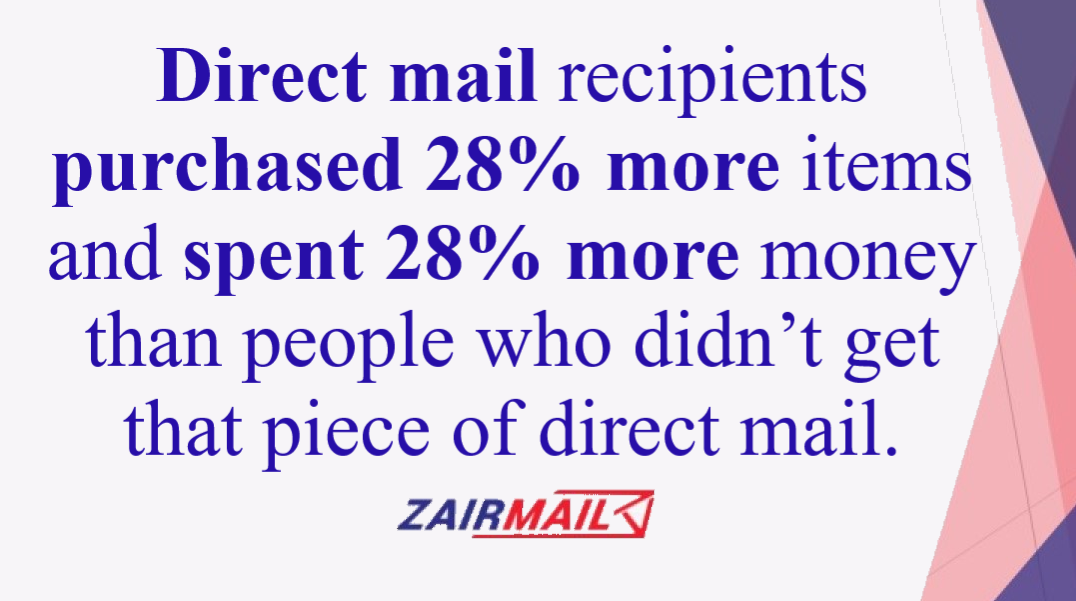
[00:17:57] Wilson: Yeah, when you talk to the Postal Service, they always talk about the “mail moment”—the moment in time every day when the consumer or the household will go down to the mailbox and check for mail, and you get shining light from the heavens and the voices of angels, and good things happen! I think they romanticize it too much, but the idea is still the same: it’s built into people’s routine and they look forward to it—a lot of people. And that’s why, in general, the Direct Marketing Association tells us that mail produces on average $12 for every dollar spent. So that’s well-executed mail.
[00:18:34] Matt: I’d love to see examples of those specific scenarios, because I have this conversation almost daily with clients and prospects, and they’re sort of saying, “Well, yeah, we’ve done letterbox jobs but they never deliver anything. We never get any work back from it.”
[00:18:59] Wilson: Well, maybe… well, maybe they’re not doing mail.
[00:19:06] Matt: Well, this is what we want back—like, what’s different? How do you make this work? Because I’m a firm believer in… take, for example, the clients that we work with, which is primarily digital marketing and advertising, and we get people leads and then convert them into site visits for them and so on and so forth. But we’re always saying to them, “Look, once you get out on site, you should have something that you can leave there,” and that whole mindset around “10 up, 10 down,” where you do the letterbox drop to 10 houses up and 10 houses down from the job you’re working on—that’s always been a good strategy, provided that you’re not dropping some crappy pamphlet that just looks like every other crappy pamphlet that’s being put into the mail, you know.
[00:19:50] Wilson: Now, the rule of thumb with marketing—the rule of thumb we use—is always 70% list, 20% offer, and whatever is left is creative. So most of it, the most important thing, is making sure we’re talking to the right person. And if we talk to the right person and give them an offer that’s compelling, good things usually happen—so that’s really important. And if people are not successful in using the mail, usually it’s because either they’re talking to the wrong person or they’re trying to serve a need that doesn’t exist.
[00:20:22] Matt: What were those percentages you mentioned before?
[00:20:28] Wilson: 70% list, 20% offer, 10% creative. And by the way, that’s not just mail—that’s direct response in general. You can have direct response with any medium. If you think about advertising—this is the professor talking here, I guess—there’s a continuum. At one end of the continuum, there’s response advertising; at the other end of the continuum is brand advertising. If you look at Nike—we talked about Nike earlier—you see their ads, they’ll say, “Just do it,” and there’s a star with a soccer ball. There’s not even a URL, or a store location, or a toll-free number. It’s all about Nike. And they do that because Nike sells their products through retail channels, and when you go into the store to pick a shoe, when you reach for the shelf, they want your hand to come back with a Nike product. The way they do that is by building brand—you can do some in-store perks or display advertising to compel the consumer, but mostly brand is what sells. And Nike has a very powerful brand, as you know.
[00:21:43] Wilson: With response advertising, what we’re really trying to do is get people to pick up the phone and call, or go to a website just to make some kind of a purchase right now. So when you look at direct mail, maybe you get a piece that has a toll-free number on it or has a website to visit. If you’re watching TV late at night, you have QVC or something where they have a number to call—they want you to pick up the phone and call right then. That’s also a direct response, even though it’s not mail. A lot of things exist on the continuum in between—maybe they’re part response, part brand, something like that. But with direct mail, what we deal with is primarily direct response. I talked about an example before, so let’s take a campaign that I think illustrates how this fits together.
[00:22:46] Wilson: We worked on a school bond initiative for a county in eastern Oregon. They were looking at redoing their athletic facilities. The state had a grant available that said, if you raise, say, $2 million in local funding, then we’ll match it with state funds. So it turns out that they could do a bond measure for a couple million dollars and the state would match it—it’s a great deal for the district, basically double their buying power. The way that bonds work in Oregon, a lot of places anyway, is that they’ll issue the bonds and then they’re repaid by homeowners through property taxes—a certain number of dollars per thousand dollars of assessed value. The school district had an existing bond—they’d done a very good job of buying down the interest rate—but they needed people to buy into renewing that bond in order to get the state funds. Athletic facilities were deteriorating; it was something they needed to do, so they put it on the ballot, and they enlisted our help to do that.
[00:24:02] Wilson: Basically, what we did is we looked at the bond initiative, and we figured out, like you would with marketing any product, what the benefits were, what the costs were, and who the target audience was that we were trying to market to. It turns out that in Oregon, we’ve voted by mail for 30 years—just for cost reasons, it’s a lot cheaper to vote by mail, which is another application of mail, by the way. And so we were able to go to the elections office, pull a list of registered voters, and we segmented it. We broke it in half: half of it being renters and the other half being homeowners—homeowners being the people who would actually pay this tax. And then we segmented again: those who had kids in school and those who did not, giving us four distinct audiences.
[00:25:02] Wilson: We built, like most people do, a website where we hosted content that talked about the school bond measure and why it was a good thing. We went out and took videos of the kids in the athletic facilities—in fact, we were able to get videos of multi-generations of students who had taken advantage of those facilities, and the kids that would be able to take advantage of the new ones. Because it’s vote-by-mail, we were able to pull the exact dates that the ballots would go out and the dates the ballots were due. We went out with an initial mail piece telling people about the bond initiative. Then we spent time doing local events—visiting with the PTA, going to coffee meetings, the Lions Club, going out in the community. We did yard signs, we did door hangers, we talked to people.
[00:26:03] Wilson: But we were able to time another direct mail piece right as ballots arrived, because it turns out that some people vote right away when they get their ballot in the mail, and some people wait until the due date. So we did one piece the day before ballots arrived, and then we did another piece the day before ballots were due to be turned in. In the meantime, we worked through digital media and these in-person events. The last time they did one of these bond initiatives, they stayed up all night waiting because it was super close—I mean, they passed it by just a couple of votes or something. But this time, it wasn’t even close—we had overwhelming success with this just because we were able to make people aware of what was going on and help share those benefits in a way that was cohesive and paid attention to the customer journey. I think a lot of marketing products are like that—we’re not just using one medium; we’re using a variety of tools to help make the customer aware of the problem and the solution we have for them, and why our solution is best. In sales, we should be solving problems, and this is one way to communicate a solution to our customers.
[00:27:26] Matt: How have you seen this work well for trade-based businesses—contractors, plumbers, electricians, you know, home services, that kind of thing?
[00:27:35] Wilson: We do all kinds of things with contractors, real estate agents, landscapers, people like that. For those, it’s mostly about finding… it’s more proximity-based mailing. If I want to service Oregon City, Oregon, then I can start at a point in Oregon City, look at a radius around that, and make people aware of the products or services I have available. It’s one of the few ways I can really do that effectively. Mainly because, if I try to do stuff online—which I should, by the way; if I’m a landscaper, I should still have an internet presence, right? That makes complete sense. But in terms of having a way to proactively reach out and touch people in my service area, especially with a special offer or if I’ve got something unique to sell, there are very few ways to do that cost-effectively, but direct mail is one of them.
[00:28:54] Matt: When we talk about unique offers through mail outs, how would that be different to the offers that you might see in digital advertising through Meta, or something along those lines?
[00:29:10] Wilson: I think the ads can be similar if we can target people in that way. For example, think about realtors—realtors here have forever been doing “just listed” and “just sold” kind of postcards, right? If they list a house in a neighborhood, they’ll reach out with a postcard campaign to all of the surrounding neighborhoods to let people know it’s for sale, because oftentimes friends want their friends to live in the area, and it’s a great way to get the networking going. In addition, when you’ve successfully sold a house, you want people to know about that so when they decide to list their home, they’re going to call you. Trying to do that with Facebook is very difficult because the geographic targeting on a street level is very limited, and home targeting is very limited, as well. You can use tools like Redfin and Zillow here that cater to people looking for homes, but the people have to come find them—the business can’t proactively find the prospect. This idea of geo-targeting and proactively reaching out to touch people is the differentiator.
[00:30:35] Matt: When I look at mail that I get from real estate agents in the mailbox in my area, it’s not so much offer-based—it’s more case study-based. It’s like, “We sold this house, do you want that thing, too?” kind of angle. Whereas when you’re getting flyers in the mail for plumbing or electricians, it’s like, “We’re a 24-hour emergency plumber, we do A, B, C, D,” and it’s like, okay, great. It’s kind of two very different things.
[00:31:13] Wilson: Right. Well, with any kind of advertising—not just direct mail, with any kind of advertising—you can choose the approach you’re using to sell a product or service. You can use humor, you can use sex appeal, you can use education, or you can offer an immediate response. We have a choice. I can see some people saying, “Yeah, if you’re looking to list your house, we just listed one down the street and here’s what that looked like—we were successful in 30 days, we could do that for you.” Sure, I could see that being successful. But in that case, you’re talking to somebody who may or may not have an immediate need. So, are we going to build brand so when they eventually want to sell their house they pick us, or are we going to try and get people to list their house today? Those are different things, and they’re going to require a different approach.
[00:32:06] Matt: Sure. What are some real-world examples that you’ve seen in the past of trade businesses that have done direct mail well, that have had a good conversion?
[00:32:14] Wilson: We see examples all of the time. On a small scale, we have realtors that we work with in markets where housing is tight. They’ll have a client that wants a house in a specific school district or a specific neighborhood, and they can pull all the residents of that neighborhood and go out with a highly personal letter that says, “Hey, we’ve got a client interested in a home in this exact area. They’re looking for a home with these kind of dimensions, they want to pay in this range, they’re willing to pay cash. Are you up for it?”
[00:32:59] Matt: Yeah, so very much personalized as opposed to like a generic flyer in the mail.
[00:33:07] Wilson: Personalization—what the research shows is that we usually get an uplift for personalization, we usually get an uplift for color versus black and white, and we’ll get a small uplift for a live stamp versus just a plain printed indicia (the little box that says US postage paid). There are little things that we can use to increase our response rates, but the primary thing is making sure we’re talking to the right people, and if there’s an offer that works, great.
[00:33:37] Wilson: Another big application is mortgage marketing. In an environment where there are low interest rates, I can use my underwriting criteria to pull homeowners that have specific interest rates and qualify for a new loan, and sell them cash-out refis, which is good for the consumer. I can say, “I can see you’ve got a loan that was X amount that you took out at this time. Look, interest rates have fallen—now they’re this rate, and you could turn your monthly payment of this amount into this amount.” We know what all those numbers are, we can put them right in the direct mail piece, and it can be personalized for every single recipient. Somebody opens it up and says, “Hey look, I could save $200 a month, I’m down for that.”
[00:34:24] Matt: Yeah, and I guess that whole approach… maybe this is where a lot of businesses fall over with direct mail, is that they sort of go for more of the shotgun, generic approach rather than spending the time to customize and make that initial contact, that first envelope they open, very well-customized to that individual.
[00:34:52] Wilson: Sure, yeah. That’s one of the advantages with mail—we do have access to very detailed data, so we can be very specific to a recipient rather than just carpet-bombing an entire city.
[00:35:14] Matt: Yeah, because I think that’s probably where most people have bad experiences with it—they just do the noise marketing, like flyers and whatever. For years, decades, plumbers and electricians have been delivering things with fridge magnets or bottle openers so that it lives on the fridge. Maybe that works, maybe that doesn’t—it obviously used to work quite well, but with technology and the internet, perhaps those conversions haven’t been as strong. But I think the message I’m hearing is that even just the brand awareness and the consistency of it might be something that gets neglected.
[00:35:56] Wilson: Right. Well, you mentioned the example of plumbers. Plumbers have a unique issue in that most people they reach out to don’t have a broken pipe today! So, you need to build brand awareness and brand preference so when somebody does have a broken pipe, they call you. For years, one of the most powerful advertising mediums used by plumbers and electricians was the Yellow Pages, which of course don’t exist anymore. But the stats were overwhelming—something like 80% of the people that looked for a product or service in the Yellow Pages actually went on to purchase from them. So a lot of plumbers would spend their entire advertising budget every month on the Yellow Pages.
[00:36:50] Wilson: The equivalent of Yellow Pages today would be Google AdWords, which is why that platform is so big. But the problem with that is, once you’re in that mix, there’s a ton of competition and noise, too. How do you isolate for that? Somebody goes on and searches, “plumber in Lake Oswego works on Sundays,” and they get a list of 400 people, including 800-numbers that just sell your lead to a bunch of other people. At that point, the person who calls you back is kind of just shopping price, right? So maybe that’s not the ideal customer, either. But if you wanted to build a rapport with a customer, you want to have a unique product offering—in marketing, we call it differentiation. This idea that we need to be different, but different in a very good way that’s important for the customer. If we can build a brand based on that differentiation, when people have a problem, they’re going to call us. And of course, having your name on the fridge is helpful in that case.
[00:38:08] Matt: What are some examples that you’ve seen of creative offers that do stand out within home services? I’m putting you on the spot here.
[00:38:19] Wilson: Yeah, no! There are different tools we would use even in direct mail. A lot of people do postcard marketing—we talked about realtors and postcards—and a lot of people do stuff with letter mail. The difference has to do with how much information I have to share and how much of that information needs to remain private. If I’m talking about somebody’s home mortgage and payments and amounts, then that belongs in an envelope. If I’m talking about home services, yard repair, or a real estate agent, I can expose more of that to the world. When I have a postcard, it’s like a little billboard in the mail—I’m going to get an immediate impression.
[00:39:26] Wilson: How do I make that impression last? If somebody has the immediate need and they pick it up and dial the toll-free number, maybe I get a conversion right away. But if they don’t, how do I make that offer linger? That’s where your comment comes in about getting on the fridge. You see people do football schedules, or recipes, or family photos—something useful that extends the life of the mail piece in the home. We’ve got a client right now working on custom stickers that are a referral system, and that’s been pretty successful for them.
[00:40:06] Matt: Stickers that they give to their clients to give to other people?
[00:40:14] Wilson: Yeah, it’s a referral-based system where a provider belongs to a network. As they network with other providers, they are connected to the clients of those other providers. The sticker is for this referral service that connects all of these different providers together, but the specific provider that sends it gets their picture printed right on it, while connecting them into the broader network. It’s an interesting offer.
[00:40:49] Matt: There’s something similar out here called BNI (Business Network International). They sort of operate in a similar way, where if you’re a part of a BNI chapter, you are responsible for representing all the other members for various things, and you have all these KPIs you’ve got to hit around how many referrals or meetings you make each month. It helps some businesses get going, but it’s kind of a hard thing to scale.
[00:41:25] Wilson: Yeah, BNI does a lot of networking meetings where people get together and talk about prospects, opportunities, and successes. This sticker program is similar to that in some ways, but it’s more of an automated referral network. It turns out—I mean, I do this too in my own home. Over the years, I’ve developed relationships with providers who do painting, or landscaping, or other things. But every once in a while, I’ll come up with a problem that I haven’t dealt with in a while, or a provider has moved away. Recently, I had to replace a water heater. The way I found somebody—I went online, I did a search, but I got 500 people and I didn’t really want to work through all that clutter. Most of it was honestly bogus anyway—it was these 800-numbers you call, and then 30 people try to reach you via automated email. It just didn’t work very well.
[00:42:25] Wilson: So I just called my realtor. I called my realtor and I said, “I need a water heater, who do you work with?” and they gave me a name of a contractor they’d run business with over the years. I called the guy, he showed up the next day, and replaced my water heater. He was fast, he knew exactly what I needed, and I had a great experience. And by the way, I had a home warranty, too! The home warranty company was supposed to handle it—I called their number, it took them a week to call me back, and they didn’t even get a provider out here, so that was a total bust. But based on my realtor’s referral, I was able to get it done and get it done well. I think a lot of people take a similar approach. This particular marketing network tries to capitalize on this exact idea: if I have a relationship with a provider as a consumer and I trust them, and they have relationships with other people, I’m far more likely to trust the people they trust, as well.
[00:43:44] Matt: Yeah, sure. Well, that kind of goes back to old-school word-of-mouth, referral-based marketing. Truth be told, you’ll never get a better lead than one that comes through a referral. But in a lot of cases, that is a very hard model to scale, and that’s a constraint we see with a lot of the businesses we work with—they typically have grown out of word-of-mouth and referrals, and they reach a point where they say, “We need something that’s going to amplify our inquiries to the broader masses.” But what I’m hearing from this is that as good as digital marketing might be for the top of the funnel, there’s a lot of opportunity being left on the table after we get that lead in. There are things we could be doing proactively—which aren’t necessarily running more digital ads—that can improve our follow-up and move people further along the sales cycle using direct mail, lumpy mail, and things that we just don’t normally do, mostly probably because of time constraints.
[00:44:51] Wilson: Yeah, no, I think so. A lot of times, people don’t know how to use the medium, either—and that’s one of the functions of a tool like Zairmail. I had a friend who was a VP of Marketing at the Postal Service, and his father owned a hardware store. He told his dad for years, “You should use direct mail to promote your business. I work at the Postal Service, it’ll be good for me, it’ll be good for your business.” So after harping at his dad for years, his dad got up one morning, went down to the local retail branch of the post office, walked up to the counter, and said, “I want to do direct mail. What have you got for me?” And they just looked at him like he was from Mars! It’s like, that’s not really how it works. For a lot of people, it’s hard to know how to get started and how to make it work. But a tool like Zairmail—the company we run—you just upload your list, upload a piece, see a preview, push the button, and you’re in the mail stream tomorrow or the next day at a fraction of the cost. It just makes it super fast and easy. There’s no reason for anybody, if they feel like mail needs to be a part of their marketing program to move the customer through their sales journey, not to do it. Zairmail is the right tool to help do that.
[00:46:26] Matt: Yeah, it absolutely makes sense to me to hear how that fits in as part of the ecosystem, because again, I see that as something we try to get clients to proactively do, but it often doesn’t get done for many reasons. But a tool like this simplifies the whole thing and makes it easier to deploy these strategies as part of the bigger picture.
[00:46:55] Wilson: Oh, it does more than that—for a lot of small to medium businesses, it makes it directly accessible. For a lot of them, they just can’t do it manually—figuring out how to do the copy on a postcard, finding a list, printing it out, putting the addresses on it, getting it to the mailbox… even if you can figure it out, you’re going to spend hours sitting at the dining room table trying to put it all together. And that just doesn’t make a lot of sense for most small businesses.
[00:47:23] Matt: Interesting. Is there in your experience a specific cadence or frequency that you see working well for a home service business with direct mail—like monthly mail outs, weekly, that kind of thing?
[00:47:45] Wilson: With realtors, we see a lot of event-based stuff—like “just sold” or “just listed” cards. But it’s very common to do a monthly newsletter, and you could do that via direct mail or you could do it electronically, too. The issue with electronic, once again, is twofold: deliverability and reach. With email—and we do email marketing here, too—we know that something like 30% of even legitimate email is never delivered right to the inbox. We have a problem connecting to people. If I want to target a whole neighborhood, the chances of me finding a valid email address for everybody in that neighborhood is very slim.
[00:48:33] Matt: Right, so you’re referring to emailing a seemingly cold contact list. I would imagine with a 30% non-delivery rate, that’s what happens there. Let me qualify what I’m talking about—when we’re running campaigns for clients, their open rates are very good because the list is qualified, they’ve opted in.
[00:49:04] Wilson: No, the issue today with email is more about spam filters and ISP blocking stuff. Because even once you have a list where people opt in and give you an email address, we still see a ton of that stuff getting blocked because of network issues—not your issue, and not your customer’s issue, but stuff in between. But if I can get a whole neighborhood of people to give me an email address and opt in, sending a monthly newsletter via email is a great tool. Sure. But I just can’t get that initial universal reach sometimes if I don’t already have an established relationship with those people.
[00:49:50] Matt: Yeah, the general mindset that we’ve gone down from an agency level with advertising is essentially top-of-funnel stuff: you run ads to get the contact details into a CRM, where you can then nurture, educate, and engage with a certain frequency through SMS and emails. That is normally what we see as the best ecosystem at the moment for sales cycle conversion. Probably the missing piece that we don’t really have in that ecosystem at the moment is direct mail or lumpy mail through various stages of that sales cycle. And I guess this is something that, like you kind of alluded to before, is dependent on the actual product. If you’re doing a high-ticket product like home renovations, which have a longer sales cycle, then case-study-related things—”Hey, we did your neighbor’s house two doors up”—might work quite well. Whereas if you’re a residential plumber or electrician just trying to hit a certain area for brand awareness, it’s probably more a case of, “Hey, did you know we can do A, B, C, D?” Regardless, I don’t know if that would become part of the top of the funnel at that point, or if it becomes more of brand awareness for nurture.
[00:51:14] Wilson: Right, it depends on whether we’re looking at direct response or brand in your example. Imagine somebody who’s selling a new air conditioning unit, and there’s special government financing or tax credits this year that are going to expire on December 31st. It’s a great deal for the consumer: get a new air conditioning unit and you’re going to get tax credits for doing it. You have that offer—it’s time-limited, it’s immediate, it’s a response-based thing where somebody can call up and just buy. Even if they don’t know they have the immediate need for it, when they find out about the tax credit, they may decide they need to do that—especially if you have a special financing or special installation deal. That feels like direct response to me.
[00:51:59] Wilson: Now, if you were that same air conditioning contractor, you could probably do something where you offer a $29 “we’ll come in and check out your system” deal—we’ll change your filters, check out your system, and let you know how it is. Then along the way, you have a checklist where you upsell stuff. Beyond that, if you just want to be their air conditioning provider of choice, then it’s all brand awareness. “If you’ve got this kind of problem, we’re the guys.” In order to do that, that’s going to take repetition and frequency, which once a month would probably be useful. That’s why a newsletter makes me think automatically about a monthly cadence—we do a monthly newsletter for our clients, too, and that’s pretty common. In order to build brand awareness, frequency is the issue. Used to be in the old days when we did magazine advertising, we used to buy placements in packages of six because we knew we needed six touches in order to build some kind of memorable brand awareness.
[00:53:15] Matt: So would it be fair to say that the best approach for direct mail for contractor-based businesses would be to have that local, geographic sort of approach, keep the message clear, personalize it the best you can, maybe align it with events or seasons, or specific examples of jobs that have been done in the area?
[00:53:54] Wilson: Sure. Most local contractors specialize in a certain city or a certain neighborhood. The question is: what do you do? What do you want to be known for? Are you the foundation guys? Are you the siding guys? Are you the home remodeling guys? You need to understand where you fit and what your unique value proposition is to the consumer, and then build that brand. And I would say you don’t build that brand just with mail—although mail has a vital role to play—I would say you do it with mail, and maybe home improvement shows, and through referrals through friends, you do coupons, and on the houses you work on, you certainly leave a sticker behind by the furnace or wherever so you get that lingering referral effect. Case studies, as you point out, can be a really good way to do that for brand awareness, but that’s not always necessarily pure direct response—although it’s a kind of a squishy area, because you could say, “If you have a project like this, call this number.”
[00:55:34] Matt: Exactly. Yeah, well, I guess the reason we bring that up is we see it working very well in the digital space where you “show me, don’t tell me.” It’s not just, “Call us because we can do these things,” it’s like, “Call us because we have done this,” and it’s sort of proof backing you up. “Oh look, that’s Bob and Sally’s house down the road!” That kind of dynamic builds a bit more authority and trust than just a general, “We can do this, trust me.”
[00:56:00] Wilson: Right. Well, and there’s another aspect to this, too: the consumer of today is impatient. If I send them a very detailed, long case study, a lot of consumers won’t spend time with that. If I can send them a postcard that’s very succinct, that might help. And if I direct them from that postcard to a site that’s got a short video, maybe that’ll work, too. We have to be more cognizant of how fast we need to communicate an idea. Today, most of what goes out… two pages would be considered very long. Most of the letters we send out are a single page, because consumers just won’t spend time with it. Make the message as short as you can, speak to the right person, and if they want to find out more, make it enticing enough for them to take the next step.
[00:57:29] Wilson: And once again, it doesn’t have to be just mail. You can have a website and you could have a YouTube video connected to the website, and you could deploy a postcard campaign that drives people back to the website to watch the video. All those things work together, and that kind of multi-medium campaign is the exact kind of thing we see being successful today—just like the school bond measure I talked about.
[00:57:56] Matt: Yeah, absolutely. I mean, you’d be silly to do a mail out that isn’t driving someone somewhere as a next action: “Click on this link,” “Scan this code to do the next thing,” “Book your meeting,” “Book a phone call,” or “Watch a video,” as you mentioned. That also gives you data points, right? When we’re talking about client metrics or lead rating, you can use those digital indicators to help you qualify that lead further and further.
[00:58:31] Wilson: Sure! I mean, just things like credibility—you send it out, somebody sees a story and thinks, “Who are these guys?” They look at your website and see, “Oh, they belong to the Better Business Bureau, they’ve been around 25 years, they offer financing.” That’s all good stuff that makes them say, “I think I will give them a call.”
[00:58:48] Matt: Yeah, and you raise a very good point there. I think this is one thing that we see as well with a lot of businesses—they don’t necessarily consider the whole ecosystem of what that potential customer’s journey might look like beyond the point of that initial contact. We know statistically they’re going to go to your website. Before they make that phone call, they’re going to be doing their research, and you live in a world where you have this opportunity—and truthfully, the responsibility—to back up your claim and make it the best possible experience when somebody does hit that digital asset. Because pretty much everything today—whether it’s a letterbox drop, direct mail, digital ads, or SEO—it’s all steering back to a website or web page which you own and control at some point.
[01:00:01] Wilson: Yeah, some kind of web presence for sure.
[01:00:01] Matt: Yeah, I mean, that’s just something you can’t really neglect anymore. It’s something that you have to put emphasis into to improve your conversions. And it’s not always an obvious, direct line—it’s not always like you click on an ad, you get the phone call, and there’s your conversion. Some of these multi-touch things are very hard to measure, but we know they work.
[01:00:26] Wilson: No, exactly. Well, I tell students this, too: for a large percentage of the population—it’s not fair and it’s not true, but it’s how they think—if you don’t have a web presence of some kind, then you don’t exist. And if it’s a crappy web presence, you’re a crappy company; if you have a good web presence, you’re a good company, because in that environment, people are going to make decisions based on what they experience. But all of these mediums should play together—it’s hard to be successful if you just say, “Oh, I’ve got a website, I’m done.”
[01:01:04] Matt: Yeah, that’s right. And that’s another thing as well—having the website is a living, breathing thing. The website is never done, and it should never be done. A lot of people say, “Yeah, I’ve got a website, I looked at it,” but it was built 12 years ago, you haven’t updated a photo, and it’s got generic stock images all over it. A website is like showering—you’ve got to keep doing it! You’ve got to keep updating it, put new photos on, add team members, add services, add blogs—whatever it might be. It works to your advantage if you do it right.
[01:01:47] Wilson: Well, exactly. The other thing about a website is it usually exists in isolation. In order for it to be useful, somehow you’re going to have to drive traffic to it, and direct mail is one way to do that. Email is another way, AdWords is another, but you’re going to have to do proactive marketing if you want that website to do its job.
[01:02:11] Matt: A lot of people don’t understand that it’s a conversion tool, not a lead generation tool per se. Like you say, if somebody sees your vehicle drive past with the logo, the web address, and the phone number, we know they’re going to go to the web address before they dial the phone number. So it becomes a conversion device, while the vehicle with the brand is the actual marketing tool. These are things the audience needs to consider out there: what does that actual ecosystem look like? Even beyond that, today we’ll run ads to specific landing pages built for that campaign, but the user might click the ad, fill out the form, and then miss our follow-up phone call because they’re busy at work. When they get home, they’ll Google your brand name, and then that conversion comes in through an organic search link. There’s this whole loop happening that is not always obvious and can be hard to measure.
[01:03:07] Wilson: True, yeah. It gets much more complicated.
[01:03:12] Matt: But I love this conversation—I feel like we could go on forever, but respectful of your time, we should probably wrap this up. Where’s the best place for people to get ahold of you, Wilson?

Zairmail is the fastest, easiest, and most reliable way to send (postal) mail


Happy Valentine’s Day.
Thank you for giving us the opportunity to serve you. It is our special privilege to serve you every single day.
Big Hugs from your friends at Zairmail.
The Zairmail Team

Happy February,
Can’t believe it is February already!
We are a little slow in our routine this year, still, we can’t help embracing Lunar New Year.
Hope you had a strong finish in 2022. It was a challenging year in many ways. We are still coming back from COVID and adjusting to the new “normal”.
Virtual communication has now become mainstream for business, school, and even personal communication. This used to be the exception, rather than the rule — not so much now. Everyday mainstream social calls are done with video using applications like FaceTime or Google Meet.
In an effort to combat rising inflation, the Fed has been raising interest rates and reducing the money supply. There were five rate hikes in 2022, for a combined 3% increase, and potential for more to come in 2023. Mortgage rates surged in 2022, with the typical 30-year loan topping 7% by year-end, more than double the average rate at the beginning of the year. The discount rate hovered near 0% from 2008 to 2016, trending up slightly to 2.4% in 2019, and then hovering near 0% again in 2020 and 2021.
Increasing interest rates, and reducing the money supply, usually has the effect of contracting the economy. There has been lingering talk of an impending recession, but even the experts don’t seem to know for sure. In order to avoid that outcome, the Fed will need to know when to take its foot off the (economic) break; yet this is far from an exact science. There is always some lag between the actions and the corresponding economic outcomes. It is extremely difficult to predict the with any certainty.
We can’t predict the future with certainty, what can we do?
We can start by evaluating what happened in 2022. If you follow this newsletter, then you started the year with SMART goals. You also monitored those goals on a regular basis throughout the year.
How did you do? Were you overly optimistic in some areas? Were you overly pessimistic in others? That is completely normal. The one thing we know about goals and forecasts is that we will always be wrong! It is almost impossible to hit them on the nose every time. We just need to evaluate the results and be brutally honest. We need to celebrate our successes with gusto, we (you) deserve it! We also need to own our shortcomings and figure out how to address them.
Then we need to map out a plan to move forward, using our past results, our key learnings from last year, and all the information we have about the future. There are a lot of forecasts for the coming year that are available. There are lots of them that are available for free. There are a number of banks and investment companies that offer outlooks for the coming year. The Federal Reserve has annual and even quarterly forecasts. There are a number of industry groups that focus on specific verticals as well.
Create a new set of SMART goals for 2023. Communicate them to all the stakeholders who are affected by them. Then make sure that you have created an organizational structure, gathered the required skills, and funded the correct activities, to achieve those goals.
The rest of it depends on the business environment, our ability to execute, and there is also a healthy dose of good fortune required as well. That is where Lunar New Year comes in.
Whatever your plan, you know we are on your side, and want you to hit the ball out of the park.
Happy Lunar New Year – The year of the rabbit.
Please let us know how we can help.
Know it will be a great one!
The Zairmail Team.
Here’s to the Year of the Rabbit!
The Zairmail team worked hard for you in 2022. We have big plans to do even more for 2023. We are always looking for your comments and suggestions. We are working hard to build the most powerful direct mail marketing tool on the planet for you. How are we doing? Are there features you love? Are there others that need to improve. We would love to know. Zairmail only exists because it is the fastest, easiest, and most reliable way to send mail. We need your help to make sure it remains that way.

Happy Holidys,
Wishing you a fun, festive, and safe Holiday Season and a peaceful and prosperous New Year.
We are looking forward to doing great things together in 2023!
Ho, Ho, Ho … Enjoy the season!
The Zairmail Team

Wishing you and your family a Safe and Happy Thanksgiving!
Best Wishes;
Zairmail Team
Postcards in envelopes for marketing near holidays and special occasions
They are affordable, efficient, easy/quick to launch, versatile, and offer excellent branding opportunities. What are they? You guessed right — postcards in envelopes.
Contrary to popular misconceptions, direct mail postcards are not a thing of the past. Instead, they are fast gaining traction and causing so much buzz in modern-day marketing campaigns. And they have proven to be profitable for marketing tools.
What Does Thanksgiving Teach Us About Business?
It’s not often we stop to think about what a celebration like Thanksgiving actually teaches us. Rather, it’s something that businesses will jump on for their promotional messaging. The problem with this is… it often comes off as a bit flat. Holidays and celebratory days come around every year, and every year organizations will come up with methods and offers, simply because it’s a ‘special day’ and they feel obligated to do the same as everyone else. But consider this… if your business didn’t learn anything last year, what do you expect to gain this year? Here are four things Thanksgiving taught us.

I coached youth football and served on the Board of Directors for Lake Oswego Youth Football for 10+ years. I just love the colors of fall, the crisp fall days, and most of all, football. Cendix (Zairmail) still supports youth sports and sponsors young athletes. The Cendix website provides more details on our community activities, including our support of youth sports.
One fall, at the end of the season, I was talking with another coach. He was a decorated and retired career officer in the Marine Corps. His son had just been accepted to a prestigious military school. The once thing that stuck with me all these years, was when he said, “there is a lot of responsibility we are putting on the shoulders of these young people”. At the time, I remember thinking that this response was probably tied to his many years of dedicated service.

As we watch the events unfold in Ukraine, his words come back to me, because we can see this principle at work. A lawless dumb-ass, in a country that has neither the legal controls nor the spine to stop him, is waging war on his neighbor, in what amounts to a vicious land-grab. Recent reports say that almost 100,000 soldiers have been killed or injured on each side. There are also tens of thousands of civilians who have died. The entire region will likely be scarred for generations by the senseless loss of life, property, and livelihood.
Yet, who is protecting the people of Ukraine? It is not the generals or the elected leaders. It is the brave young men and women of their armed services. Their country called, and they came together, to fight for their country, and push back on the evil that drives this conflict. The same is true of the United States, who stands with Ukraine, and provides the tools required to be successful. It is the young men and women of our armed services who help keep us safe. It is no small feat to protect a democracy and the freedoms we enjoy as citizens. It is also far too easy to overlook their sacrifices and contributions.
Today, on Veteran’s Day, please join us in giving thanks to the men and women of our armed services who sacrifice so much to keep us all safe. It truly is a lot of responsibility that we put on their shoulders. We also know they are more than up for the job.
God bless all of those who have served in uniform to keep us safe and protect our way of life.
Happy Veteran’s Day
The Zairmail Team

The leaves are changing, red and yellow piling up all over, and the weather is getting cooler. There is a spooky holiday just a week away and then the holiday season will be on us.
US mid-term elections are in just two weeks, which could change the political landscape. The Federal Reserve has raised interest rates three times this year, as it tries to bring record inflation rates, currently near a 40-year high, under control. This aggressive monetary activity has prompted many pundits to speak of the possibility of a recession – policy actions, like rate hikes, are notoriously hard judge from a timing/magnitude standpoint. It is very easy to go to far or hold elevated rates too long.
Are there evil green eyes staring at us from the bushes, and strange sounds in the distance, in the dim light provided by the harvest moon up above? Should we be worried as we cautiously move forward towards the lights in the distance?

The leaves are changing, red and yellow piling up all over, and the weather is getting cooler. There is a spooky holiday just a week away and then the holiday season will be on us.
US mid-term elections are in just two weeks, which could change the political landscape. The Federal Reserve has raised interest rates three times this year, as it tries to bring record inflation rates, currently near a 40-year high, under control. This aggressive monetary activity has prompted many pundits to speak of the possibility of a recession – policy actions, like rate hikes, are notoriously hard judge from a timing/magnitude standpoint. It is very easy to go to far or hold elevated rates too long.
Are there evil green eyes staring at us from the bushes, and strange sounds in the distance, in the dim light provided by the harvest moon up above? Should we be worried as we cautiously move forward towards the lights in the distance?
We have endured a pandemic for over two years now. We are not completely out of the woods and it is not clear that life will ever return to (a pre-pandemic) normal. We know that business is open, and the magnitude of inflation tells us the customers are ready to spend – robustly. As a nation, we are all ready to move on, and we can not wait for all the lights to be green. As business owners we need to find a way to survive, and even thrive, in the current business environment – whatever that might be.
If you are in politics, then you sharpen your policy goals and value proposition, put your best foot forward, and communicate those ideas clearly to potential voters and constituents.
If you are in business, then you need to continue to create unique and innovative offerings, and promote them in a way the creates awareness, establishes preference, and drives demand.
With the holidays approaching, we also need to consider how we can embrace the season to build rapport and share goodwill with our family, friends, clients, and community.
There are a few ideas to help support these goals in this newsletter.
In some sense, we just need to shake off the fear, turn on the lights, and do what we have always done – identify new opportunities, drive demand, and deliver a solid value for our clients. The rest just has a way of taking care of itself.
That is the best way we know to get treats this Halloween season.
We would love to help you ward off the spirits and see the sun rise on a brand new day. The Zairmail Team
Zairmail is the fastest, easiest, and most reliable way to send (postal) mail.
Stamp Up Response Rates
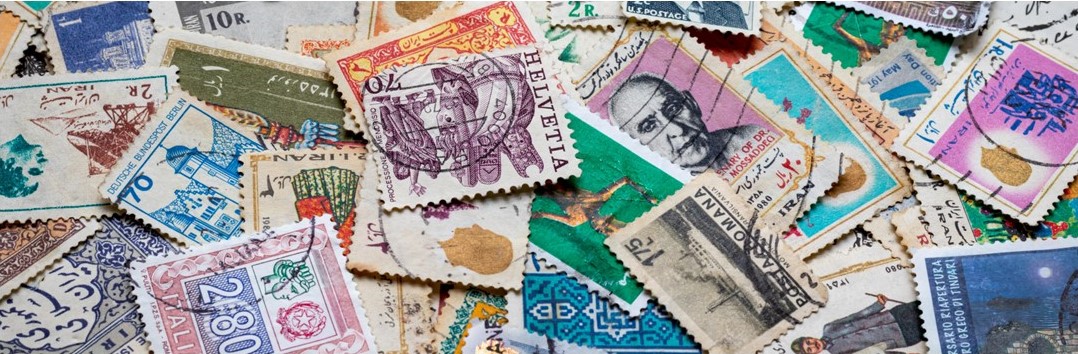
Postcards are a popular format for direct mail campaigns. They serve as a small billboard in the mail which can provide an immediate impression for the advertiser. If the message (or image) is memorable, they might even win a spot on the fridge, and provide lasting value for advertisers.
How to Win More with Direct Mail Responses

When a business uses direct mail as a marketing method, its purpose is either to generate a response or build brand equity by staying connected. It’s worth us saying that while this article focuses on generating responses, it’s not always the only goal, you are investing in building a relationship.

October 29, 2026
January 24, 2016
February 9, 2016
February 10, 2016
February 11, 2016
About the Author
Wilson Zehr, PhD is a Direct Mail Industry Expert, Direct Marketing Specialist, and CEO of Cendix (www.cendix.com), the leading provider of Web-to-print solutions that increase sales both online and offline. He is also the founder of Zairmail (www.zairmail.com), the company responsible for many "industry firsts" in direct mail.
Click here to get a free Zairmail Sample Kit with all the information you need to get your direct mail campaigns off the ground!
Home Send Direct Mail Free Sample Kit Login
Frequently Asked Questions Contact Us
© 2003-2026 Cendix Solution. All rights reserved. Terms and Conditions Privacy Policy