Episode Details
Podcast: The New Moat
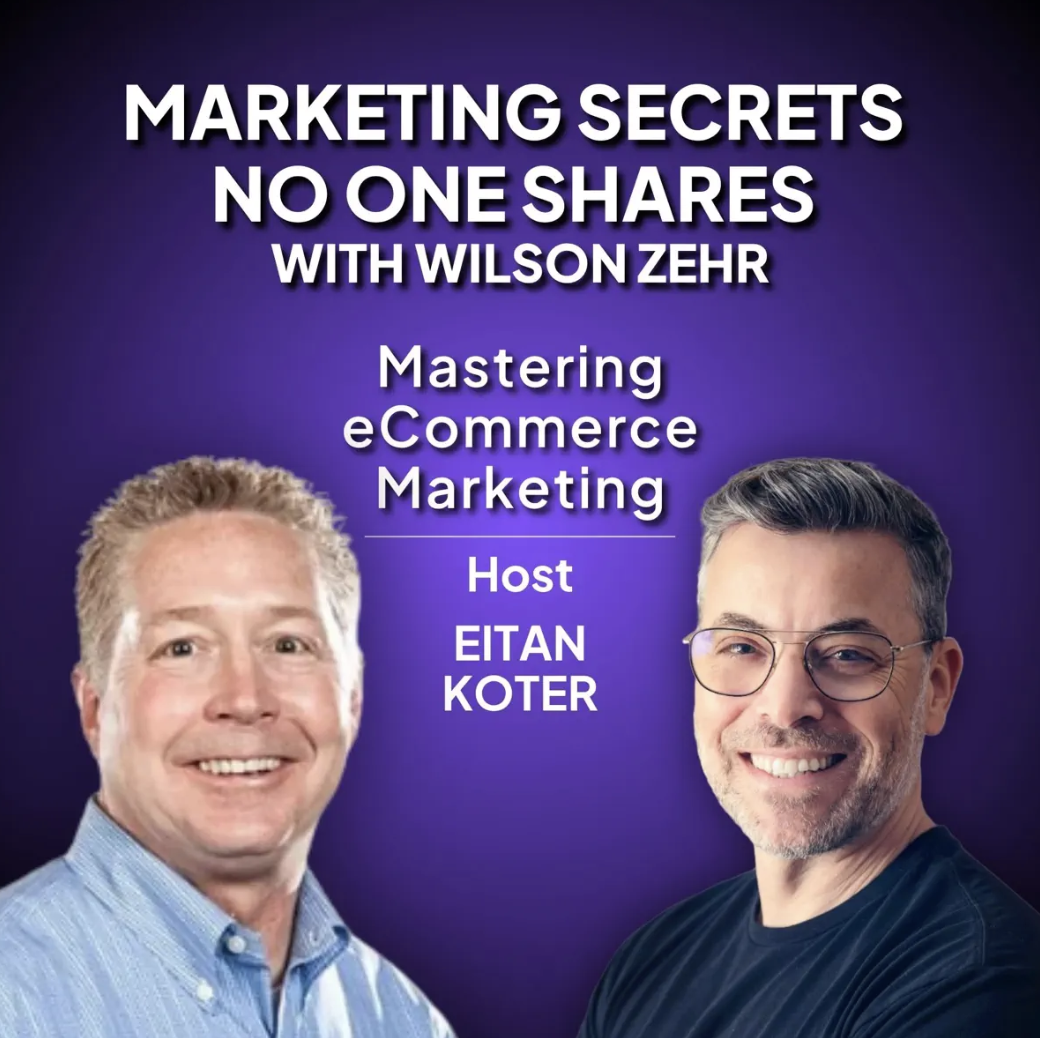
Episode: #176 – Marketing Secrets No One Shares with Wilson Zehr
Published: July 22, 2025
Guest: Wilson Zehr
Guest’s businesses: Zairmail and Cendix
Guest’s title: Founder & CEO of Zairmail; CEO of Cendix
Host: Eitan Koter
Duration: Approximately 33 minutes (32:58)
Apple Podcasts: https://podcasts.apple.com/us/podcast/176-marketing-secrets-no-one-shares-with-wilson-zehr/id1721814393?i=1000718443199
On this episode, host Eitan Koter welcomes Wilson Zehr, CEO of Zairmail.
Wilson has over 25 years in tech, innovation, and business strategy. He has helped launch eight tech startups and raised more than $60 million in venture capital.
He has also spent years teaching marketing and entrepreneurship at the university level.
Now, Wilson leads Zairmail. The company makes sending direct mail as simple as sending an email.
In today’s world, where inboxes are crowded and digital ads get ignored, Wilson believes direct mail is making a real comeback.
Brands, startups, and political campaigns are turning to mail to reach people in ways that digital channels cannot.
Wilson explains how direct mail cuts through the noise, reaches every home and business, and offers precise audience targeting.
He shares how automation and data make it easy for brands to get the right message to the right people at the right time.
Eitan and Wilson talk about how timing, good lists, and a strong offer are key to any campaign’s success.
Wilson brings real examples of what works and what to watch out for.
His advice is practical, not just theory. He believes marketing should be about what gets results, not just chasing the latest trend.
Whether you are a marketer, founder, or just curious, you will pick up clear ideas you can use right away.
Tune in to learn why direct mail is back in the spotlight and how it could help your business stand out.
Takeaways:
- Direct mail is experiencing a resurgence due to digital fatigue.
- It reaches every household and business six days a week.
- Direct mail is proactive and can engage customers at the right time.
- ROI is a key driver for direct mail campaigns.
- Understanding the customer journey is essential for effective marketing.
- Sales and marketing are critical for startup success.
- Data-driven marketing enhances targeting and effectiveness.
- AI should be viewed as a tool to enhance marketing efforts.
- Entrepreneurs need support and resources to succeed.
- Zairmail offers innovative solutions for direct mail automation.
Chapters:
00:00 Introduction to Wilson Zare and Zairmail
02:41 The Comeback of Direct Mail in a Digital World
05:25 Advantages of Direct Mail Over Digital Marketing
07:57 Integrating Direct Mail into Omnichannel Strategies
10:40 Case Study: School Bond Initiative in Oregon
15:38 The Importance of Targeted Messaging
18:19 Sales and Marketing in Startups
21:00 The Role of Data in Direct Mail Campaigns
23:34 AI in Marketing and Direct Mail
28:43 Conclusion and Resources
Watch the full Youtube video here:
Apple Podcasts: https://podcasts.apple.com/us/podcast/176-marketing-secrets-no-one-shares-with-wilson-zehr/id1721814393?i=1000718443199
Wilson Zehr is a Direct Mail Industry Expert, Direct Marketing Specialist, and CEO of Cendix (www.cendix.com), the leading provider of web-to-print solutions. He is also the founder of Zairmail (www.zairmail.com), responsible for many industry firsts in direct mail.
Free Direct Mail Sample Kit
See direct mail before you send it
Get samples of direct mail postcards and letters, plus service details to help you launch your first campaign. Your kit ships free by USPS.
Request Your Free Sample Kit →Click to View Full Episode Transcript
Podcast: The New Moat
Episode: Marketing Secrets No One Shares
Host: Eitan Koter
Guest: Wilson Zehr (Seasoned Entrepreneur, Academic & Founder of Zairmail)
[00:00:00] Wilson: …if I can find a problem, a compelling problem that people need to solve and they understand they need to solve it, then the sales piece goes a lot easier [00:00:00].
[00:00:06] Eitan: Welcome to the Mastering E-commerce Marketing Podcast. I’m your host, Eitan Koter from Vimmi [00:00:06]. In an era of rising acquisition costs and increased competition, this podcast is dedicated to helping you drive sales, engage customers, and build meaningful communities so you can turn passive visitors into active buyers [00:00:13]. Now let’s get started with the episode [00:00:21].
[00:00:29] Eitan: In this episode, I’m meeting a seasoned entrepreneur, marketing strategist, and educator who’s redefining what it means to connect with customers in a digital-first world [00:00:29]. Wilson Zehr is the CEO of Zairmail, a platform that’s made sending direct mail as fast and as easy as email [00:00:39]. With over 25 years of experience launching tech startups, raising more than $60 million in venture capital, and teaching marketing and business strategy at the university level [00:00:45], Wilson brings a rare blend of real-world execution and academic insight [00:00:52].
[00:00:58] Eitan: In this conversation, we dive into why direct mail is making a powerful comeback, how startups and political campaigns alike are using it to cut through the digital noise [00:00:58], and what today’s brands can do to drive deeper engagement in an age of digital fatigue [00:01:06]. If you’re looking for fresh, actionable strategies to stand out and grow smarter, this episode is just for you [00:01:12]. Wilson, welcome to the show. How are you today? [00:01:19]
[00:01:26] Wilson: Fine, Eitan. How about yourself? [00:01:26]
[00:01:26] Eitan: Doing great. Looking forward to this episode. Pretty excited about, you know, your story and about Zairmail [00:01:26]. I mean, yeah, I mean digital world, digital fatigue, all these words—I mean, we all feel them probably [00:01:32]. There are good insights that you will educate us all today [00:01:40]. But before we dive in, Wilson, if you can choose like three words that probably better describe you or are most important to you and share it with us, and also please explain why you chose these words [00:01:40].
[00:01:50] Wilson: Great question and a challenging one to start with, by the way [00:14:46]. Thank you for having me on, I really appreciate the opportunity, and I’m always happy to talk [00:14:53]. In terms of three words, I know you asked me that before, but I came up with four [00:02:00], and I would say: innovation, education, family, and community [00:02:04]. So that spans my interest and the focal point of most of my activities [00:02:07].
[00:02:17] Eitan: It’s kind of a common thread here. I feel like a life which is well-balanced, right? And now it’s as well-balanced as it could be, which is not easy as a founder and tech CEO, right? [00:02:17]
[00:02:29] Wilson: No, yeah. You know, it’s um—time is always a—time is always a difficult thing to manage, and it’s always at a premium, right? [00:02:29] Yes. Just setting up this interview, I mean, we wrestled with that a little bit—time zone differences and schedules and all kinds of things [00:02:41]. I mean, it’s—it’s tricky, especially if you’ve got a, you know, family and other activity that you’re involved in [00:02:49].
[00:02:56] Eitan: As we grow, I think we must be smarter in the way we prioritize things, with the way we delegate things and make decisions, right? That’s, I think, a very important process of growth [00:02:56].
[00:03:10] Wilson: No, I agree, too. I mean, we have those catchwords we talk about a lot of times about having a balanced life [00:03:10], you know, being able to balance fitness, and education, and family, and community, and things like that, which I try to do, too [00:03:16]. But you know, it’s funny that sometimes it seems hard to balance in that way [00:03:21]. It seems like you spend a little bit of time where you’re more focused on your business, and then you have a little period of time where you’re more focused on your family, and you kind of move back and forth [00:03:27]. Because we can’t always control when we have an opportunity to do those things, and the demands come externally [00:03:37]. I mean, we don’t—we can’t control them. Well, we could try, but oftentimes we have limited control [00:03:41].
[00:03:52] Eitan: Exactly, exactly. But as long as we are feeling passionate, or let’s say our vitality is at a very good level, then we can process things, handle things, and try to cope with everything that surprises us like almost every day [00:03:52].
[00:04:05] Eitan: Yeah, no, exactly. So Wilson, why do you believe direct mail is making a comeback right in an age of digital overload or digital fatigue? [00:04:05]
[00:04:11] Wilson: You know, direct mail um—it’s true. I mean, some—some people are rediscovering it, some people are discovering it for the first time [00:04:11]. I mean, if we look at the volumes from the US Postal Service—I mean, we’d seen, well, we could break that down a little bit [00:04:16]. Here in the US Postal Service, I mean, there’s—there’s more than one class of postage [00:04:28]. I mean, there’s a number of classes of postage. In the direct mail industry, we tend to talk about first-class mail and standard mail [00:04:33]. Standard mail being, you know, bulk mail—it’s the most advertising mail that’s sent in large quantities [00:04:38]. You know, if you use GE Healthcare, Mastercard, Visa, people like that, they’re sending mail—you’re sending more standard mail mainly because the postage is a lot less expensive [00:04:44], you know, sometimes 20 cents a piece or more [00:04:51]. And when you’re sending millions of pieces of mail, excuse me, that makes a big difference [00:04:57].
[00:05:02] Wilson: But if we look at the volumes overall, you know, the first-class mail volumes have been way down because a lot of transactional mail has gone electronic, which makes sense [00:05:02]—sending your Visa card statements, bank statements, things like that [00:05:07]. But direct mail, a lot of advertising mail, has held relatively constant [00:05:14]. It’s down, but it’s not down as much, and the reason for that is that most direct mail is ROI-driven, you know? [00:05:14] And as long as people are generating the kind of returns they need, they keep spending on it [00:05:20]. It’s true that some forms of digital advertising seem cheaper on the face—I mean, if you look at search engine optimization, email marketing, things like that [00:05:27]—but direct mail does some things that no other medium can do [00:05:38].
[00:05:44] Wilson: And as a marketing professor, you know, I always think in terms of… I think we need to step back and think in terms of the job we’re trying to solve rather than the medium, right? [00:05:44] There’s this old saying that if all you have is a hammer, every problem looks like a nail [00:05:54]. But if we think about a customer, the customer journey—which is really what we’re focused on, you know—moving the customer from not understanding who we are or what we offer, or even sometimes even what problem we’re solving, to being a customer [00:06:00]. You know, building that awareness and preference and helping them become a customer [00:06:11] may require a lot of different tools depending on what we’re trying to accomplish and the stage in the buying process [00:06:18]. And so, really, what I think we need to do is stand back and look at, you know, what are we trying to sell? What kind of budget do we have to work with? What does that journey look like, and what are the best tools to help us accomplish that? [00:06:26]
[00:06:42] Wilson: If you think about direct mail—and you didn’t ask this question, but I’ll throw it out there since we’re talking about it—direct mail, you know, when you think about direct mail as a tool, it does some things that no other medium can do [00:06:42]. First of all, direct mail reaches every household and business in America six days a week, and um, you know, that’s by mandate [00:06:53]. The US Postal Service is required to deliver [00:06:58]. So, you know, I’m not worried about, you know, spam filters or lost things [00:06:58]. I think the last stat I saw said something like 35 or 40% of even legitimate email is never delivered, you know? [00:07:11] It’s just swallowed up by the network somewhere [00:07:11]. Assuming that you could reach people, I mean, the average person has 2.7 email boxes or something like that, which they may or may not check on a frequent basis [00:07:17].
[00:07:30] Wilson: The second thing is it’s proactive communication [00:07:30]. With mail, I can reach out and touch people when I’m ready to talk [00:07:30]. Now, it still may wait to engage until they’re ready to move forward, but you know, I can have that conversation when we’re ready to do it [00:07:37]. Whereas if I’m using something like um, Google AdWords or something of that nature, I have to wait for people to find me [00:07:44], or a search engine, you know—I have to wait for people to get interested and look for a term [00:07:58].
[00:08:02] Wilson: Thirdly is just precise audience targeting [00:08:02]. You know, the demographics for direct mail, given that it’s been around for so long, the demographics are very well-developed [00:08:02]. So if I wanted to reach middle-aged dentists in New Jersey that have bought a car in the last six months, I could probably find that list [00:08:10]. If I wanted to do that for email or some online medium, it’d be really tricky [00:08:17]. I don’t think that information probably exists. We could probably try to approximate it, but we wouldn’t have the same kind of precision targeting [00:08:23].
[00:08:31] Wilson: And then finally here, it’s built into the American psyche [00:08:31]. I mean, people are used to getting mail once a day, you know, or at least once a day [00:08:38]. You know, they go to the mailbox and pick out the letters, decide what they want to act on, what they don’t [00:08:43]. The US Postal Service would call it the “mail moment,” you know? You go to the mailbox and you hear music from the heavens and things light up, and you know, you get these gifts in the mail [00:08:48]. Um, I think they over-romanticize it a little bit, but the fact remains that most Americans are programmed or are accustomed to receiving messages from the mail, and they react oftentimes positively to it rather than negatively [00:08:59]. Here in the US, I mean, if you’re doing telemarketing these days and you’re trying to get a consumer on the phone, man, that is a thankless job—one of the worst out there, right? [00:09:14] Yeah. No, it’s—with the do-not-call list, especially for consumers here, I mean, the size of the list is tiny these days [00:09:22]. I mean, there’s no way you can get to the same—get the same kind of reach [00:09:37]. But if you do get somebody, I mean, it’s like running into a buzzsaw. [00:09:44]
[00:09:49] Eitan: Yes, yes. So obviously a lot of advantages, great in terms of targeting and trying to find the intent [00:09:49]. How can brands effectively integrate a direct mail campaign into their, let’s say, omnichannel strategies, overall strategies? [00:09:56]
[00:10:03] Wilson: Oh, I mean, using tools like Zairmail, I don’t think it’s difficult to do at all [00:10:03]. The Zairmail tool was designed to let automation work for you [00:10:12]. So you upload a piece, upload a list, see a preview of what’s going to be produced [00:10:12]. You like what you see, you push the button, you’re in the mail tomorrow or the next day at a fraction of the cost [00:10:18]. I mean, that’s what we do, that’s what we’ve been doing for 20-plus years, amazing [00:10:23]. And we do have a new tool that we just introduced called Speedy, which is really a desktop application where you can just drop even a single letter on it [00:10:26]—like a Word doc or PDF—and it says, “Would you like to send this? Give us an address.” You give it an address, you push the button, it turns into a letter, goes out the door. [00:10:40]
[00:10:50] Eitan: Yeah. And what are some of the use cases? When do you recommend brands to send those direct mails? [00:10:50]
[00:10:57] Wilson: It’s going to depend on the brand, and the customer, and what we’re trying to accomplish [00:10:57]. But it’s usually an effective piece of the marketing mix [00:11:05]. We do have some customers that are just using mail. I mean, they have a call center and they’re trying to drive traffic to the call center, and they have a very specific demographic and a very specific message, and that’s what they do [00:11:05]. They’ll do, you know, 30,000 pieces of mail a couple of times a week and just keep the phone ringing [00:11:16]. So we have people that do that [00:11:22].
[00:11:22] Wilson: More often, it’s part of an integrated marketing strategy [00:11:22]. I can give you one example that I shared in the past: we worked on a school bond initiative in Eastern Oregon—and Oregon’s where I’m located, where I’m sitting right now [00:11:27]. We decided to take on this initiative for the school districts in La Grande, Oregon, Union County, Oregon [00:11:41]. And basically what was happening is they had a school bond, well, they had some athletic facilities that needed to be replaced [00:11:49]. The state of Oregon was offering some matching funds [00:11:56]. Um, in order to get those funds, the district had to do a bond measure to get their piece of the matching fund and replace an existing bond [00:11:56]. And so they put an initiative on the ballot to do that [00:12:11]. So we had to help people understand why that was a good idea and why they should vote for that [00:12:18]. Years earlier, they had done an initiative for the original bond and they had just barely passed it—I mean, they were up all night waiting, and I think they finally passed it by a couple of votes [00:12:23].
[00:12:41] Wilson: What we did is we looked at, from a marketing standpoint, you know, who do we need to support this, and what’s the messaging it will take to do that? [00:12:41] So we were able to go down and we bought a voter file from the county of all the people that vote [00:12:48]. We were able to overlay that—basically divide it into smaller lists [00:12:54]. Here, the way that that kind of funding works in the state of Oregon is it’s driven by property taxes [00:12:58]. So if you own property, you’ll pay a certain amount per thousand of assessed value [00:13:07]. So we took the list, we divided it into homeowners versus renters, and those two lists into those people with children in school and those people who did not have children in school [00:13:13]. And so we knew that those people who were homeowners would have to pay for it and had children in school, they had a very direct benefit but some very direct costs, too, so we needed to address that [00:13:29]. Those who were paying the tax but didn’t have kids in school, we had to sell them more about community, you know, and how to help their neighbors [00:13:41]. Yeah, but for those on the renter side, I mean, it’s almost all upside, so they’re not paying the bill for that, and their kids in school are going to benefit from it [00:13:47].
[00:13:59] Wilson: And so we took that messaging and different audiences. We built a little website, you know, just like a lot of folks would do, because we need a place to host content and a focal point to drive people to if they wanted more information [00:13:59]. We described the initiative and put all of the supporting materials there [00:14:17]. We made videos of children—or not just children, children, adults, families—that had used that facility in the past over the years, shared those stories with people [00:14:17]. We shared stories of support from the community [00:14:31]. Then we used social media—so we found social media networks that tied in the parents, tied in those audiences, and allowed us to share those stories [00:14:31]. We went to the Parent-Teacher Association and got them to share that information with their networks [00:14:46]. Then we went to parent-teacher meetings, we went to coffee meetings, we met with the Lions Club—you know, the local organizations—so that’s another type of outreach [00:14:53].
[00:15:08] Wilson: And we also did stuff like… well, let me back up first, because I’m giving you a smattering of stuff across the board, but that’s okay [00:15:08]. I mean, so we know from the… in Oregon, it’s all vote-by-mail—it’s been vote-by-mail for decades, right? I mean, that’s just the way we do things here [00:15:16]. It reduces costs, it maximizes voter response [00:15:28]. So we know from the state, we know when ballots are going to mail, we know when ballots are due, all right? So that gives us a timeline to work with [00:15:34]. So from a direct mail standpoint—so we talked about the other tools we used, outreach tools, and by the way, we did like everybody else: we did yard signs, we did door hangers, we did those [00:15:42]—but if we talk about the direct mail, given that we have these lists segmented, we can go out and touch, you know, connect with voters through the mail just before the ballots are delivered [00:15:48].
[00:15:59] Wilson: So the day before the ballot arrives in the mailbox, they get a jumbo postcard describing this initiative and what the benefits are [00:15:59]. And the reason why that’s important is because we know that some people just get a ballot in the mail and they vote right away, right? They don’t wait—they just check the boxes, put it in the mail so they won’t forget [00:16:12]. Secondly, about midway through the election, we did another reminder [00:16:24]. And then a couple days before the actual election itself, before the results were due, we hit them with another follow-up campaign to get any stragglers [00:16:29]. And given that activity, I mean, it wasn’t even close—it passed overwhelmingly [00:16:36], unlike the previous time where they just eked out a win [00:16:44]. And it wasn’t because we did anything tricky; it was just basic blocking and tackling: understanding who the customer is, what message they needed to hear, how to reach them, and how to move them along that journey to get to the place we needed to go [00:16:51].
[00:17:10] Eitan: And it was very, very targeted, right? To the specific people and audience that you need to actually target, right? [00:17:10]
[00:17:16] Wilson: Yes. And just keep sending them not just once, maybe more than that, like twice or three times, just to follow those follow-ups [00:17:16]. And it’s obviously a very, very effective process—super, super interesting, yeah [00:17:24]. Right. And we had a website out there, too, and it was optimized for the school bond initiative [00:17:24]. So if you went online and you queried for the school bond initiative, you’d go right to our website and you’d see that information, request additional information [00:17:37]. I mean, so it was a completely integrated campaign, and they used all of these tools in the most effective way possible. [00:17:43]
[00:17:49] Eitan: Yeah. So it’s just—it’s much more than just a technology platform where you can just upload a list and send whatever with some kind of a script [00:17:49]. The whole process of trying to identify customers and targeting, and those lists—this is something that also you provide as part of your services? [00:18:02]
[00:18:09] Wilson: Sure, sure. I mean, we’re happy to help our customers [00:18:09]. Most of the customers that come to us already have some idea of creative, what they want to send out, they in many cases already have a list, but we’re happy to help [00:18:17]. I mean, if you come with a problem, we’ll look at it for you, we’ll try and identify the right people to talk with, we’ll help you find the right list [00:18:28]. I mean, we have access to data from Acxiom and LexisNexis and 100 other providers, because we do this every day [00:18:34]. And ultimately, our goal here is to help people be successful, because we know that if you’re not successful using this tool, you won’t be coming back again, right? [00:18:44]
[00:18:59] Eitan: Sure. That’s life, obviously, in today’s era [00:18:59].
[00:19:09] Wilson: Direct mail historically, as I mentioned early on, direct mail is ROI-driven, right? [00:19:09] So people know what they spend, they know what they get in sales, and they need to be able to show a positive return [00:19:16]. And so to the extent our customers can show a positive return, they continue to come back [00:19:20], and if we can’t help them do that, maybe they look for other solutions, so we’re very focused on that [00:19:20].
[00:19:27] Eitan: Sure, sure. Do you see any specific industries or niches that this is more effective, or is it just working across the board? [00:19:27]
[00:19:34] Wilson: I don’t know. I mean, you know, people have these kinds of marketing problems in many different industries [00:19:34]. I mean, traditionally direct mail, we see a lot of—especially this kind of mail—we see a lot of people using it in real estate, mortgage marketing, independent insurance agents, people like that [00:19:42]. These days, we’re also seeing a lot of people using it for different forms of collection, or outreach for unclaimed rewards or unclaimed taxes, or just a whole bunch of different activities [00:19:53]. I mean, it really boils down to, I think, what you’re trying to accomplish more than what industry you’re in, yeah. [00:20:08]
[00:20:15] Eitan: Well, you’ve been involved in multiple tech startups. What’s your perspective on marketing? I mean, how do you launch a product, how do you manage growth? What’s your typical process or processes you believe in? [00:20:15]
[00:20:23] Wilson: So, it’s a great question, I mean—it’s a tricky one, too [00:20:23]. I’ve talked with a number of venture capitalists in the past who say, “You know, with the portfolio companies we have, if there’s an issue, it’s usually in sales and marketing, right? [00:20:38] People know how to build stuff—they have great ideas, they know how to build stuff—but not everybody knows how to sell stuff.” [00:20:43] And you know what? At the end of the day, universities are to blame, too [00:20:49]. I teach at the university when I’m not working on startups, and in the university environment, quite often we teach nothing about sales, or very little about sales, because we don’t think of it as being professional, you know? [00:20:54] It doesn’t have the same depth of research and academic literature behind it [00:21:07]. But the fact is that if we can’t sell stuff, then everybody else can just go home [00:21:14]. I mean, it doesn’t matter what we’re building if we can’t sell it, because we can’t pay for people to work on it [00:21:22].
[00:21:22] Wilson: So sales turns out to be very important, and it turns out that good sales is very professional, and it is, you know—we’re helping customers solve problems, we’re working together to solve problems [00:21:29]. You know, the problem is so often people think about sales as, you know, a guy in a plaid coat trying to sell a used car [00:21:41]. But in B2B, I mean, that’s not what we’re doing—we’re really working with customers to help solve real-world problems, and they have to get value from those solutions if we want to keep doing business with them, yes [00:21:48]. So, and direct mail is a tool that can help with that, but it’s really going to depend on the venture [00:22:01]. But I do think, I mean, sales and marketing are very important for just about any startup venture [00:22:07]. I mean, unless you can get that initial traction, then everything becomes a little trickier [00:22:15]. You see startups these days—you know, people get a big pile of money and they just hire, you know, 50 or 100 sales reps and use brute force to iterate [00:22:21], but for most of us, that’s not really an option. [00:22:35]
[00:22:43] Eitan: Sure. I mean, obviously, in the tech world it’s a more product-led growth strategy, right? Kind of a strategy right? Just probably delay the hiring of a sales team just to perfect the product, because sales have their way to close business even if the product is not totally perfect for that specific use case [00:22:43]. And a lot of tech startups are pushing product-led growth and just trying to fine-tune the products to the maximum before they feel that they hit product-market fit, and then hiring a sales team just to grow this [00:23:05]. So yeah, that’s—that’s interesting [00:23:13]. Wilson, what about the data part? I mean, data is so important today, right, for any company, just to feed AI engines [00:23:20]. How do you collect data? What type of data is available with a direct campaign? [00:23:27]
[00:23:34] Wilson: The data—I mean, for us, data is usually in the form of mailing lists and demographics, and they are, as I mentioned before, pretty well-developed [00:23:34]. I mean, you can go on the platform today and put in demographic criteria and pull lists for consumers and businesses [00:23:47]. We offer consumer data through Acxiom, which is the largest consumer database in the United States [00:23:54]. Our business lists are coming through Dun & Bradstreet [00:24:01]. We’re looking at things like different kinds of liens and other kinds of financial information from LexisNexis, and we have scabs of other special providers [00:24:01]—you know, if you want a subscription list from a particular magazine, or different kinds of custom lists built, we can do that as well [00:24:14].
[00:24:23] Wilson: It’s really important, when direct mail—we talk about this model for success being 70-20-10 [00:24:23]. So if we think about our success, 70% of it is the list, right? We need to make sure we’re talking to the right person [00:24:36]. 20% is the offer, and whatever is left is creative [00:24:44]—being able to break through the clutter and get our message across [00:24:44]. But what one thing we know is if we have a compelling offer and put it in front of the right person, good things usually happen in terms of sales [00:24:51].
[00:25:03] Wilson: You touched on something that I think is interesting, too, and it really depends—from a startup standpoint, it really gets a lot easier if we’re solving a compelling problem rather than pushing a technology [00:25:03], and you see people coming in both directions [00:25:09]. But if we’re just pushing a technology, especially a technology that’s solving a problem that people don’t realize they have, then that becomes a missionary sell, and that’s just a lot more effort [00:25:15]. People do it, but it’s harder [00:25:32]. But if I can find a problem, a compelling problem that people need to solve and they understand they need to solve it, then the sales piece goes a lot easier, yes, for sure, for sure [00:25:32].
[00:25:46] Eitan: I mean, you’ve been involved in innovation, and obviously in all those years and launching multiple startups, is there something right now that you see in the near future that’s exciting, that you find exciting in the industry? [00:25:46] Probably on the marketing side, some kind of a trend that you feel is important to mention—trends like, are you talking about AI? [00:26:07]
[00:26:12] Eitan: AI—how do you see this integrated into your business? [00:26:12]
[00:26:12] Wilson: Yeah, AI is an interesting term for me because I started my career in computer science, and at the most basic level, we’re a software company [00:26:12]. So we’ve created software that automates the production, routing, and production of direct mail [00:26:29]. And as software people, I mean, I’ve been hearing about AI for 40-plus years, right? Different forms [00:26:35]. Space Odyssey—remember that movie talking about how… [00:26:41] and more recently, I, Robot, Will Smith [00:26:49]. And I don’t think we’re anywhere near that yet [00:26:49]. Everybody today, it seems like—especially if you’re out raising money—everybody needs an AI story, but whether they really need to use AI and what that means in their context can be very different [00:26:58].
[00:27:04] Wilson: A lot of what we’re talking about are large language models, so we’re grinding through data and using that data to try and identify patterns or trends—that’s a useful type of data analysis, and we can try and use those patterns to forecast into the future [00:27:10]. That has its own limitations because obviously, the future doesn’t always repeat the past, right? [00:27:24] And then there’s something called linear extrapolation, which means we’re going to take a pattern from the past and try to extend it into the future using the same basic slope, or curve, or behavior, which of course often does not work [00:27:32]. So that gets a little tricky, too [00:27:46].
[00:27:46] Wilson: I will say, I mean, we use things that you might consider AI in our business [00:27:46]—like, for example, we have intelligent network routing [00:27:55]. So we do handle fulfillment through a network of production partners across the United States, and we look at things like pricing, and network traffic, and what’s being produced, and time zones [00:28:00]—a lot of different stuff to try and find the most efficient way to produce it, and we’ve been doing that for a long time [00:28:12]. In a way, it’s a form of AI, and it’s real-time—we use real-time data to do that [00:28:21]. For customer acquisition, we use some tools to try and identify likely users of our product or service, people we could add most value to [00:28:26].
[00:28:37] Wilson: But I would encourage people to use AI, at least in its current incarnation, think of it more like a tool rather than a destination [00:28:37]. We see this in academia, too—mean that people are using what we call AI to do research, right? To grind through a bunch of data and gather information really quickly [00:28:50]—it’s really good for that [00:29:04]. I read an article the other day saying some very large percentage of lawyers are using AI today because so much of their job is doing research, you know—looking at precedent and contracts and other results—and a tool like that can help them go through a lot of data very quickly [00:29:04]. So that all makes perfect sense to me [00:29:22]—most of the tools we have are great for that [00:29:28].
[00:29:29] Wilson: The internet was life-changing, right? I mean, it impacted everything: schoolwork, international relations, communications—I mean, the way we do any number of things [00:29:29]. I’m not sure AI, at least in the current incarnation, has the same kind of implications [00:29:47]. I am sure it can be a useful tool in the right hands if people know how to use it, and we’re seeing signs of that [00:29:54]. Especially when educators don’t see it as a threat, they tend to embrace it as a tool, then it becomes even more valuable, yes, yes [00:30:00].
[00:30:12] Eitan: Yeah, there are so many AI use cases that you see there. Okay, nice. I mean, all those, you know, picture creation, video—I mean, it probably influences huge industries, but for others, it just still doesn’t make any effect on their business or on their life [00:30:12]. But we are at the beginning, right? We don’t know how things are going to scale, you know, in terms of AI [00:30:32]. So Wilson, what is the best way for people to find you, right? And to find Zairmail? [00:30:32]
[00:30:37] Wilson: Zairmail’s online at zairmail.com—it’s like airmail with a Z on the front [00:30:37]—so you can find the site there [00:30:53]. It’s fast to sign up, no credit card required [00:30:53]. If you have questions—I mean, a lot of people hide from phone calls—our toll-free number is right there in big numbers [00:31:01]. If you have a problem, call us, we’re always there [00:31:07]. We also have this new application, Speedy, which you can find at zairmail.com [00:31:07]. You can download it today for free, you can use it for free [00:31:14]—the first two letters are free. If you refer friends, we’ll give you more free letters, so you could essentially send free letters using Speedy forever, as long as you’re referring potential users to us [00:31:23]. So I think that’s a pretty good deal [00:31:28].
[00:31:37] Eitan: Great. So we will add all those links obviously in the show notes. Wilson, anything else you want to add? That’s an open ending, that’s okay. I think we covered a lot, but yeah, you’re open to say anything [00:31:37].
[00:31:48] Wilson: Yeah, no, I just wanted to say that we’re always here to help [00:31:48]. In the university environment, we’ve helped hundreds of companies in terms of solving problems, and at Zairmail we do that every single day [00:31:54]. So we’re always open—we love entrepreneurs, we want to see people be successful, we’re always happy to help in any way that we can [00:32:07]. If you need help, send me an email, connect on LinkedIn, call the number—we’re here, we want to help you be successful, we’d love to have a chat [00:32:15].
[00:32:28] Eitan: Amazing. That’s a great summary, Wilson. Thank you so much. It was really, really interesting. Wish you all the best and good luck [00:32:28].
[00:32:34] Wilson: Thank you, Eitan, really appreciate the opportunity. Thank you [00:32:34].
[00:32:35] Eitan: Thank you for listening to the end of this episode. If you found this episode valuable, please subscribe so you won’t miss any of our future content [00:32:35]. Explore Vimmi, the video commerce platform that includes live shopping, shoppable video, and social commerce capabilities [00:32:42]. Visit Vimmi at www.vimmi.net. We appreciate your support and look forward to bringing you more valuable insights in our next episode [00:32:48].