Episode Details
Podcast: ClickFunnels Radio
Episode: #795 – Bridging Oldschool Textbooks and Modern Tactics with Dr. Wilson Zehr
Published: December 17, 2025
Guest: Dr. Wilson Zehr
Guest’s businesses: Zairmail and Cendix
Guest’s title: Marketing Professor and Serial Entrepreneur
Duration: Approximately 54 minutes (53:45)
Apple Podcast: https://podcasts.apple.com/us/podcast/bridging-oldschool-textbooks-and-modern-tactics-with/id1079993982?i=1000741656313
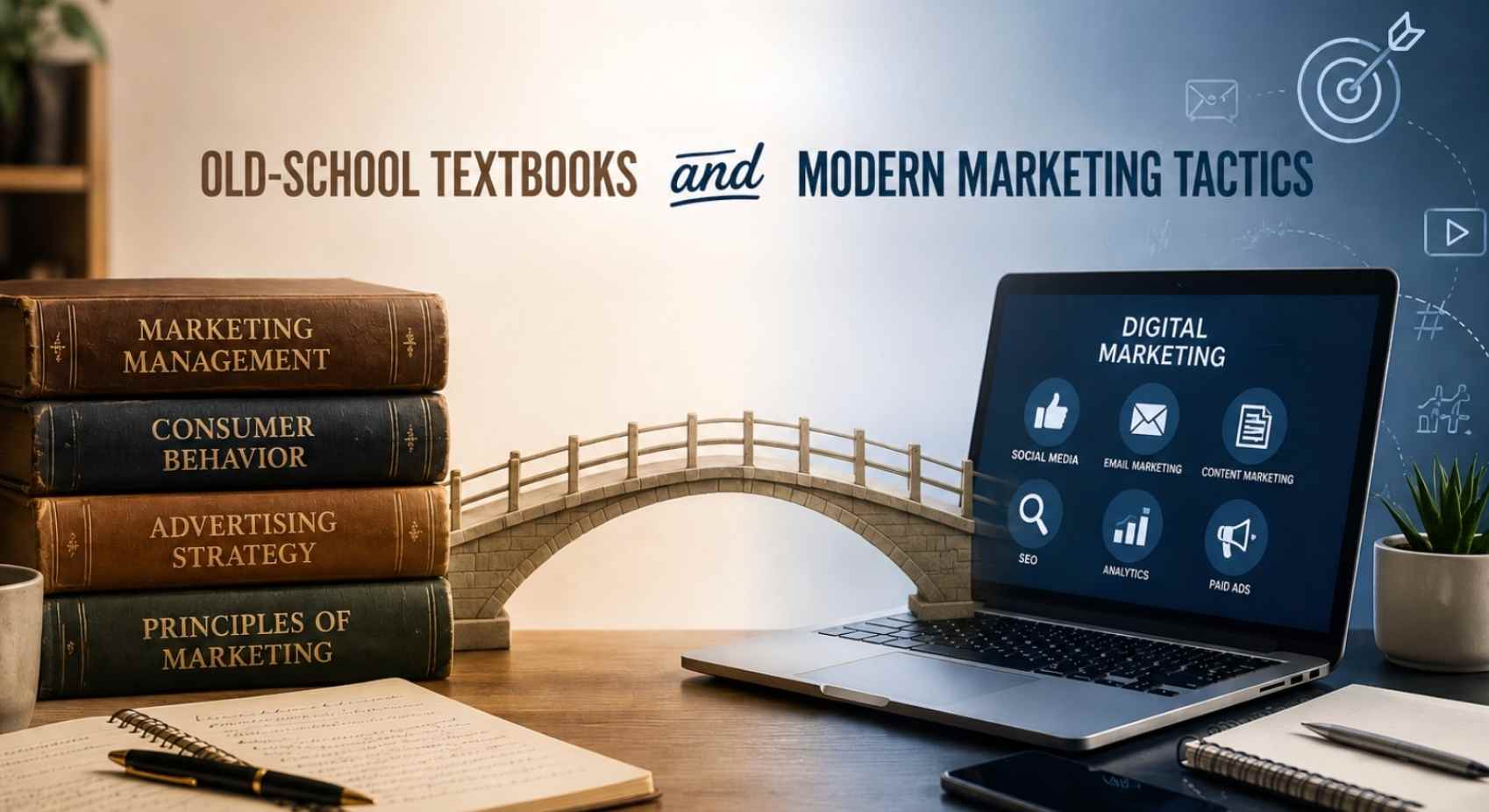
Marketing today sits at an interesting crossroads. On the one side, traditional methods endure: direct mail system, print advertising, relationship-based selling, and offline campaigns. Meanwhile, fast-moving digital tools include social media ads, AI-driven targeting, email automation, and search optimization. Together these options form a balanced framework for lasting customer reach.
When integrated, this blended approach creates a cohesive marketing system across multiple channels for diverse audiences. Teams can test messaging, reallocate budgets, and measure outcomes with clear signals over time. Ultimately, the combined method improves reach, relevance, and response rates for broader audiences.
From Theory to Real-World Application
Academic marketing principles often focus on frameworks, consumer behavior, segmentation, positioning, and the marketing mix. These foundations remain valuable because they explain why people make purchasing decisions.
However, real-world marketing goes a step further. It requires testing, iteration, and creativity. Businesses that succeed today are those that take these classic principles and apply them in dynamic environments where customer attention is fragmented across many channels.
The gap between theory and execution is where innovation happens. Modern marketers are increasingly blending structured learning with hands-on experimentation to build strategies that actually perform in the market.
Why Traditional Marketing Still Works
Despite the dominance of digital platforms, traditional marketing methods like direct mail continue to deliver strong results when used correctly. In fact, direct mail often achieves surprisingly high returns because it stands out in an increasingly digital and crowded world.
Unlike emails that can be ignored or ads that can be scrolled past, physical mail has a tangible presence. It creates attention simply by existing in the physical space of the customer. When paired with strong targeting and compelling creative, it becomes a powerful conversion tool.
The key takeaway is not that traditional marketing is “better,” but that it still plays an important role in a diversified strategy.
Creativity is Still the Biggest Advantage
One of the most overlooked aspects of marketing is creativity. Whether the channel is digital or physical, creative execution determines whether a campaign is ignored or remembered.
Simple but unexpected ideas, like personalized mail pieces, unusual promotional items, or interactive campaigns, can significantly increase engagement. In a world where consumers are constantly bombarded with messages, novelty and relevance matter more than ever.
Great marketing doesn’t just deliver information. It creates an experience.
Building a Complete Marketing Toolbox
Modern marketers are no longer tied to a single channel. Instead, they operate like system builders, combining multiple tools:
- Direct mail for attention and memorability
- Email marketing for nurturing relationships
- Social media for reach and engagement
- Paid ads for scalability
- SEO and content for long-term visibility
- AI tools for optimization and personalization
Each channel has strengths and weaknesses. The goal is not to rely on one, but to integrate them so they support each other across the customer journey.
The Role of AI in Modern Marketing
Artificial intelligence is rapidly changing how marketing works. From content generation to audience targeting and predictive analytics, AI helps marketers make faster and more informed decisions.
Search behavior is also evolving. People are increasingly relying on AI-driven results rather than traditional search engines alone. This shift means businesses must focus more on clarity, authority, and value-driven content that can perform well across multiple discovery platforms.
However, even with AI advancements, the fundamentals remain unchanged: understand your audience, solve their problems, and communicate clearly.
Conclusion
The most effective marketing strategies today are not purely old or new, they are integrated. Traditional methods like direct mail still hold power, while digital and AI-driven tools offer speed, scale, and precision.
Success comes from combining these approaches into a unified system. Businesses that understand both the foundational principles of marketing and the evolving digital landscape are the ones best positioned to grow in a constantly changing environment.
Free Direct Mail Sample Kit
See direct mail before you send it
Get samples of direct mail postcards and letters, plus service details to help you launch your first campaign. Your kit ships free by USPS.
Request Your Free Sample Kit →Click to View Full Episode Transcript
Podcast: ClickFunnels Radio
Episode: Bridging Oldschool Textbooks and Modern Tactics
Host: ClickFunnels Radio
Guest: Wilson Zar (Seasoned Entrepreneur, Academic & Founder of Zairmail)
[00:00:01] Welcome to ClickFunnels Radio, the podcast that brings you the latest strategies, insights and success stories from online marketers just like you who utilize funnels to grow their business. Our Join us every week as we bring you exclusive interviews and thought provoking discussions that will revolutionize the way you approach online marketing. and Tyler Wicks. Welcome back to ClickFunnels Radio. My name’s Chris Cameron and joined with me as always is the wonderful Tyler Wicks. You got wonderful today. Like an hour ago, I was wondering what it was going to be today. Apparently, do you write down any guesses? I thought you were going to go back to debonair for some reason. That one was classic.
[00:00:54] Tyler, I’m excited today, man. This is… You know, occasionally we get people who reach out and they’re like, hey, you know. I don’t know whether it’s brokers or whatever and we’re pretty choosy, you know about as much. But just to give you an idea, we’ve got Dr. Wilson Zehr here. He has 20 plus a year experience in entrepreneurship, business operations. direct mail even. And actually he is a professor at the University of Eastern Oregon, right? Eastern Oregon University. Most recently Eastern Oregon University. Excellent. Well, welcome to the show. Do I call you Dr. Z? What do I call you? Dr. Z works, Wilson works. It’s whatever feels comfortable to you. I’m not sure anybody’s ever used debonair. You have an MBA and you have a PhD, but you have always done marketing and entrepreneurship and consulted with that.
[00:01:55] Tell me kind of about it and then you teach at university as well. you balance this as well, because a lot of entrepreneurs it You know, it’s not what it used to be, it’s not this and we’re That’s a great question. Usually when I’m teaching at the University of Valorment, I teach marketing, entrepreneurship, finance, and business strategy. My undergraduate education was in finance. a degree in finance with a minor in computer science. I spent five or six years as a software engineer and then went back on my MBA and worked in marketing strategic alliances, business development and executive leadership. I kind of followed that path and I actually have coursework for three PhDs.
[00:02:54] They have one. just, you know, kind of lifelong learner, always curious about stuff and ended up, you know. It seems like whenever there’s a lull in a startup environment, I’ll dig in and do some academic stuff just haven’t learned, you know, learned from the students as well, learn new stuff that, you know, just from, you know, teaching with the students I’m supposed to be teaching and I end up learning. And so that’s a, that’s a good thing. Yeah. So talk to me as you teach entrepreneurs, like I said, it’s maybe it’s just a ClickFunnels thing. Maybe it’s, it’s not, but a lot of them are like, Like for me I dropped out of? And I’m not throwing shade at all it’s you know traditional education so talk to me about how you kind of balance that of like hey when do you know like to go get fully educated as an entrepreneur maybe depends on who you are tell me kind of some of your thoughts on that on entrepreneurship and education.
[00:03:55] Yeah, that’s There’s a lot more that happens in the university environment than just education too. The education is key. We try to make that meaningful. I can talk about some of the things we do in entrepreneurship. I built the entrepreneurship program at Eastern Oregon University. I played a big role in what they did with Oregon State and Portland State University. and northeastern, some other places that work. But beyond the educational piece, which is important. I mean, there’s a big piece of socialization. I try to understand what you want to do. getting, say, a broader worldview. I mean, there’s…
[00:04:42] You know, there’s a lot of growing that happens in that period of time. You know, if somebody’s going through school 18 to 22 years old, it’s a huge growth period as an individual, you know, from really, you know, to become an adult, to become a professional. And so we help try to help students with all of that, not just, you know, trying to figure out what’s in the textbook. Beyond that, entrepreneurship, I think, is something that you need to experience too. the stuff that’s in the textbook we we spend time talking about other entrepreneurs we highlight people that have been successful even people you might not think i mean one of the We do something called an Eastern Oregon called the Pub Talk, where we set up an environment, a local group of which the entrepreneurship.
[00:05:29] I think I saw that on the website. You had some video things and one of them was the PubTalks. Exactly. One of the faculty members started side-aid brewing and the Entrepreneurship Club helped with that. So we got to help put that together, but we put these pop talks and we bring in noteworthy entrepreneurs and we give them a chance to talk about their entrepreneurial journey. What does your background look like? Where did the idea come from? How did you get started? What did you enjoy? What would you not want to repeat? what’s next, you know? And so we talk through that, you know, to try and highlight heroes, you know, because we want, you know, a entrepreneurs to be able to look at somebody and say, you know. If they can do it, I can do it too. Tim Draper is a big believer in that idea of heroes, having heroes.
[00:06:23] people on, like we had a woman who does some music, you know, as a music artist. She’s… She’s a country music artist, you know, and she decided that, you know, she was really big in the music scene in Spokane, Washington. In order to be big in country though, you have to kind of have to go to Nashville. So she moved to Nashville. She did some work with Dolly Parton, and did some voiceovers with Dydney, and she’s got some, you know, some great, you know, original work. But her job is, you know, carving out this career in the music industry is building her own personal brand. And how do you find the next gig? And, you know, how do you get your music? And that’s entrepreneurship, right? It’s a different form, but it’s entrepreneurship. You have somebody goes and they, you know, they play basketball.
[00:07:13] Yeah, they get paid by the team, but they’re also building a personal brand. You’re going to have to monetize that for a lifetime. What does that and we have more traditional entrepreneurs, you know, that, you know, small business. I mean, from the university environment, we tend to. I I mean, there’s tend to be two ways to approach it. One is a small business approach where we say, you know, we’re going to create a florist or a plumbing company or something of that nature, which is interesting and important. I mean, there’s an important role to play for those kind of ventures. The approach I like the take, it is more like high-growth enterprises, right? We’re going to create the next Amazon or the next Google or the next Apple. I mean, if you look at the, you know-know, the Magnificent Seven, you know, the big companies that drive the economy 40 years ago, none of those companies, 40 or 50.
[00:08:04] 40 for sure. Most companies never existed or if they existed, they were in embryonic state and so that’s what drives our economy. of some entrepreneur decided to get off the couch, run with an successful. Now, you don’t need to own all of those tools. I mean, I don’t have to count. I mean, I know how to find accountants, but they have to get an education. And I need to probably know how to manage them. I need to know where to use them, and where not to use them. At some level, being an entrepreneur is kind of like being an engineer. or an architect too. You’ve got to put together this venture, figure out where all the pieces are coming from. Anything that’s lawmaker I want to own, anything that’s I’m passionate about, I probably also want to own too, but other things I can bring in partners to help with that.
[00:09:03] Funny, I remember having a gentleman into a class one time who was very successful at this window company that was sold to… I don’t know remember the name in a minute but a very large window company but he was he was in six years and seventies and i said how how do you know you know how do you how do you know where you want to go or where you start what the opportunity looks for he said well he says everyone has gifts. and everyone has capabilities. So gifts are things that you can do really well or passion, things that you’re passionate about. He said their ideal opportunity is somewhere in the middle, something you’re passionate about that you’re also really good at. But we still have to turn that into a business, so we have to know what a business is.
[00:09:52] Exactly how it works, what the pieces are, where to find those pieces. Could I muddle through it and do it on my own? Sure, I could do that. And some people do. But I would miss out on all that other stuff that happens in the university environment too. So it’s trade-offs like every other decision in life, you know. Yeah, that’s, that’s a great answer. Um, so interesting you bring up, you know, uh, practitioners or doctors or musicians or athletes and they get very, very good at their trade. But oftentimes they go out, if they’re going to work for someone, that’s one thing. but oftentimes they’re gonna start their own practice or they’re trying to get their name out and bill like that personal branding and the people who I find the most successful are those who can be the entrepreneur be good at their trade but also be very very good at marketing and running the business of.
[00:10:41] their trade there’s a lot of holes to fill in and there’s a couple ways to learn that right is one is school hard knocks the other is is you know university environment as well. Talk to me about maybe how you talk to people or teach them about. the vision of that personal branding the running you know the running the business even if they are a musician a doctor and athlete or whoever. !!!!!!!!!!!!!!!! Yeah, well in the university environment too, I mean, you know, that’s what that whole, you know, we’ve got general education requirements, right? So people learn about language and literature and, you know, art and other things. So hopefully you get a broader base to build.
[00:11:29] We do we get students across the university involved in entrepreneurship they want want we do we get students across the university are involved in entrepreneurship they want to know you know musicians artists R. they want to know how to build a business and it really did that. Depends on which way you’re gonna take it. I mean a lot of those folks. I’m an artist. Maybe I want to start my own gallery more of a small business focus and Certainly you need to know about advertising marketing and more fundamental skills like accounting and finance and things like that I just,ocally talk through a process, you know, of entrepreneurship, we talk about identifying an idea, creating the product concept and how do we market it. And so we, we talk about personal brand within that context.
[00:12:15] But I don’t think that’s just limited to students in the university. Yesterday there was a guy here, a gentleman here who came to install Christmas lights. And he, he’s got this business he’s starting. He does, other times of the year, he does power washing, pressure washing, and he does windows. And he, you know, youngish, you know, mid-twenties. And he, he said, well, you know, I a- I know you were marketing, and, you know… I don I don’t have jobs, I go around, I just knock on doors in the neighborhood and I see, you know, people, I’m doing power washing, I’m putting up lights where, you know, it kind of sets you up. And I. Well,- how’s that working for you?
[00:13:07] that number. They say, well, you know, ten doors, knock on ten doors, I get probably two people answer, you know, and of those, maybe one wants me to come back later, maybe one will sign up for, and somebody says, well it’s to the mouth, let’s figure out how it’s working out for you, you know. And I went there, we talked about other kinds of tools. I said, you know what? If you have a list, if you knew what your ideal customer looked like, we could find a list of those people. Maybe go out and do them with a postcard. Maybe you’d spend a lot less time walking and a lot more time working, less time sewing. I mean, how’s that? How’s that? That’s interesting. I never really thought about that, you know.
[00:13:41] There’s a lot of, there’s a lot of things we can do when we have tools that will give us choices that help us build our business. And that was the other thing I shared. Will you working on the business and working in the business. It’s a really tough trade off. He’s knocking on doors and talking to people. He’s working on the business. When he’s actually on the roof, he’s working in the business. It’s really difficult to do both at the same time. But entrepreneurs tend to view their time as free, right? It’s got no cost- It’s got no cost to it. But honestly, if you’re an entrepreneur, especially a small entrepreneur like this guy, he’s only has one person working at his company, that is the most expensive resource. Time is expensive, you bet.
[00:14:42] You know, so, so how do we save your time? How do we make it so that you spend more time on the roof and less time knocking on doors? Yeah. Yeah. It’s crazy. Like, so go ahead, relent. I was just gonna I felt like this was a good, uh, Transition spot because you are kind of a direct mail guy and you brought that up a little bit and I I love direct mail So I definitely want to talk prospect that You know and for businesses like that it’s a good fit but yeah, tell us tell us a little bit about your direct mail background It’s interesting because I was… Fresh out of school, I spent time as a software engineer, five, six years as a software engineer, went back on my MBA and then worked in marketing, product marketing. So as a product marketing person, I use direct mail on a number of different campaigns. And honestly, as I moved into strategic alliances, stop using and stop thinking about it.
[00:15:42] When the internet took off, we were looking at in convergence businesses, we did a business on voice over the IP, and then created this company called ZairMail. And the point of ZairMail was to make direct mails fast and easy in the email, to make mail in general, as fast and easy as email. you know, as technology guys, we thought as male, how hard can it be really? And we found out that it’s really pretty complicated in some ways, but we make it really simple. And, you know, that caused me that and then, you know, in this focus of marketing from a teaching standpoint. really, you know, caused me to rethink direct mail and how it fits together and how you can use it to grow your business and what’s important. And I guess, you know, the work come out on that is that it’s not.
[00:16:36] You know, people talk about digital versus direct mail versus AdWords versus whatever. I mean, but those things are not mutually exclusive, right? And I grew up as kind of a gearhead, worked on a lot of hot rods and stuff, still play around. You’re talking to the right guys then, for sure. Yeah, you’re speaking Chris, Chris’s language for sure. We can suck practice immediately. Yeah, we can talk about, we can compare when we’re having a driveway. We won’t do that on here. No, well, yeah, no, I’m sure you’re way ahead of me, but at any rate, but it’s still an area of special interest to me. I’ll put it that way.
[00:17:27] But as a mechanic, you know, back in the day, I think they probably still do this. They have something called a flat rate model. And so you get this car to work on, and they’d say, R&R transmission, you got, you know, 6.5 hours. And if you could do it before, you made a lot more money, right? You still got paid for 6.5, but you finished in four, you can go on to the next job. But the, The only way to do that was to have the right tools. You had a big tool chest and with special tools for everything, you knew the right tools, your new houses, you could knock it out, you could really make some good money. That’s a young man.
[00:18:01] And so in marketing, it’s not exactly the same, but it’s similar. We’ve got all these tools we can use, and we’ve got and customer, we’ve got a product, we’ve got a value proposition, we’ve got value proposition, we’ve got a target audience. So we’re going to engage with that customer, interrupt them. build awareness, establish preference, drive a sale, you know, how we can help them along their customer journey. And we’ve got a whole lot of tools we can use to do that. And so and different tools have different capabilities associated with. And so when when we’re working on campaigns, I don’t know, digital or direct mail or is it, you know,
[00:18:39] a bench or the a side of a bus, I say, what is it going to take to connect with a customer and move them where we need them to go? So direct mail as a medium does some things, some important things that nothing else does. First of all, I can reach every household and business in America six days a week. Right, because every, you know, just about the Postal Service, that’s their charter was to deliver mail and people have addresses, you know, that, well, I guess unless they’re living in the car. Unless they live in Portland, Oregon. He went there. He did. But anyway, reach every household business in America six days a week. Secondly, it’s proactive communication. Christmas-like guy here is talking about Facebook apps. Great tool. Love that for a consumerearances application. But it’s also…
[00:19:36] Is passive to wait for people come find me i don’t find them and even when they come find me it’s really noisy there’s a lot of other people selling stuff to direct my own that channel right i connect to the customer and they’re focused on my piece for. for some period of time. So it’s proactive. I can start up that conversation. I can have it when it suits us both. Thirdly, it’s precise audience targeting. If I want to reach Jewish Denison, New Jersey, who purchased a car in Alexis Month, I can do that. That’s really hard to do online. The list are very in fact if you know that’s why it’s such a big deal for things like mortgage and credit profiles and i can get really good at finding exactly the person who can benefit from what i’m selling.
[00:20:29] Think about a CAF. I’m going to find somebody who needs a payment lower than what they are. I know what my interest rates are so I you know, coming to work and getting the mail and then going through it. And, you know, the US Postal Service, they talk about the mail moment, you know, the mail arrives and the sunlight comes from the heavens and there’s music and I’m not sure it’s quite that romantic, but it is built into the the normal American process. And people aren’t mad when they get it, usually, you know, it’s a lot different than when you get that cold call during dinner, right? So that’s why on average direct mail returns on, you know, about $12 for every dollar invested according to American Marketing Association and the Direct Marketing Association.
[00:21:25] Is it the only tool that we can use? Absolutely not. I can give you examples of multi-media campaigns that we’ve done that have been very successful that use direct mail, that use digital, that use… large door hangers and coffee talks, just going out and talking to people. But it just really hinges on what’s our product or service and what do we want the customer journey to look like? Sure. I love that you do direct mail. That’s one of the biggest reasons I was like, this is really interesting because there are so many things that are online and we are constantly in a battle of attention. You know, I, I watch my kids. Okay. Here’s, here’s where I’m going. I watch my kids. Okay. I’ve got four boys from 18 down to nine.
[00:22:20] And they’re starting to dress like I did in the nineties. They’re starting to do the baggy clothes again and everything else like, oh my gosh, it kind of of comes back around things are cycl You know the people I’m talking about, Tyler, right? You’re like, there’s either you’re a clean inbox… or you got 10,000. I don’t know. But there’s some… Yeah, you’re a big clean inbox guy. What I’m talking about is like a pattern interrupt though, or something coming back almost in style. When all of a sudden there’s something that comes, and was it Dan Kennedy that calls it lumpy mail? Anyways, and it shows up and it’s something tangible, right?
[00:23:07] Yeah, let me know something that usually mail that has something in it. It’s a credit card or some people back in the day they put a penny or even a dollar. Or he makes a heart of the tear or something like if you’re just in the mode of. Yeah, exactly. I think Dan Kennedy’s example was even. Not to sidetrack us too much, but like he would throw like, like an Advil or a Tylenol or something in the envelope to like, I can’t like, what is that? Because then it sparks curiosity. You’re going to open it up. What the heck is in this envelope? Anyway, where were you going, Chris? Sorry. We could talk about that, too. I mean, depending on what you’re using, whether you’re using a postcard or self-biller or a letter or a snap pack, there are kinds of techniques. Of course, with a postcard, I’m not as worried about getting an open, because I get the immediate oppression. But if I
[00:24:00] Yeah. For sure. Yeah. The thing I think that you mentioned, and you mentioned it early on even before transition, is you’re talking to somebody and saying, okay, well, well, like this lights guy, who’s your ideal customer? He may think, okay, I’m going to go into this fancier neighborhood, they’re bigger houses, it’s more square footage, I can put up more lights. And that might be his ideal customer, but he may be going out and doing that in the middle of the day when they’re not home. So there’s a lot of things here is understanding this ideal customer, where they hang out, what they respond to. I mean, I mean, maybe talk a little bit about how you go about
[00:24:34] finding out who somebody’s ideal customer is and then how to attract them. That’s it. Yeah, that’s a really important question. We use something called a strategic marketing model to to help define the marketing mix, you know, and one element is that is the product in his case. Well, we talk about the the the core product and the augmented product. I the concept, this idea that you have the core product or service. But oftentimes what the customer is buying is something more than that. So in this case, this light installer, the fact that, you know, is scheduling convenient? Is he pleasant to do business with? You know, does it take the right amount of time? It’s a price point, right? So that all becomes part of the product, not just putting up lights.
[00:25:26] And then we have to look at who’s the market for that. And the market, you know, oftentimes identifying that market might change because the product we’ve created may not move. might not match the market we had in mind. So maybe we have to adjust the market, but maybe we have to adjust the product to match the market too. So there’s an iterative process there where we have to make sure everything’s in alignment. For example, in his case, he may decide, as you say, that I want to put up lights and I want affluent consumers in these neighborhoods with big houses. And I’m going to offer them a fair value for that.
[00:26:10] But you may find that, you know, a hundred other light providers, there’s virtually no barriers entry, right. You need to own a ladder and a harness. And so maybe there’s a hundred other providers there. So maybe that’s not the ideal market because when you have lots Right? You know, everything just falls apart. People are just given it away. So, maybe I want something in the middle of a market that’s underserved, right? There don’t have quite as many competitors. And maybe I offer some other things that are more valuable to them. Like this particular guy said, you know, by the way, you know, that we’ve got trees around here. I haven’t had my gutters done.
[00:26:49] you’re up there. Would you mind cleaning the gutters the no problem at all. I’ll cost you an extra hundred. Okay. Sign me on. Yeah. And that’s a product he’ll take with them to the next customer too. Right. Absolutely. Right. So I’m going to clean your gutters too. You know, while you’re up there. I mean, there’s a lot of factors involved in identifying the market opportunity, but then creating a product. you know, that aligns with that, how does our unique value proposition, and how do we build that product in a way that offers additional value to the customer. And then that, you know, comes into the lessons around, you know, pricing and channel and how does it all fit together.
[00:27:35] Yeah, I want to go back. That’s a great answer. I want to go back to direct mail a little bit. And I want to ask how you handle this in a direct response marketing world. You know. We often talk about marketing in the respect of a couple of things, you know, sometimes it’s just brand awareness or exposure. Like for example, Pepsi, always sponsoring the halftime of the Superbowl or something like this, just Pepsi everywhere. but can, can they track to see exactly what that add what they put in what the return on investment was maybe maybe not i’m sure you can look at the correlation impressions and everything else but indirect mail.
[00:28:11] still try to be direct response. Calculate, okay, we’re gonna do a postcard. Is it a QR code? Is it a link? Is it a phone number? Maybe talk to us about how you kind of track how I guess effective it is. Yeah, that’s an important number to have for, you know, for entrepreneurs. And then, you know, to the Christmas tree, you know, like, guys, in his credit, he did know all of his numbers, which a lot of entrepreneurs do not. Yeah, That was important first step. And measurement is is one of the reasons why direct mail is still around, to be honest with you. I mean, direct response has always been about ROI, return on investment. And, you know, because mail costs money. It’s not like, you know, email, I could spam the world for,
[00:29:09] Every piece a direct mail I send out, I’ve got to buy a stamp for it. So I need results. And so calculating that return on investment But in order to set the stage for that, I would say that when we’re doing any kind of advertising like this, there’s a continuum. between brand and response advertising and one and is like nike just do it right there’s no or old there’s no phone number is no nothing you have to be close to, add the opposite extreme is you most campaigns are somewhere in between. If I’m doing direct response and I’m looking at that lead to a sale, and I can do that using a response-vehicle, one that we would call. Historically, we try to get the customers as many as we can using a fax number these days.
[00:30:11] we’re using key arc codes., we.re using phone numbers. We’re looking at websites with what we would call a pearl, a personalized URL or a pin number that comes off the piece. that we can track, and we do those kinds of things. With brand advertising, it’s harder as you try to look at a… You know try to a result result based on an increase in sales that happens in proximity to that advertising but in reality with brand advertising what they see just do it, the next time they go into a shoe store and they reach for the shelf, they’re reaching for a Nike instead of reaching for something different. And you’re right, that’s harder to measure. But we can do it in the aggregate, looking at the increase in sales relative to our ad spend.
[00:31:07] a specific product. So, I’m pretty sure that most big agencies, and Nike has used Wyden and Kennedy forever. But most, most big agencies are tracking using some form of that. We do use a lot of phone numbers and a lot of personalized URLs. and direct response today. And a personalized UI love can be, you know, can be. represented with a QR code as well. Yeah. Yeah. And that’s become more, I, especially even thinking before COVID, you know, people look like, especially the older demographic that look at it and go, okay, what, what is going on here? I think most people are pretty darn trained at this point. Like, okay, we know exactly what to do in this scenario.
[00:31:53] For the longest time, people really didn’t even know what it was. You know, it’s like, wow, it’s a clip for now. Even most smartphones, if you just put, you know, you pick up your smartphone, like you’re going to take a picture. It just knows you should correct. Yeah. Yeah. Yeah. Yeah. Just opening Google. Yep. Yeah, makes it pretty self-explanatory if you don’t know what’s going on, I guess. We just ate at a restaurant in the airport on the way home last week, and yeah, that was the only way to order was the QR code. People were getting forced into figuring it out almost. That was big during COVID for sure.
[00:32:28] No, Dr. Z, tell us one of your most creative direct mail campaigns, if you’ve got story for that. Like, well, we sent out something really weird. I’ll give you an example. We did one a couple of years ago, Tyler and I, when we did the 2.0 launch and we sent out to our biggest affiliates. We got these big, huge foam click funnels. they were light, but they were big. It was super lumpy mail if that was a category And that started catching on a little bit. And then other people would just throw it away. But one thing you could do it, you could love it or you could hate it, but you also couldn’t ignore it. And it turned out being pretty cool. So I’m just wondering if the you’ve done anything like that where
[00:33:09] You know, this was something unique. We sent out, you know, I’ve seen real estate, he’d send out a key or, you know, little things. Like that. Is there something, you know, with, uh, with your, um, ZairMail that you’ve done that’s kind of unique and different. Yeah, we’ve done. Interesting stuff over the years. I mean, um, And Se Recently, a proposal we made for one hasn’t actually been executed yet, so you’re the inside story. There you go. The Eastern Oregon University is a rural university. It’s located in Union County, Oregon, which has about you know, 13,000 people, I think, in that county. Is their mascot the Chuckers? The what? Aren’t they the Chuckers or something like that? No? No, the Chuckers would be cool. No, they’re the Mountaineers.
[00:34:03] Okay, I know where I’m not sure they understand where what you know, they’ve they’ve done lot of research on West Virginia, but I’m here too. But, yeah, it’s kind of a, Le Grand is actually a French, you know, it’s a university located in Le Grand, Oregon, and spelled with Grand, G-R-A- kind of, but he’s got a more of a frontier feel to him. That’s kind of University has a football program. It’s NAIA, it’s not Division 3, but you. But you can think of it, roughly comparable to Division NCAA Division 3. But the university, because it’s in a rural area and they serve, have a large service area, the students come from all over. By the way, they’re not just limited.
[00:35:04] at the Union County. But because they have this large spread out service area, they were in the distance learning very early on before the internet, right? They would do, they had these locations, satellite locations and stuff. So the internet was a really good thing for them. you know, they actually will never step foot on the campus. But that creates another interesting problem because as athoodity, what I want to be able to do is build a rapport with my student base because I want follow-on contributions, we want them to send their kids there, they want them to make. donations there or, you know, there’s a lot of…
[00:35:50] We think about lifetime. Customer value there’s a lot of lifetime customer value in the environment if we do it right but online students they never form that same bond with the university because they don’t spend time on time on campus questions how do you do that. And given that we have the on-campus students, they spend a lot of time going to football games, right? On Saturday, tailgates, football games, athletic events, athletic events. One of the ideas was we, we find a way to televise all of these games, their video anyway, they’re online. And then we take the online students and we get them and we put them together, you know, we send them a schedule of all the games and we send them a box and a box and it has one of those big foam fingers. It has popcorn.
[00:36:37] of the stuff they need to do to celebrate. And then as faculty, we tell the students the game this weekend, who you rooting for, you know? And built it into the culture to get the students engaged in this cool stuff we have happening on campus, even though they may never spend a day on campus. And we can do that kind of thing with dimensional mailing. At least support the process. Yeah, I mean, that’s happening all over. You actually see some of the boxes that we do. We’ve done that for a bunch of these little challenges we do. You know, Tyler’s got one over his right shoulder. When you have that in conjunction with…
[00:37:13] line, you know, it kind of brings that together. We are in definitely a virtual society and trying to figure out how, how to bring us together in a way and having something physical is a big piece of that. You’ve worked with a lot of companies as well. Okay, you’ve worked, like you said, dozens of companies, consulting or as startups or even as part, the ownership groups. Do you have a favorite or one that started small and got bigger? I’d love to hear some stories about that. I’m not sure there’s a favorite. There’s things to like about. All of these different ventures and not all of them been successful. Every one of them I’ve learned a lot from. And we’re still on the journey.
[00:38:10] and um and rolled it out. It was jointly funded by Draper Fisher Jervison and Hewlett-Packard. Managed to get a bunch of traction and grow it and then we were kind of hit with the triple whammy at that period of time so we had the dot-com meltdown and then we had 9-11. Yeah. Because everything stopped during 9-11 for months. And then we had the anthrax scare, Poison in letters. Oh, yeah. That was right after night. Right after night. They’re saying it was coming out of. Trenton, New Jersey, I remember. Like, it was just crazy. And I was living in Trenton at the time. It was the weirdest thing. Talk about a wealthy male. Yeah, that’s right. Yeah. That would actually be a real whammy on that direct male piece, wouldn’t it?
[00:39:02] And so, well, thankfully for a zero-mail is that, you know, when you send mail through zero-mail, nobody ever touches it except our production facility. So our mail is safe, so that’s good. But rebirth still, you have to go through consumer and business perception of the risks that might be associated with opening a letter. And, of course, money got really expensive, you know, after the dot-com bubble burst. Thankfully for us, we were always very frugal about how we spent our money. And we were able to work through that. Our largest competitor was a company called eLadder.com. It was funded by Hummer Windblad. And they were burning through about $20 million.
[00:39:43] dollars a quarter I think. Holy smokes. And a yeah, because they decided it would be their job to actually produce the mail. And so they had big warehouses with and we ended up buying what was left of that company and a couple other competitors we and we ended up getting purchased by our largest production partner in Hayward, California. And then you ever seen those pictures with a little fish getting eaten by bigger fish, by a bigger fish, by a bigger. And that’s kind of what happened to their mail. It ended up, I think, being part of our Donnelly or something. And they, you know, they didn’t know what to do with it. It was like a rounding error. We were still working on the software.
[00:40:23] So at some point we ended up getting it back for the cost of the earls and putting it on a new software, turning on a switch in order to start coming in. And we just, you know, keep, we’ve created new software, new partners, new networks, new products. We have a brand new product called, called Speedy, which is a desktop application. So you can see that www.zairmail.com slash Speedy. And basically is a desktop application where you can click on it, opens a little window, you type a message, pick an address. Push the button and it turns into a letter and ends up in somebody’s mailbox. Even one piece of mail. And the first two letters are free. So if you’re in marketing…
[00:41:11] and trying to build a rapport with somebody, sending a letter is a really good way to do-do that. This tool is there and should be in every market marketer’s toolbox along with their bill, but usually was their value after sending a couple more than one piece. You can do a handwritten. You can choose different fonts, so you can pick a handwritten font. These days, those are pretty good. We could do a handwritten version. And for some clients in the past, we have done that. You know, where you get an army of grandmas and they just, you you know, Exactly. But most customers don’t really want to pay for that today. And to be honest, we talked earlier about ROI. you know the difference between really writing a letter and using a handwriting font, the difference in response rates is tiny.
[00:42:09] I like to pay the uplift for that and we wouldn’t recommend they do that. about what ZairMail does, is this strictly letters or is it some of the lumpy stuff that we talked about? Give us a little bit more of what- General, we’ll do lumpy stuff. We do all kinds of direct mail for our customers, but our standard products, our most popular products are postcards, self mailers, letters, and snapbacks. Well known in the industry, not so much. If you’re not a direct mail, you know, you know. into direct mail. Yeah, I don’t know what it is. Yeah, it’s like when you get a pin number from the bank. or rebate, you know, when you tear off the edges and open it up, that. That’s a snapback, a technical name for it. Oh, yeah. It looks like it looks
[00:43:09] And, you know, depending on what, you know, there’s different challenges to different kinds of mail. We alluded to that earlier. You get a postcard, you get the G-E-E-E-E-E-E-E-E-E-E-E-E-E-E-E direct impression. And so you have some choices to make on size of the postcard. What’s the message? Whether you use color one side, color two side, or just black and white. If you meet the problem with a postcard, of course, and postcard is going to be more less expensive If you have personal information you don’t necessarily want a postcard where the world can see it. But once you put it into a letter or a snapback then you have to go back to your question. and with a lump in mail about how do I get an open? Because if I’m done until I get an open, people can’t see my message. So there are lots of different techniques I can use to do that as well.
[00:43:59] Beyond those standard formats, we do a lot of. We do millions of pieces of direct mail. You can go on the site. You upload a list. You upload a piece. You see a preview in real time. You push the button. You’re in the mail tomorrow, the next day at a fraction of the cost. Super fast, super easy. And that’s what we’ve been doing for a very long time. Because then you think about it. But, you know, you woke up this morning, you wanted to do direct mail. You didn’t have a tool like XAML, what would you do? You know, go buy envelopes and some paper and try to make that work. And then forget about, you know, to get postal discounts. You need a very expensive piece of software.
[00:44:35] to do that. And even if you have the software, it takes, you know, a lot of training to know how to use it. So service like XAML is essential if you wanted to direct mail and you want to do it in any kind of way that preservess your time. We talked about the value of time, entrepreneurs’ time. And so their mail is really good for that. Now, if you have something specialized, you want to do dimensional mailing or lumpy mailing or something like that. Sure we can handle that too. But it’s not automated through the platform in the same way that would let us get it out tomorrow for you. You know, because we have clients come through here that are trying to keep the phones ringing in a call center, for example, and they need mail to do that. And they say, you know, we got 50,000 pieces, they need to be in the mail tomorrow. Can you do that? And we say yes, you know, that happens. Yeah, well, Tyler, what did I miss?
[00:45:29] Just looking through my questions just a minute ago. How do you track it? Talk about, talked about that. I just wanted to point out something that stuck out to me at the. The beginning of the conversation was. I think it’s, you know, it’s And I might ruffle some feathers here. It’s refreshing to talk to a college professor that’s out there doing the thing, right? Like, I went to I’ve learned far more about marketing, obviously, working for Russell and ClickFunnels the last decade than I ever did in college. But even at that time, I remember thinking like, have you ever done this, sir? Like you’re here teaching us how we’re supposedly supposed to do this, but you never worked in marketing, right? And that’s like a…
[00:46:17] and kind of the marketing and business space I feel like a little bit at the university level so that was just Cool. I think some of your students hopefully should appreciate that, that it’s like, hey, this guy’s in the trenches. He’s running businesses. He’s doing the thing, you know, that he’s teaching us about rather than just being an entrepreneurship professor because you read. you know, and, you know, and, you know, and, you know, and There’s definitely a benefit to be able to tell students say, you know, here’s what the book says you can do, and you can do that. But if you do that, here’s what I think will happen.
[00:46:58] some different things you could think of instead. I’m not going to tell anybody what to do, but I’m happy to give people tools and choices. There’s a lot of things that are always changing. And sometimes, youthood, gosh, you got textbooks, you got a lot of other things, curriculum. How do you keep up with it all, especially as a professor, you know, when you think about AI and everything? Maybe if you give us an idea of where you think the puck is going. What is unique? What is new and upcoming that we have to be on top of? Is it AI? What else is it? Well, I mean, that’s a great question. Forecasting the future is always a little tricky.
[00:47:42] Of course. And this is a strategy we spend a lot of time trying to figure out, trying to figure that out with varying degrees of success. Of course I know it’s and it seems to be that there’s this question about how far out do you go, you know, predicting the future 10 years out almost impossible, especially in technology. you know, two months out, maybe a little easier, but then how useful is that? Everybody can already see it. So, you know, figuring out what the time horizon is and which direction we should go. So, I mean, I don’t know that I can predict the future exactly, but I can, I can…
[00:48:22] things we’re working on. I mean, we’re still working on making direct mail more relevant, faster, more powerful. We’re looking at integrating more tightly into the electronic environment. How do we make responses? You know, make it so that people receive something, a direct rail, maybe they respond electronically, and maybe they go into a funnel to electronically. So all of these things they step in. about of the digital world and maybe that happens seamlessly, they don’t even notice. AI is a big one. I mean, I don’t wanna. probably not in the way you’re used to thinking about it but maybe, you know, for us, from an advertising standpoint, I mean, think about Google, right? Google was a game changer. We talk about
[00:49:18] I mean, this is way too much information. I don’t know if we have enough time, but back in the day they had the yellow pages, right? The yellow pages and the yellow pages were very powerful for small business and the reason why is because something like 80% of people that would look up a product or service in the yellow pages would go on to buy a product or service like that. And so a lot of plumbers, electricians, and stuff would spend 90% of their of their advertising budget. On the Yellow Pages, trying to get an ad that would resonate with people. Fast forward to today, Yellow Pages are gone. They don’t exist. People use tools like Google to try and find those kind of services.
[00:49:58] and we to advertise to them. But here comes, and by the way, AI is, in some ways, is kind of a misnomer. I mean, we don’t think about like, the AI we have today is not like Terminator or, or, or Howl. more iRobot. Yeah, you have a touchy subject. But it does have, it has. It’s very good at gathering information and then synthesizing, and then using that synthesized information to make decisions. But the models, at least they exist today, they’re not driven by advertising in the same same way Google is. product or service. The only way to really do that in that, ato at least in the current model people are using, is we have to somehow
[00:50:50] Inform that large language model you know that i today is it currently conceived. They will use a large language model bunch of data the grind through trying to see the relationship use those relationships to make. suggestions. But if you’re not in that data set, then you’re not available to be suggested. So if a consumer is using AI as a tool to find a product or service,iasco do we make sure that we’re represented? And if we’re represented, how do we make sure we’re represented? correctly and how do we make sure we can establish a preference. That’s very tricky. I’m into tools, may or may not.
[00:51:29] Well, don’t exist yet, right? Everybody’s just kind of figuring out how that works. But more and more people are adopting that as a tool. You know, my wife She uses AI, she uses chat GPT a lot more than she uses Google these days. And then by the way, but they talk about hallucinations, those tools are not always right. A lot of times they’re wrong. and that’s not helpful either if we’re the best solution in the marketplace and the chat GPT is giving somebody the wrong information and they’re not to be given earls. They’re just throwing back information at people. That’s a really big challenge for a marketing person who relies on the digital environment.
[00:52:16] So we’ve got a lot of big, you know, big challenges to wrestle with and coming down the path. I’m sure meeting will change. We’re already looking at, you know, a computing environment that’s more of a fabric than individual computers. But anything beyond that, I would have to get into more academic looking stuff that I’m sure is not going to be your audience. This has been very insightful. If somebody wants to know more about you, you did drop a link earlier. Do you want to get that to us one more time if they want to go and get involved? Sure. The company is called Azirmail, which is like air mail.
[00:52:54] like traditional airmail with a Z on the front so www.zairmail.com if you want that application speedy which will allow you to send free letters it’s zairmail.com slash speedy and you can give it a try i would suggest everybody give it a try we have a toll free number on the website And like a lot of our customers, we love to talk to our customers. We do answer the phone. Give us a call. We’re happy to talk. Even if you don’t, you never do business with us. We’re still happy to talk to you. A real person, not AI? Exactly. Pretty good. That’s pretty good these days. Well, Dr. Wilson’s there. Thank you for being an incredible guest here on ClickFunnels Radio, and we will see you all next time. Thanks, everybody. Sounds great. Thanks for the opportunity. Take care.