If you ask any revenue leader what keeps them awake at night, you’ll hear the same concern—sometimes spoken aloud, often whispered quietly:
“Our warm leads are going cold… and our lapsed customers aren’t coming back.”
Every funnel leaks.
Every database decays.
Every fast-growing company eventually runs into the same reality.
Email open rates flatline.
Retargeting costs climb.
SMS starts to feel intrusive.
Customers unsubscribe or worse, disappear without a trace.
Yet some teams continue to grow quarter after quarter.
Not because they send more messages, but because they reactivated the customers everyone else lost.
And increasingly, they’re doing it through a channel many digital-first teams once abandoned.
Direct Mail Is Back, and It’s Becoming a Re-Activation Engine
This isn’t nostalgia.
It’s performance.
Modern direct mail is no longer manual, slow, or disconnected from data. High-growth organizations are using automated, trigger-based, highly personalized direct mail to solve the hardest problem in revenue: bringing dormant customers back to life.
Why?
Because it solves three challenges digital channels struggle with.
1. It Reaches Customers Digital Channels Can’t
People change email addresses.
Ignore SMS.
Block ads.
Disable cookies.
Unsubscribe from everything.
But physical addresses?
Those rarely change.
Direct mail reaches customers digital channels simply can’t.
2. It Cuts Through Digital Saturation
Digital channels compete for pixels.
Direct mail arrives alone.
No spam folders.
No notification fatigue.
No crowded feeds.
Just a physical message that gets held, opened, and actually noticed.
3. It Creates Emotional Weight
There’s something different about receiving a real, tangible message—especially when it’s personalized.
It feels intentional.
It feels valuable.
It feels human.
And that emotional signal matters when you’re asking someone to re-engage.
How High-Growth Teams Use Direct Mail for Re-Activation
These aren’t random mailers. They’re strategic, lifecycle-driven campaigns designed to trigger action.
1. The “Return to Value” Letter
A brand- or founder-led message reminding customers:
- Why they chose you
- What’s changed or improved
- Why now is the right moment to return
This works especially well for B2B services, financial and legal firms, healthcare networks, SaaS, and high-value eCommerce.
Why it works: It feels personal, authoritative, and important.
2. The Incentive-Based Postcard
Fast. Visual. Action-driven.
Examples:
- “Your $50 credit expires in 7 days.”
- “Scan to restore your account.”
- “We upgraded your plan—here’s what’s new.”
Why it works: Urgency plus clarity, with a frictionless path back online.
3. The Official-Style Snap Pack
Snap packs demand attention.
High-growth teams use them for:
- Compliance-safe reminders
- Reinstatement offers
- Final-notice win-back campaigns
Why it works: It mimics official communication—dramatically increasing open rates.
4. The Automated Multi-Touch Journey
The most effective teams don’t rely on one piece.
They build sequences:
- Letter → emotional appeal
- Postcard → offer-driven nudge
- Snap pack → attention reset
- Final reminder → urgency
Why it works: Repetition, variation, and escalating intent.
Direct Mail as an Omnichannel Force Multiplier
High-growth teams don’t choose between digital and mail.
They layer them.
When direct mail works alongside email, SMS, retargeting, and on-site personalization, it becomes the touchpoint that reactivates every other channel.
Final Thought
Direct mail doesn’t just bring customers back.
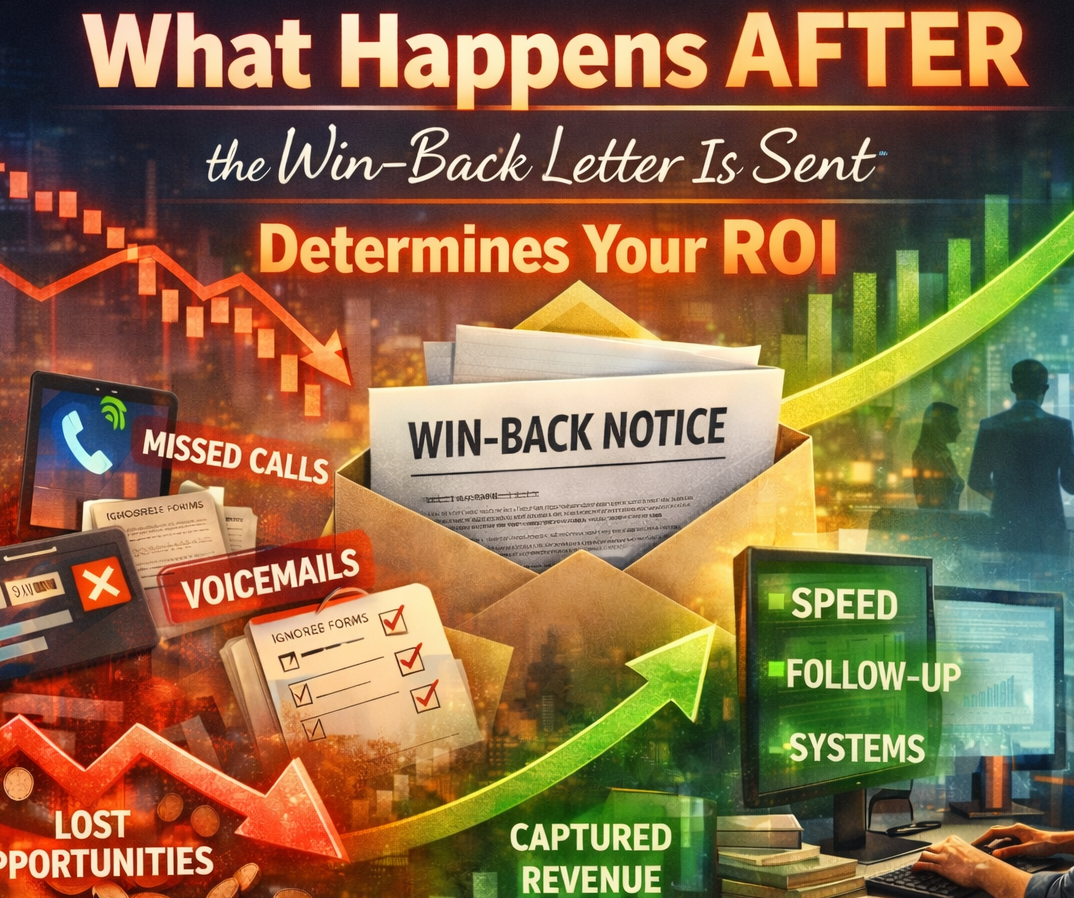
What happens after it does—how fast you respond, how consistently you follow up, and how well your systems handle renewed interest—is what ultimately determines ROI.
That’s where the real opportunity lives.
Wilson Zehr is a Direct Mail Industry Expert, Direct Marketing Specialist, and CEO of Cendix (www.cendix.com), the leading provider of Web-to-print solutions that increase sales both online and offline. He is also the founder of Zairmail (www.zairmail.com), the company responsible for many “industry firsts” in direct mail.